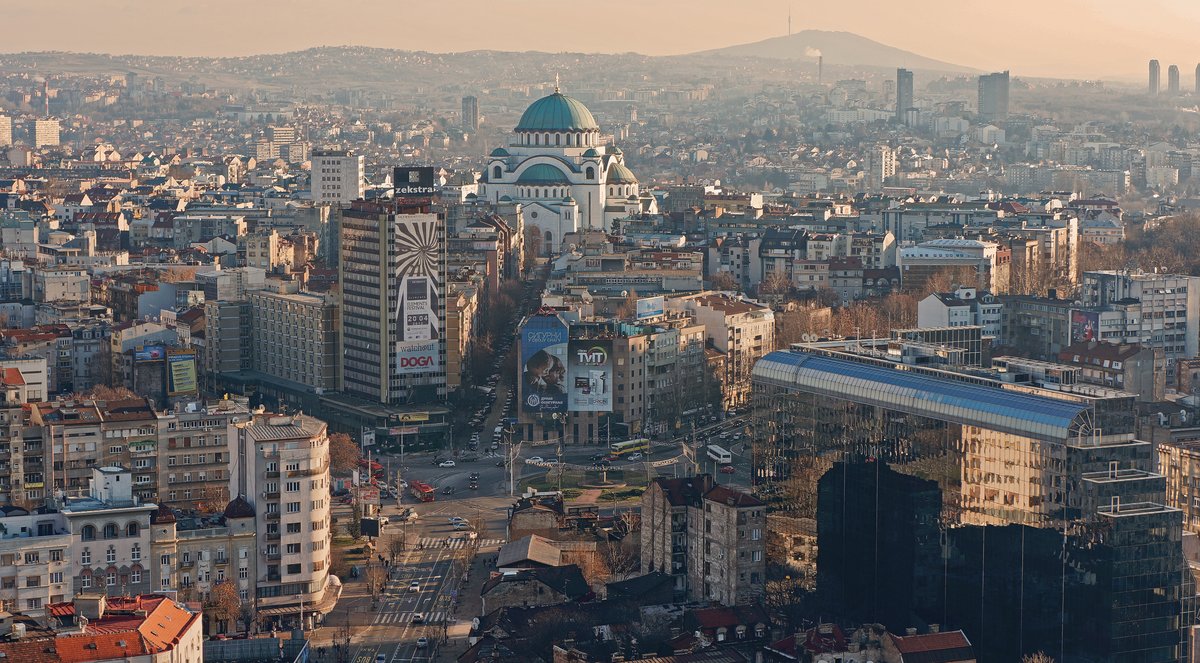
🇷🇸 Belgrade — Family Travel Guide
Country: Serbia Last Updated: February 2026
Overview
Belgrade is the Balkans’ most electrifying capital — a city of two rivers, ancient fortresses, communist history, and extraordinary food that costs a fraction of Western Europe. It sits at the confluence of the Sava and Danube rivers, which gives it a character unlike anywhere else: outdoor swimming on a river “beach,” fortresses you walk into for free, and a café culture so intense that locals drink coffee for three hours as a social ritual.
For families, Belgrade is a revelation. It’s one of the most child-welcoming cities in Europe — children are adored and welcomed almost everywhere, including restaurants well into the evening. Prices are jaw-droppingly low: a full sit-down family meal at a good local restaurant rarely costs more than €25–30. The city is safe, English is spoken widely, and there’s a depth of history — from Neolithic settlements and Roman occupation through Byzantine, Ottoman, Habsburg, and Communist layers — that turns every corner into a story.
Why families love it:
- Ridiculously affordable — one of the cheapest capital cities in Europe
- Children are welcomed almost everywhere, including upscale restaurants at night
- Kalemegdan Fortress Park is a free mega-attraction with a zoo, playgrounds, military museums, and river views
- Ada Ciganlija provides a full beach day without leaving the city
- Serbian food (ćevapi, pljeskavica, burek) is universally kid-approved
- The Nikola Tesla connection gives older kids a genuine science-history hook
- Day trips punch well above their weight: Iron Gate Gorge is jaw-dropping
⏰ Best Time to Visit with Kids
| Season | Conditions | Verdict |
|---|---|---|
| Apr–May | 15–22°C, green and beautiful, low crowds | ⭐ Excellent for sightseeing |
| Jun | 25–28°C, rivers warm enough for swimming | ⭐ Best all-round |
| Jul–Aug | 33–38°C, very hot, Ada Ciganlija packed | 🔴 Hot — beach-possible but tiring for city walks |
| Sep–Oct | 18–25°C, beautiful foliage, quieter | ⭐ Best for families overall |
| Nov–Mar | 0–10°C, cold, occasional snow | ✅ Cosy kafanas, Christmas markets in December |
Pro tip: September is arguably the city’s single best month. The heat breaks, the rivers are still warm, outdoor dining is perfect, school groups haven’t yet overwhelmed the museums, and the light is golden. EXIT Festival in Novi Sad (July) adds a bonus if you’re visiting then.
🚗 Getting Around
Car Rental A car isn’t needed within central Belgrade — in fact it’s actively inconvenient in the city centre due to parking. It becomes essential for day trips to Iron Gate Gorge, Fruška Gora, or Sremski Karlovci.
Tram, Bus & Trolleybus
Belgrade has a functional network of trams, buses, and trolleybuses. The BusPlus card works across all. Single fare: 70 RSD (€0.60). Day ticket: 200 RSD (€1.70). Kids under 5 travel free. Buy cards at kiosks, not on board.
Bolt / Rideshare Bolt is the dominant rideshare app and is extremely affordable. A 15-min ride across central Belgrade typically costs €2–4. Much easier than parking.
Bicycles Ada Ciganlija and the Zemun waterfront have excellent cycling infrastructure. Bike rental from Ada Ciganlija costs around 500–800 RSD/hour (€4–7).
Walking Central Belgrade (Kalemegdan, Knez Mihailova Street, Skadarlija) is very walkable. Note: cobblestones in historic areas can be challenging with strollers.
🏛️ History & Culture Experiences
1. Kalemegdan Fortress Park & Belgrade Zoo
The single unmissable Belgrade experience. Kalemegdan is a 2,300-year-old fortress complex at the confluence of the Sava and Danube rivers, and the surrounding park is essentially Belgrade’s living room. You could spend a full day here: exploring medieval gates, Roman wells, Ottoman baths, the Military Museum, climbing ramparts with sweeping river views, and watching locals play chess under the trees. The Belgrade Zoo is tucked inside the fortress walls — one of Europe’s oldest and most atmospheric zoos, with over 2,000 animals along winding paths cut into the ancient fortifications.
- Rating: Fortress Park: 4.5/5 (TripAdvisor) | Zoo: 4.0/5
- Age suitability: All ages; the fortress grounds are magical for children who love open space and adventure
- Cost: Fortress park is completely FREE, open 24/7. Zoo: Adults
600–650 RSD (€5.50), Children350–400 RSD (€3.00) — verify current prices at the entrance. - Time needed: 2–4 hours for fortress + zoo combined; you’ll linger
- Location: Central Belgrade, Kalemegdan — end of Knez Mihailova pedestrian street
- Open: Park always. Zoo: 8am–8pm in summer, shorter hours in winter
- ⚠️ Honest note: The zoo is older and smaller than modern counterparts — cages are more traditional than naturalistic. Some parents find it bittersweet. The fortress grounds can be uneven and hilly — challenging with a pram.
- Pro tip: Arrive in the late afternoon so you can catch the sunset from the fortress walls over the Danube and Sava. It’s one of the most spectacular views in the Balkans.
2. Nikola Tesla Museum
This is not just a museum for science nerds — it’s an unmissable Belgrade experience and one of the most memorable science attractions in all of Europe. The museum holds Tesla’s original archives (UNESCO-listed as a Memory of the World document), his personal belongings, and working replicas of his machines. The guided tour (mandatory and included) involves a live Tesla coil demonstration that will genuinely make your kids’ hair stand on end — literally. The guide who demonstrates wireless electricity through the floor is typically fantastic with children.
- Rating: 4.5/5 (TripAdvisor, Google)
- Age suitability: Best for ages 7+ for full appreciation; 5–6-year-olds enjoy the lightning demonstration. Under-5s may be frightened by the coil.
- Cost: Single English guided tour ticket: 800 RSD (~€6.80) — cash only, Serbian dinars
- Time needed: 45–60 minutes (tour is ~45 min)
- Location: Krunska Street 51, Vračar (10-min taxi from Kalemegdan)
- Open: Mon 10:00–18:00, Tue–Sun 10:00–20:00. Tours run every hour, mostly in English.
- ⚠️ Honest note: Cash only, Serbian dinars only — bring cash before arriving. The museum is small; book ahead if visiting July–August as tours fill. The gift shop is surprisingly good.
- Pro tip: Book the first English tour of the morning (10am or 11am) — guides are freshest and groups are smaller. Tesla was born in Serbia to Serbian parents and moved to America, so local guides have genuine personal pride in the story.
- Website: tesla-museum.org
3. Aeronautical Museum (Aviation Museum)
One of Europe’s best aviation museums and it’s almost entirely unknown outside Serbia. Located right next to Belgrade Nikola Tesla Airport, this geodesic glass dome houses over 200 aircraft — from WWI biplanes to Cold War supersonic jets. The star exhibit is the wreckage of the USAF F-117 stealth bomber shot down over Serbia in 1999 (literally unique — the only one on public display anywhere in the world). There are aircraft lined up outdoors that kids can walk right up to. Aviation-mad children will be in heaven.
- Rating: 4.5/5 (TripAdvisor, Google)
- Age suitability: Best ages 5+; younger children love climbing near the planes even if they don’t understand the history
- Cost:
300–400 RSD (€2.50–3.50) — confirm at entrance. Extremely affordable. - Time needed: 1.5–3 hours
- Location: Surčin, next to Belgrade Airport (30-min drive or bus from city centre)
- Open: Tue–Sun (check seasonal hours; generally 9:00–17:00); closed Mondays
- ⚠️ Honest note: Getting there requires a bus or taxi from the city — not walkable. Can combine with airport arrivals/departures if timing aligns. Outdoor aircraft are weather-exposed.
- Pro tip: Make it a combo with airport pick-up or drop-off — it’s literally adjacent to the terminal building.
- Website: aeronauticalmuseum.com
4. Josip Broz Tito Mausoleum — “House of Flowers”
A uniquely Balkan experience that blends architecture, Cold War history, and surreal Yugoslavia nostalgia. This was the winter garden and then final resting place of Yugoslav leader Tito, who is still viewed with ambivalence and nostalgia across the former Yugoslav states. The site includes Tito’s marble tomb surrounded by tropical plants (hence “House of Flowers”), a large collection of the famous Relay Batons (ceremonial batons carried across Yugoslavia each year for Youth Day), and exhibits on Tito’s life. For families, it’s a window into a world that ceased to exist — and that makes it genuinely educational.
- Rating: 4.0/5 (TripAdvisor)
- Age suitability: Older children (10+) who can engage with the historical context get the most from it; younger children find it peaceful but puzzling
- Cost:
300–500 RSD (€2.50–4.30) — adult; discounts for children - Time needed: 45–90 minutes
- Location: Botički Potok 6, Dedinje (upscale residential area, 15-min taxi from centre)
- Open: Tue–Sun 10:00–18:00; closed Mondays
- ⚠️ Honest note: The adjacent Museum of Yugoslav History adds historical depth but can feel overly text-heavy for kids. The complex is on a hillside — strollers possible but some slopes.
- Pro tip: Visit on a weekday morning — weekends attract many older Serbian and Bosnian visitors who come to pay respects, creating a hushed, contemplative atmosphere.
🌊 Outdoor & Nature
5. Ada Ciganlija — Belgrade’s “Sea”
Ada Ciganlija is one of the world’s most extraordinary urban beaches. A former river island converted into a peninsula on the Sava River, it has a 4km freshwater lake for swimming, 7km of walking and cycling paths, beach volleyball, mini-golf, kayaking, football pitches, and dozens of riverside restaurants with playgrounds. Locals treat it with the same devotion Maltese locals give Mellieħa Bay. In summer it’s packed with families, and the vibe is festive without being chaotic.
- Rating: 4.5/5 (TripAdvisor, Google)
- Age suitability: All ages; the lake is calm and shallow at the edges, perfect for young swimmers
- Cost: Park entry and beach access are FREE. Paid facilities (kayak hire, mini-golf, water sports) are very affordable (500–1,500 RSD / €4–13 range)
- Time needed: Half day to full day
- Location: Ada Ciganlija peninsula, accessible by bus or a 20-min cycle from city centre
- Open: Always (facilities seasonal May–September)
- ⚠️ Honest note: Summer weekends (July–August) get very crowded — arrive before 10am for a good spot. The lake water quality varies; check local reports in wet summers. Changing facilities are basic.
- Pro tip: Rent bikes near the entrance and cycle the full perimeter — the lake is beautiful and the path is completely car-free. Restaurants here are open year-round; the fish restaurants on the water are notably good.
6. Zemun Waterfront & Gardoš Tower
Zemun is a charming historical neighbourhood across the Sava from central Belgrade that feels like a completely different city. Originally a Austro-Hungarian frontier town (and technically in a different country until the 20th century), it has Habsburg architecture, a Danube waterfront lined with floating café-restaurants, and the Gardoš Tower (Millennium Tower) at the top of a hill with panoramic views. Kids love feeding the resident swans and ducks along the quay. It’s a lovely half-day neighbourhood exploration.
- Rating: 4.5/5
- Age suitability: All ages
- Cost: Walking is free. Gardoš Tower:
200 RSD (€1.70) to enter. River boat trips: 500–800 RSD (~€4–7) - Time needed: 2–3 hours
- Location: Cross the Branko Bridge from Belgrade city centre, or take Bus 15/83/84 from Zeleni Venac
- ⚠️ Honest note: The hill climb to Gardoš Tower is steep — not suitable for strollers without taking a longer route. No pram access to the tower top.
- Pro tip: Rent bikes in central Belgrade and cycle the dedicated riverside bike lane — it’s a fully car-free route the entire way to Zemun (about 7km), completely safe for children.
🎭 Unique Belgrade Experiences
7. Skadarlija — Bohemian Quarter & Kafana Culture
Skadarlija is Belgrade’s 19th-century bohemian cobblestone street — once home to painters, poets, and musicians. Today it’s lined with traditional Serbian kafanas (taverns) that serve as living cultural institutions. A kafana is not a restaurant — it’s a gathering place where food, music, and conversation merge. In the evenings, roaming musicians (svirači) will serenade your table with Serbian folk songs. The kid-friendly food (ćevapi, pljeskavica, roast meats) is universally loved, portions are enormous, and the atmosphere is unlike anything in Western Europe.
- Rating: 4.5/5 overall experience
- Age suitability: All ages; children are welcomed warmly. Best from 6pm onwards when the musicians start.
- Cost: Meal per person at a traditional kafana: 1,500–2,500 RSD (~€13–21); children’s portions available. Drinks very cheap (local rakija, beer, juices).
- Top kafanas: Dva Jelena (most famous), Tri Šešira (great for families), Šešir Moj
- Location: Skadarlija Street, off Makedonska Street, central Belgrade
8. Serbian Culinary Experiences — Must-Try Foods for Kids
Serbian food deserves its own section because it’s genuinely one of the most family-friendly cuisines in Europe — grilled meats, cheese-filled pastries, thick soups — all at extraordinary value.
What to order:
- Ćevapi (grill sausages in flatbread with onion) — kids’ favourite, every restaurant serves them
- Pljeskavica (Serbia’s answer to a burger — spiced meat patty, often stuffed with kajmak/cheese)
- Burek (flaky filo pastry stuffed with meat or cheese, bought from bakeries for €1–2) — the ultimate breakfast or snack
- Gibanica (layered cheese and egg pastry, sold everywhere)
- Supa (chicken or beef soup) — starter staple
- Palačinke (thin crepes with jam/Nutella) — dessert of choice for every Serbian child
- Kajmak (rich clotted cream spread) — serve with everything
Budget guide:
- Burek from bakery:
150 RSD (€1.30) - Ćevapi full portion:
700–1,000 RSD (€6–9) - Full family restaurant meal (4 people):
3,000–5,000 RSD (€25–43) - Coffee:
150–200 RSD (€1.30–1.70)
🏞️ Day Trips from Belgrade
Day Trip 1: Novi Sad & Petrovaradin Fortress ⭐ Best Family Day Trip
Novi Sad is Serbia’s second city and one of the most beautiful in the Balkans — a European Capital of Culture with a charming pedestrian centre, a magnificent fortress overlooking the Danube, and a very different vibe to Belgrade. Petrovaradin Fortress is a 17th-century UNESCO-worthy fortification on a cliff above the Danube, with 16km of underground tunnels (tours available), an outdoor café, and gorgeous river views. The city’s pedestrian zone, Zmaj Jovina Street, is excellent for a stroll. In July it hosts EXIT Festival, one of Europe’s top music festivals.
- Distance: 90 km / ~75-90 minutes by car or train from Belgrade
- By train: Frequent trains from Belgrade main station (~1.5h, ~600 RSD one way per adult). Note: Novi Sad main station was damaged; check current service at srbvoz.rs
- By car: A1 motorway, straightforward
- Age suitability: All ages
- Cost: Fortress grounds free; tunnel tours
400–600 RSD (€3.50–5) - Time needed: Full day
- ⚠️ Honest note: If visiting during EXIT Festival (mid-July) accommodation books out months ahead and the city is heaving — fantastic for adults, very loud for small children.
- Pro tip: Combine with a stop in Sremski Karlovci (20 min beyond Novi Sad) — a gorgeous baroque village famous for wine, cathedral views, and incredibly cheap ice cream.
Day Trip 2: Golubac Fortress & Iron Gate Gorge (Đerdap)
One of the most dramatic landscapes in all of Europe and almost unknown to Western tourists. The Iron Gate Gorge (Đerdap) is where the Danube forces itself through a narrow canyon between Serbia and Romania with cliffs rising 300 metres on either side — the deepest and longest gorge in Europe. Golubac Fortress sits like a fairy tale at the gorge entrance: 14 towers rising from the water’s edge, perfectly restored, with walkways along the battlements. The entire Đerdap National Park along the route is stunning. This is a long day but absolutely worth it.
- Distance: ~115 km / ~2 hours by car from Belgrade
- Age suitability: 5+; the fortress walkways have some steep stairs but are manageable for older children
- Cost: Golubac Fortress entry:
800 RSD (€6.80) adults /400 RSD (€3.40) children. Organised tours from Belgrade: ~€45–70 per adult including transport. - Time needed: Full day if driving yourself; organised tours depart around 8:30am and return by 8pm
- ⚠️ Honest note: The drive on the Danube riverside road (E761) beyond Golubac is spectacular but narrow and winding — take it slow. Not recommended as a self-drive with very young children unless parents are comfortable on narrow mountain roads.
- Pro tip: Book an organised tour (Victor Tours, GetYourGuide) if you have children under 10 — the guide adds enormous value to the fortress context and you don’t have to navigate.
Day Trip 3: Fruška Gora & Sremski Karlovci — Wine & Monasteries
Fruška Gora is a gentle, forested mountain range northwest of Novi Sad, famous for two things: 16+ Serbian Orthodox monasteries dating from the 15th–18th centuries, and excellent white wine. For families, the combination of easy forest hiking, meadow picnic spots, and stops in the baroque wine-village of Sremski Karlovci makes for a relaxed country day. The monasteries are peaceful and beautiful; Orthodox monks are generally welcoming to respectful visitors. Children who handle quiet spaces well (or are interested in art and religion) will find these fascinating.
- Distance: ~100 km / 1.5h from Belgrade
- Age suitability: 5+; hiking trails are gentle (max 2–3 hours for easy family loops)
- Cost: Monasteries free (donations appreciated). Sremski Karlovci wine tasting:
1,000–2,000 RSD (€8.50–17) per adult. Lunch in Karlovci: very cheap (~€8–12 per person). - Time needed: Full day
- ⚠️ Honest note: Religious sites require modest dress (shoulders and knees covered). Children need to be respectful of the silence. Trails can be muddy after rain.
- Pro tip: The Stražilovo viewpoint at Fruška Gora is a stunning panoramic hike (2h return, suitable for 6+) — named for the Serbian poet Branko Radičević whose grave is at the top.
🏨 Where to Stay
Central Belgrade (Stari Grad / Vračar area) Best for families who want walkable access to Kalemegdan, the pedestrian street, and Nikola Tesla Museum. Good transport links.
Recommended areas:
- Knez Mihailova / Skadarlija — heart of old town, most walkable
- Vračar — quieter residential area near Tesla Museum, great local cafés
- Novi Beograd — across the river, more modern/chain hotels, better value, easy bus access
Accommodation price guide (per night, family room / 2-bed apartment):
- Budget: €40–70 (Airbnb apartment, family room in 3-star hotel)
- Mid-range: €70–120 (4-star hotel, spacious apartment)
- High-end: €120–200+ (boutique hotels, luxury)
Note: Belgrade is exceptionally good value for Airbnb apartments — a central 2-bedroom apartment often runs €50–80/night and gives families kitchen access to cut food costs further.
💰 Budget Summary
Belgrade is one of Europe’s most affordable capital cities. A family of 4 can have an excellent trip for well under €100/day total.
| Item | Cost |
|---|---|
| Full restaurant dinner (4 people, kafana) | €25–40 |
| Burek breakfast from bakery (4 people) | €5–7 |
| Kalemegdan + Zoo entry (family of 4) | ~€18 |
| Nikola Tesla Museum (2 adults + 2 kids) | ~€20 (cash) |
| Ada Ciganlija day (free entry + activities) | €10–25 |
| Bolt taxi across city | €2–5 |
| Ice cream (gelato) | ~€0.80–1.20 |
| Coffee in local café | ~€1.30–1.70 |
Total daily budget estimate (family of 4, mid-range): €80–130/day including accommodation
🗓️ Suggested 5-Day Itinerary
Day 1 — Kalemegdan & Old Town Morning: Kalemegdan Fortress Park + Belgrade Zoo (3h). Lunch: Burek from Grčić bakery. Afternoon: Walk Knez Mihailova pedestrian street, Republika Square. Evening: Kafana dinner in Skadarlija.
Day 2 — Tesla + Zemun Morning: Nikola Tesla Museum (10am English tour, book ahead). Lunch: Vračar neighbourhood café. Afternoon: Cycle or bus to Zemun, walk the waterfront, climb Gardoš Tower, feed swans. Dinner: Floating river restaurant on Zemun quay.
Day 3 — Ada Ciganlija Full beach/lake day. Bike rental, swimming, volleyball, waterfront restaurants. Zero planning required.
Day 4 — Novi Sad Day Trip Train or car to Novi Sad. Petrovaradin Fortress morning. Pedestrian zone lunch. Sremski Karlovci afternoon. Return to Belgrade by evening.
Day 5 — Aviation Museum + Neighbourhood Exploration Morning: Aeronautical Museum (near airport — good on departure/arrival day). Afternoon: House of Flowers (Tito Mausoleum) if interested in history. Evening: Farewell dinner on floating kafana on the Sava.
🌍 Practical Information
Currency: Serbian Dinar (RSD). 1 EUR ≈ 117 RSD (Feb 2026). Note: Serbia is not in the EU; bring or exchange Euros to Dinars. ATMs are widely available and usually give good rates. Some tourist places accept Euros but at poor rates. The Nikola Tesla Museum is cash only, RSD only.
Language: Serbian (Cyrillic script). English is widely spoken in Belgrade by younger people, tourist areas, and most staff. Learn “hvala” (thank you) and “molim” (please) — locals love the effort.
Safety: Very safe for families. Petty crime (pickpocketing) exists in tourist areas but Belgrade is much safer than most Western European capitals. Children are doted on by strangers in a way that can surprise Western families — Serbians will give your child candy, squeeze cheeks, and tell you your child is beautiful. It’s affection, not concern.
Strollers: Belgrade has cobblestone streets in historic areas (Skadarlija, Kalemegdan edges) that are rough on prams. Bring a carrier as backup. Kalemegdan park itself is manageable but hilly.
Medical: European Health Insurance Card (EHIC) provides emergency coverage for EU citizens. Serbia has decent public hospitals in Belgrade.
Tipping: 10% is standard in restaurants; round up taxi fares.
Getting there: Belgrade Nikola Tesla Airport (BEG) has direct connections to most major European hubs (Air Serbia, Ryanair, Wizz Air, Lufthansa, Turkish Airlines). No direct flights from Malta to Belgrade as of 2026 — typical routing via Rome, Munich, Istanbul, or Vienna. Flight time: ~2h from Central Europe.
⚠️ Honest Family Downsides
- Smoking culture: Serbia has high smoking rates and enforcement of indoor smoking bans is inconsistent. You will encounter cigarette smoke in some restaurant terraces and bars. Outdoor dining helps.
- Pavements and accessibility: Historic areas have uneven cobblestone pavements, broken kerbs, and cars parked across footpaths. Strollers are genuinely difficult in some areas — a baby carrier is strongly recommended for under-2s.
- Summer heat: July and August can reach 38°C+ — brutal for small children on city sightseeing. Plan outdoor activities for morning and late afternoon only; rest/siesta in the hottest midday hours.
- Cyrillic signage: Street signs are in Cyrillic, which can be initially disorienting. Google Maps works well and offline maps are recommended.
- Long drives for day trips: Iron Gate Gorge is a long day (8h+) — not ideal for children under 5 or anyone prone to car sickness on winding roads.
- Limited playgrounds in centre: While Ada Ciganlija and Kalemegdan have good play areas, the city centre has relatively few playgrounds compared to Scandinavian or German cities.
Sources: TripAdvisor, Nikola Tesla Museum official website, Reddit r/Belgrade community, Wikipedia, Belgrade tourism resources, Aeronautical Museum website. Prices accurate as of February 2026 — verify locally as Serbia has had moderate inflation.