🇱🇾 Benghazi — Family Travel Guide
Country: Libya (State of Libya) Last Updated: February 2026
🚨 CRITICAL SAFETY ADVISORY — READ FIRST
Benghazi is currently NOT recommended for family travel. The following governments issue their highest-level travel warnings for Libya:
- 🇺🇸 US State Department: Level 4 — DO NOT TRAVEL — “Do not travel to Libya for any reason due to crime, terrorism, unexploded landmines, civil unrest, kidnapping, and armed conflict.”
- 🇬🇧 UK FCDO: Advise against all travel to Libya
- 🇨🇦 Canada: Avoid all travel to Libya
Key risks: Ongoing militia activity, kidnapping risk for foreigners, unexploded landmines (do not go off-road), political instability (Libya has two rival governments — Tripoli in the west, Benghazi in the east), limited/unreliable emergency services, frequent power outages, erratic flight schedules.
This guide is written for information purposes — to document what Benghazi offers so families can visit when circumstances improve, or so adventurous adult travellers can make informed decisions. It is not a recommendation to visit with children at this time.
💡 When to revisit this guide: Monitor UK FCDO and US State Dept advisories. If Libya achieves broader political stabilisation and Benghazi’s advisory drops to Level 2–3, the day-trip attractions (especially Cyrene) become genuinely extraordinary.
Overview
Benghazi is Libya’s second-largest city — a battered Mediterranean port that was once one of North Africa’s most cosmopolitan cities, and that still reveals its layered history at every turn. Founded as the ancient Greek settlement of Euesperides around the 7th century BC (later Berenice under the Ptolemies), the city carries millennia of Phoenician, Greek, Roman, Byzantine, Arab, Ottoman, Italian colonial, and modern Libyan history within its streets.
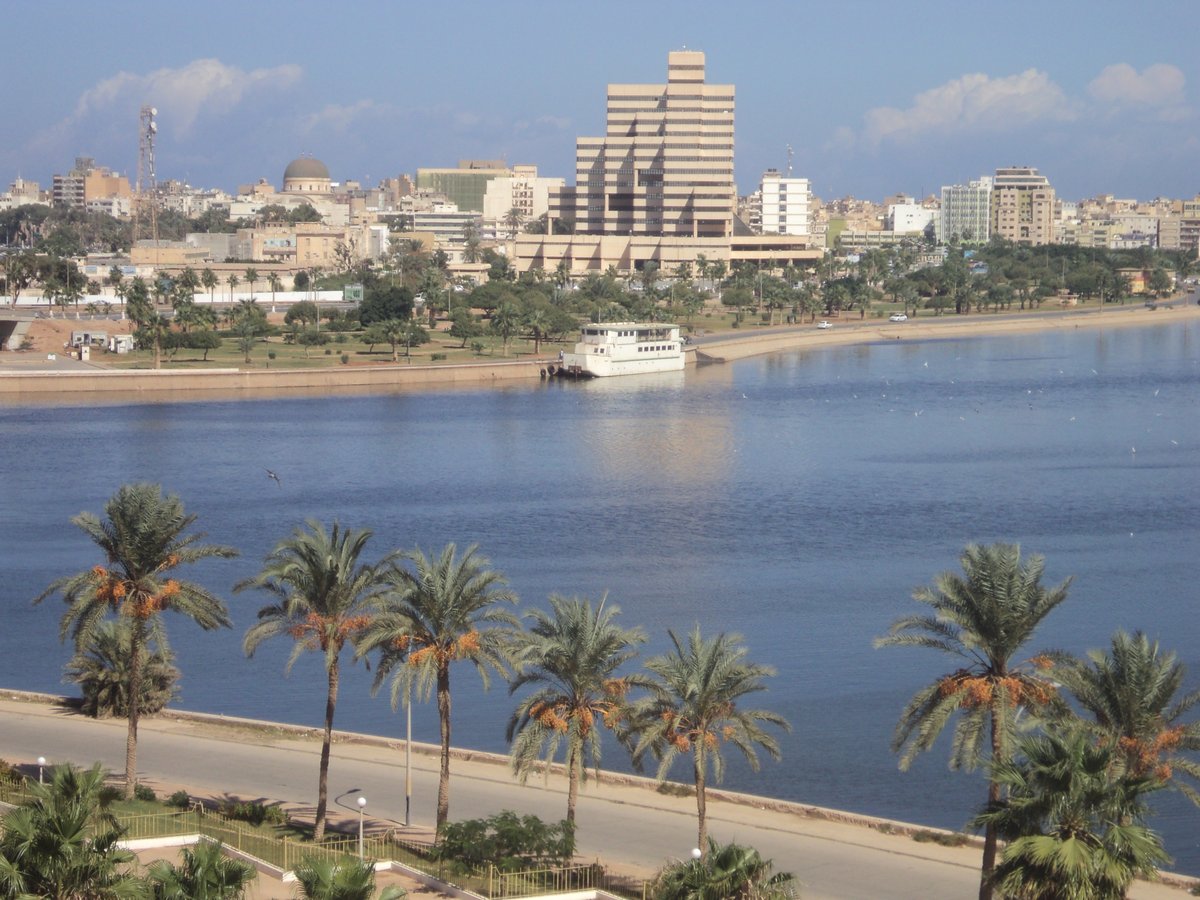
The city gained global notoriety from the 2011 revolution (the uprising against Gaddafi began here), the subsequent civil conflict, and the 2012 attack on the US diplomatic mission. Reconstruction is underway, and resilient locals have rebuilt much of daily life — cafés, markets, and the famous corniche promenade hum with activity. But the scars remain, and the security environment remains genuinely dangerous for foreign visitors.
When it’s safe, what makes Benghazi special:
- Gateway to Cyrene — one of the most spectacular and least-visited Greek/Roman archaeological sites on Earth (UNESCO World Heritage)
- The Jebel Akhdar (Green Mountain) — uniquely verdant highland plateau, unlike anything else in North Africa
- An authentic, un-touristified Mediterranean city where you’ll be the only foreigner
- Italian colonial architecture, Ottoman mosques, and Byzantine ruins coexisting in the same streetscape
- Apollonia — an ancient port whose ruins partly lie underwater after an earthquake shifted the coastline
⏰ Best Time to Visit (When Safe)
| Season | Conditions | Verdict |
|---|---|---|
| Mar–May | 18–25°C, pleasantly warm, minimal rain | ⭐ Best for sightseeing |
| Jun–Aug | 28–35°C, hot, beaches busy with locals | ✅ Good for beach days, hot for ruins |
| Sep–Oct | 22–28°C, sea warm, lighter crowds | ⭐ Excellent |
| Nov–Feb | 10–18°C, some rain, Green Mountain area lush | ✅ Cooler but fine for archaeology |
Pro tip: Spring (April–May) offers ideal temperatures for visiting Cyrene’s ruins, which require significant walking on open hillside terrain. The Jebel Akhdar region gets its lush green colouring after winter rains — best appreciated March–April.
🚗 Getting Around
Entry & Visas The Eastern Libyan government (Benghazi) issues visas completely separately from Tripoli. There is no eVisa system; arrangements must typically be made through a local Libyan contact, sponsor, or specialist tour operator. Budget for specialist travel logistics.
Airport Benina International Airport (BEN), 19km east of the city. Flights primarily to/from Arab countries (Egypt, Tunisia, Turkey, Gulf states). No direct flights from Western Europe; transit through Cairo, Tunis, or Amman is typical.
Within the City
- Private driver/guide: Strongly recommended and effectively essential for foreign visitors. Local English-speaking guides significantly improve both safety and access.
- Shared taxis (Shar-shar): Used by locals; cheap but require Arabic language skills.
- City is walkable in the central corniche and downtown areas on foot — distances between main sites are manageable.
Day Trips A private car with driver is essential for Cyrene (200km east), Apollonia, and the Jebel Akhdar. Arrange through your Benghazi contact or specialist tour operator. Roads between cities are generally in reasonable condition on main highways.
🏛️ Historical Sites & Cultural Experiences
1. Benghazi Corniche (Mediterranean Seafront Promenade) ⭐
The beating heart of the city — a long palm-lined waterfront promenade where families stroll, fishermen cast lines, and the Mediterranean glows gold at sunset. Walking the corniche is the essential Benghazi experience: you feel the city’s resilience, see its everyday life, and understand why Libyans call this one of Africa’s most beautiful seafronts.
- Rating: 4.5/5 on Google
- Age suitability: All ages; flat and easy walking
- Cost: Free
- Time needed: 1–2 hours
- Location: Eastern seafront of the city, from the port south past the lighthouse
- Best time: Late afternoon into sunset — the light on the water is stunning and the promenade fills with local families
- ⚠️ Honest note: Some sections were damaged during the civil war and are in varying states of repair. Evening gatherings of locals are common and generally welcoming of respectful foreign visitors.
- Pro tip: The stretch near Maydan al-Shajara (Tree Square) is the most animated area — the natural starting point for exploring the city on foot.
2. Benghazi Lighthouse (Sidi Khreibish Lighthouse)
The city’s iconic coastal landmark, visible from the entire corniche and a defining feature of Benghazi’s seafront identity. The Ottoman-era lighthouse sits at the tip of the corniche peninsula and has become a symbol of the city. Extremely photogenic — particularly at the golden hour when it’s silhouetted against the Mediterranean.
- Rating: 4.3/5 on Google
- Age suitability: All ages
- Cost: Free (exterior viewing)
- Time needed: 30–45 minutes
- Location: Corniche seafront, northern end near the port
- Pro tip: Best photographed from a boat on the water or from the corniche 200–300m away for the full silhouette. Combine with a corniche walk.
3. Benghazi Archaeological Museum
A regional museum housing artefacts from Cyrenaica’s ancient Greek and Roman heritage: pottery, marble statuary fragments, coins, inscriptions, and finds from local excavations including material from ancient Euesperides/Berenice. Contextualises Benghazi’s ancient history and serves as a good primer before visiting Cyrene.
- Rating: 4.0/5 on Google
- Age suitability: Best for ages 8+; exhibits require some context to appreciate
- Cost: Nominal entry fee (LYD, cash only — verify locally)
- Time needed: 1–2 hours
- Location: City centre
- ⚠️ Honest note: Opening hours are erratic — confirm locally before visiting. Some collections were damaged or displaced during the civil war period; restoration is ongoing.
- Pro tip: If you can arrange a local guide or archaeologist to accompany you, the context they add transforms the visit. Many university archaeology staff are willing to assist serious visitors.
4. Italian Colonial Quarter (Historic Downtown)
One of North Africa’s most intact Italian colonial streetscapes — the Italians occupied Libya from 1911–1943 and left behind a distinctive grid of rationalist and art deco buildings, piazzas, arcaded streets, and public fountains that give central Benghazi an unexpectedly European feel. Many buildings bear bullet scars from the 2011 revolution and subsequent fighting — a haunting palimpsest of history.
- Rating: 4.2/5 on Google (area)
- Age suitability: All ages; interesting for older children and teens who appreciate architecture and history
- Cost: Free to walk
- Time needed: 1–2 hours
- Location: Downtown Benghazi, centred around Omar al-Mukhtar Street
- Pro tip: The Atiq Mosque (Old Mosque) and Benghazi Cathedral (now converted to a mosque) are both worth seeing within this area — two architectural eras in the same street. Omar al-Mukhtar Street is the main artery.
5. Benghazi War Cemetery (Commonwealth War Graves)
A quietly powerful WWII cemetery maintained by the Commonwealth War Graves Commission — honouring Allied soldiers who died during the North African campaign (Libya was the site of some of WWII’s fiercest fighting, including multiple sieges of Tobruk and the El-Alamein campaign). Immaculately maintained against all odds, with graves of British, Australian, New Zealand, South African, and other Commonwealth soldiers.
- Rating: 4.5/5 on TripAdvisor
- Age suitability: All ages; particularly meaningful for ages 10+
- Cost: Free
- Time needed: 30–60 minutes
- Location: Central Benghazi
- Pro tip: The cemetery survives as a result of agreements respected by successive Libyan governments. Its quiet dignity amid a turbulent city is genuinely moving. A good place for older children to understand the human cost of conflict.
6. Atiq Mosque (Omar al-Mukhtar Mosque)
One of Benghazi’s oldest and most historically significant mosques, located on the main Omar al-Mukhtar Street. The mosque features distinctive Islamic architecture and serves as a focal point of the city’s religious and cultural life. Non-Muslim visitors may view the exterior; entry during non-prayer times is sometimes possible with a respectful local guide.
- Rating: 4.4/5 on Google
- Age suitability: All ages (respectful dress required)
- Cost: Free
- Time needed: 20–30 minutes
- Pro tip: The mosque is a good example of how Benghazi integrates Turkish Ottoman architectural elements with local North African style. Named for Omar al-Mukhtar, the Libyan resistance leader executed by the Italians in 1931 — a national hero whose image appears on the Libyan 10-dinar note.
🏖️ Beaches & Waterfront
7. Jiliana Beach
Considered Benghazi’s most famous beach — soft sands, clear Mediterranean water, and a lively atmosphere particularly on weekends when Libyan families fill the shoreline. Popular with local families in summer. The beach has basic facilities and some nearby seafront cafés serving fresh fish.
- Rating: 4.0/5 on Google
- Age suitability: All ages; popular with local families
- Cost: Free access; cafés and facilities nearby
- Time needed: 2–4 hours
- Location: North of the city centre, along the coast
- ⚠️ Honest note: No formal lifeguards or tourist infrastructure. Dress codes are conservative — women should not appear in swimwear on public beaches; family beach culture is significantly more conservative than European norms. Covered swimwear is appropriate for foreign women.
8. Boushlif Beach & Al-Badayen Beach
Two less-crowded alternatives to Jiliana — Boushlif is known for calm waters and golden sands close to the city, while Al-Badayen (west of Benghazi) features wide sandy areas and striking turquoise water, popular with nature lovers seeking more secluded spots.
- Rating: 4.0/5 on Google
- Age suitability: All ages
- Cost: Free
- Time needed: 2–4 hours
- Pro tip: Al-Badayen is less accessible but more scenic — requires a car to reach. Worth the extra effort for more privacy and better water clarity.
🌿 Nature & Outdoors
9. Al-Bosco Park (Benghazi Tourist Park)
The city’s largest public park — established in 1956 and containing a zoo, recreational areas, artificial lakes, and gardens. A genuine green lung in a dense city and a popular destination for Libyan families, especially on Fridays (the weekend). The zoo includes North African wildlife species. The park sustained some damage during the civil conflict but has been partially restored.
- Rating: 4.0/5 on Google
- Age suitability: All ages; best for younger children
- Cost: Nominal entry fee (LYD cash)
- Time needed: 2–3 hours
- Location: Central Benghazi
- Pro tip: Friday mornings are when you’ll see the park at its liveliest — full of Libyan families picnicking, children playing, and a genuine window into everyday Benghazi life. A rare opportunity to interact naturally with local families.
10. Lake 23 July (July 23rd Lake)
A natural lake near Benghazi offering calm surroundings for picnics and an escape from the city’s noise. Popular with local families for evening outings. The lake’s name commemorates a date significant in Libyan history (the Egyptian Revolution of 1952 that eventually influenced Libyan politics).
- Rating: 4.0/5 on Google
- Age suitability: All ages
- Cost: Free
- Time needed: 1–2 hours
- Pro tip: A pleasant spot for a sunset picnic — bring your own food and drinks (alcohol is illegal in Libya). The reflections on the water at dusk are lovely.
🍽️ Food & Local Cuisine
11. Libyan Street Food Experience — Bazeen, Couscous, Sharba
Benghazi’s food scene is almost entirely local — there are no international chains, no tourist restaurants. This authenticity is either the appeal or the challenge depending on your perspective. Key dishes:
-
Bazeen: Libya’s national dish — a dense dough made from barley flour, served with lamb or beef stew and vegetables. Eaten communally by hand. Unlike anything else in North African cuisine.
-
Sharba: A rich spiced tomato soup with lamb and orzo pasta — the Libyan comfort food.
-
Couscous with lamb: Different from Moroccan or Tunisian versions — heavier, more rustic, deeply flavoured.
-
Fresh grilled fish: The corniche seafood restaurants serve the morning’s catch simply grilled — exceptional quality.
-
Libyan tea: Served in small glasses, very sweet, sometimes with mint or peanuts — the social ritual of Libyan hospitality.
-
Cost: Meals at local eateries: approximately LYD 10–25 per person (budget to mid-range)
-
⚠️ Note: Alcohol is completely illegal in Libya. No exceptions. Meals are taken without alcohol; juice, tea, and fresh lemonade are the norm.
-
Pro tip: Accepting tea from locals is a gesture of respect and the single best way to have a genuine human exchange. Never rush a tea invitation.
12. Benghazi Old Market (Suq al-Jareed)
The city’s traditional covered market — selling spices, fabrics, household goods, and local produce. A sensory immersion into everyday Libyan commercial life. Unlike the tourist-oriented souks of Morocco, this is a genuine working market where locals buy daily essentials.
- Rating: 4.2/5 on Google
- Age suitability: All ages; older children find markets fascinating
- Cost: Free to browse; purchases as desired
- Time needed: 1–2 hours
- Pro tip: Saffron, cumin, and coriander here are very fresh and inexpensive. Libyan hand-woven textiles and leather goods are good local buys.
🌍 Day Trips — The Real Reason to Come
Note: All day trips require private transport and, ideally, a trusted local guide. Do not attempt independent road travel in unfamiliar areas of Libya without local knowledge of current conditions.
Day Trip 1: Cyrene (Shahat) ⭐⭐⭐ — Unmissable
~200km east of Benghazi, approximately 2.5–3 hours drive. UNESCO World Heritage Site.
The single most spectacular reason to come to this region. Cyrene was founded as a Greek colony in 631 BC and grew into one of the most important cities in the ancient world — a rival to Athens, home to Eratosthenes (who calculated the Earth’s circumference), and birthplace of Simon of Cyrene who, according to the Gospels, helped carry Jesus’s cross. The ruins UNESCO described as “one of the most impressive ruin complexes in the entire world” sprawl across a dramatic hillside overlooking the Mediterranean with virtually no other tourists.
What you’ll see:
- Sanctuary of Apollo — The founding sanctuary of the city, where the original Greek settlers established worship. Extraordinary state of preservation with standing columns and carved reliefs.
- Temple of Zeus — Larger than the Parthenon in Athens. Even in its partially ruined state, the scale is jaw-dropping.
- The Necropolis — One of the largest ancient cemeteries in the world, carved into cliff faces along the hillside approach road. Hundreds of tomb facades cut directly into the rock.
- The Agora (Forum) — The ancient civic centre with Roman-era additions and a remarkable density of statues, inscriptions, and architectural fragments.
- The Greek Theatre — Carved into the hillside with views down to the sea.
- Sanctuary of Demeter — Recently re-excavated, with important finds still being documented.
A headless statue of Aphrodite found here (the “Venus of Cyrene”) is now in Rome’s Borghese Gallery — one of many treasures extracted during the Italian colonial period.
- Rating: 4.8/5 on Google — one of the Mediterranean world’s truly great archaeological sites
- Age suitability: Best for ages 8+ who enjoy archaeology/history; the scale and state of preservation makes it more accessible than many ruins
- Cost: Entry fee (verify locally — historically very inexpensive, around LYD 5–10)
- Time needed: 4–6 hours minimum to do justice to the site; a full day ideally
- ⚠️ Honest note: There is minimal on-site infrastructure — bring food, water, and sun protection. The site covers a large hillside; it involves significant walking on uneven ancient paving. No official visitor centre comparable to European heritage sites.
- Pro tip: The emptiness of Cyrene is its greatest gift. You walk through a Temple of Zeus larger than the Parthenon with no crowds, no queues, and often no other foreigners in sight. The emotional impact of this — wandering through a Hellenistic city that hasn’t yet been commercialised — is unlike any experience in the Mediterranean world.
Day Trip 2: Apollonia (Susa) ⭐⭐
~220km east of Benghazi (close to Cyrene, ~7km below on the coast)
Apollonia was the ancient harbour town of Cyrene — where goods were shipped to and from the great city above. Two earthquakes in antiquity (365 AD and earlier) caused coastal subsidence, and parts of the ancient city now lie underwater in the clear Mediterranean — visible from the surface on calm days and diveable for those equipped. The above-water ruins include Byzantine churches, a Roman governor’s palace, and the theatre.
- Rating: 4.4/5 on Google
- Age suitability: Ages 8+; older teens who snorkel will find the underwater element unforgettable
- Cost: Nominal entry fee
- Time needed: 2–3 hours (combine with Cyrene for a full archaeological day)
- Pro tip: Combine with Cyrene in a single long day — they’re only 7km apart. The contrast between hillside Cyrene and coastal Apollonia perfectly illustrates how ancient cities integrated their hinterland and maritime trade. Glass-bottomed boats are sometimes available locally to see the submerged ruins without diving equipment.
Day Trip 3: Jebel Akhdar (Green Mountain) ⭐⭐
~180–250km east of Benghazi; the highland plateau behind Cyrene
One of Libya’s most surprising landscapes — a fertile, well-watered plateau at altitude that produces juniper forests, wildflowers, fruit orchards, and a distinctly cooler climate than the coast. The “Green Mountain” is aptly named: after winter rains (February–April), the plateau blooms in a way that is genuinely shocking for a country most people associate with desert. Small Berber villages, ancient carved tombs, and spectacular cliff-edge views over the Mediterranean make this a remarkable half-day extension from Cyrene.
- Rating: 4.5/5 on Google
- Age suitability: Ages 6+ for the scenery; hiking on plateau trails for ages 8+
- Cost: Free (no entrance fees for the natural area); small villages may have basic cafés
- Time needed: 3–5 hours
- Best time: March–April for wildflowers and greenest scenery
- Pro tip: The cliff-edge viewpoints looking north from the plateau rim down to the Mediterranean coast (with Apollonia and Cyrene visible in the landscape below) are among the most dramatic natural viewpoints in all of North Africa. Ask your local guide for the best vantage points — most are unmarked.
💡 Practical Information (When Visiting)
Accommodation
- Benghazi International Hotel — Long-standing hotel with central location and reliable facilities; the standard choice for business visitors and the few foreign tourists
- Ebreaze Hotel — 5-star with outdoor pool, fitness centre, and restaurant; best facilities in the city
- Diar Al-Salam Hotel — More affordable, well-located near main tourist attractions
- ⚠️ Note: Advance booking and confirmation via WhatsApp or phone is strongly recommended — online booking platforms do not reliably reflect availability.
Safety Principles (For Those Who Choose to Visit)
- 🔴 Register with your embassy before entering Libya — the UK, US, and most Western embassies have minimal or no consular presence in Benghazi
- 🔴 Arrange a trusted local contact before you arrive — not negotiable. Everything in Benghazi flows through personal relationships and local knowledge
- 🔴 Do not go off-road — unexploded landmines and munitions are a real hazard across Libya; red and white plastic tape marks danger zones
- 🟡 Keep a low profile — avoid photographing military sites, checkpoints, or official buildings without permission
- 🟡 Carry cash (LYD) — card payments are almost non-existent; ATM availability is unreliable; bring sufficient hard currency
- 🟡 Power cuts are frequent — major hotels have generators; carry a power bank
- 🟡 Mobile data/internet — Libyana and Al-Madar SIM cards work; international roaming is expensive; buying a local SIM is practical
- ✅ Dress conservatively — both men and women; this is a conservative Islamic society; shorts and sleeveless tops are not appropriate outside private spaces
Visas & Entry
- There is no tourist visa process for Eastern Libya (Benghazi). Entry is arranged through a local sponsor or specialist tour operator.
- A military clearance/permit is required, typically arranged through an approved local contact at a cost of approximately USD 500 (as of 2024).
- Specialist Libya tour operators (based in Malta, Tunisia, or the UK) can arrange complete packages including visas, local guides, and itineraries.
- Recommended approach: Contact a specialist operator such as Temehu Tours, Tours Libya, or others experienced with eastern Libya well in advance of your intended travel.
Currency & Costs
- Currency: Libyan Dinar (LYD). Cash economy; bring USD or EUR to exchange locally.
- Exchange rates: Parallel market rates often differ significantly from official rates — arrange exchange through trusted local contacts.
- Daily budget (backpacker): Approximately USD 30–50/day for accommodation, food, and local transport
- Day trip transport: Hiring a car with driver costs approximately USD 80–150/day for day trips to Cyrene
Language
Arabic (Libyan dialect) is the language of daily life. English is spoken by some younger educated Libyans, university staff, and those in the tourism sector, but is not widely available. A basic Arabic phrasebook and Google Translate (download offline Arabic pack) are valuable tools.
📋 Quick Reference: What Benghazi Offers (When Safe)
| Experience | Type | Cost | Unmissable? |
|---|---|---|---|
| Corniche promenade | Atmosphere | Free | ✅ Yes |
| Cyrene ruins (day trip) | UNESCO archaeology | ~USD 5 entry | ⭐ Unmissable |
| Apollonia underwater ruins | Ancient harbour | ~USD 5 | ✅ Yes |
| Jebel Akhdar plateau | Nature | Free | ✅ Yes |
| Benghazi Lighthouse | Landmark | Free | ✅ Quick stop |
| Archaeological Museum | History | Nominal | ✅ Yes |
| Italian Colonial Quarter walk | Architecture | Free | ✅ Yes |
| Commonwealth War Cemetery | WWII memorial | Free | ✅ Yes |
| Old Market (Suq) | Culture/Shopping | Free | ✅ Yes |
| Al-Bosco Park | Family outdoors | Nominal | Optional |
| Jiliana Beach | Mediterranean swim | Free | ✅ Yes |
| Libyan home cooking | Food experience | USD 5–15 | ⭐ Don’t miss |
✈️ Getting to Benghazi
Airport: Benina International Airport (BEN), 19km east of the city. Taxi to city: approximately LYD 30–50 (arrange in advance through your local contact).
Main connections: Cairo (Egypt Air, Libyan airlines), Istanbul (Turkish carriers), Tunis, Amman, Dubai. No direct flights from Western Europe.
Transit options: Most Western visitors route via Cairo (most options), Tunis, or Istanbul.
🌟 The Honest Bottom Line
Benghazi is genuinely extraordinary — not despite its difficulty, but partly because of it. Cyrene alone ranks among the Mediterranean’s top five archaeological sites and sees almost no visitors. The Jebel Akhdar is one of North Africa’s most beautiful and unknown landscapes. The city itself, with its layered history and resilient people, offers a human encounter with modern Libya that very few outsiders experience.
For families: Not yet. The security environment is too unpredictable, the infrastructure too unreliable, and the risks (particularly kidnapping and unexploded ordnance) too serious to recommend for children.
For adventurous adult travellers who have thoroughly researched current conditions, engaged a trusted local contact, registered with their embassy, and accepted the risks: Benghazi and its surroundings offer experiences of genuine rarity — ancient ruins without crowds, human warmth in unexpected places, and landscapes most of the world has never seen.
Check conditions annually. Libya is slowly, unevenly, rebuilding. The day this guide can drop its red warning banner will be a day worth celebrating.
Guide compiled February 2026. Security conditions change — always consult current government travel advisories before any plans. UK FCDO: gov.uk/foreign-travel-advice/libya | US State Dept: travel.state.gov