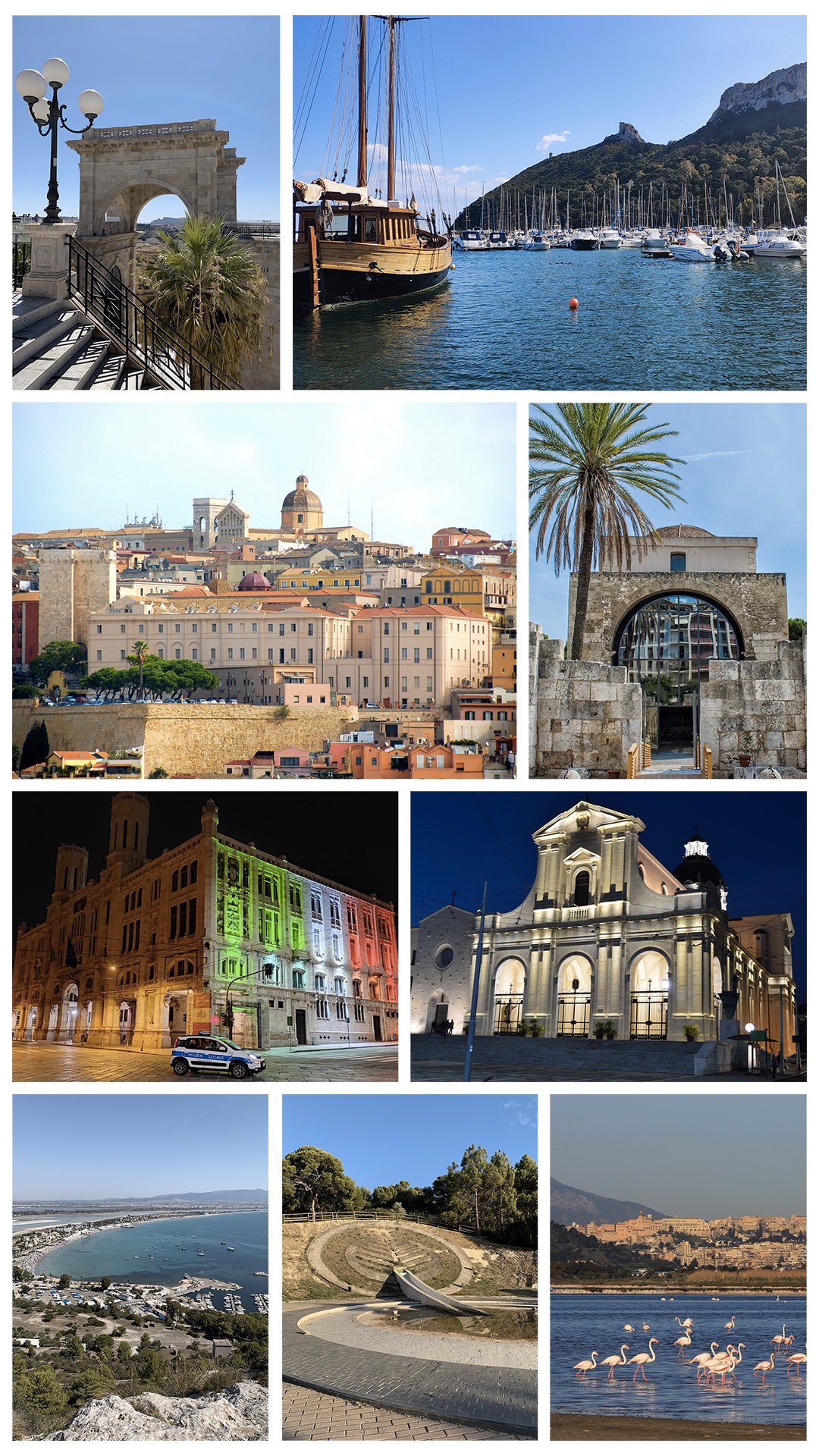
🇮🇹 Cagliari — Family Travel Guide
Country: Italy (Sardinia — Autonomous Region) Last Updated: February 2026 Airport: Cagliari Elmas International Airport (CAG)
Overview
Cagliari is Sardinia’s vibrant capital — a city that utterly defies expectations. Perched above a spectacular natural harbour, it layers 3,000 years of history — Phoenician, Punic, Roman, Pisan, Spanish, and Piedmontese — over a city that still feels authentically Italian rather than tourist-polished. For families, Cagliari is a rare combination: a proper living city with a UNESCO-worthy hilltop medieval quarter, an extraordinary national museum, pink flamingo wetlands within city limits, and one of the Mediterranean’s great urban beaches stretching 8km from the city centre.
What makes Cagliari unique is its Nuragic civilisation context — Sardinia is the only place in the world where nuraghi (Bronze Age stone towers) exist, and Cagliari is the gateway to understanding this mysterious, utterly singular culture that has no parallel anywhere on Earth. Children who visit leave with a story they can tell for years.
Why families love it:
- Extraordinary, uniquely Sardinian history — Nuragic civilisation exists nowhere else on Earth
- Pink flamingos in a nature park 15 minutes from the city centre
- Poetto Beach — 8km of sandy urban beach with beach bars, cafes, and calm water
- Compact, walkable historic centre with lots of visual drama
- Excellent food culture at very reasonable prices
- Warm Mediterranean climate: beach-ready from May through October
- Much less crowded and far cheaper than Sardinia’s north coast (Costa Smeralda)
⏰ Best Time to Visit with Kids
| Season | Conditions | Verdict |
|---|---|---|
| Apr–Jun | 20–28°C, sea warming, low crowds | ⭐ Best for families |
| Jul–Aug | 32–36°C, peak season, busy beaches | 🔴 Hot — doable but manage expectations |
| Sep–Oct | 24–30°C, sea at its warmest, quieter | ⭐ Excellent |
| Nov–Mar | 12–18°C, some rain, heritage sites quiet | ✅ Good for city & history, not beach |
Pro tip: Cagliari’s summer is hot but the reliable sea breeze (locally called the maestrale) makes it more bearable than many Mediterranean destinations. Mornings and evenings in July–August are perfectly comfortable; only the 12–4pm window is punishing. Plan accordingly.
🚗 Getting Around
Car Rental (Strongly Recommended for Day Trips) A car is essential if you want to explore the southern Sardinian coast (Chia, Villasimius, Su Nuraxi). The city itself is walkable, but day trips require wheels. Rent from the airport — expect €30–60/day for a small car. Roads are good; driving is straightforward. Parking in the Castello district can be tricky — use the Piazza d’Armi car park.
City Bus (CTM Cagliari) Cagliari has a reliable urban bus network. Key for families:
- Bus PF/PQ line to Poetto Beach — runs regularly from Piazza Matteotti (city centre)
- Day tickets: ~€2.50 (valid 90 min); daily unlimited ~€4.50
- Under-5s: Travel free
- App: CTM Cagliari for real-time tracking
- Website: ctmcagliari.it
Light Rail (Metrocagliari) A tram/light rail system connects the city. Useful for getting to the university area and some suburbs. Limited network but clean and cheap (~€1.30 per journey).
Taxis & Rideshare ItTaxi app works in Cagliari. Taxis are metered and reasonable — city centre to airport is ~€25. No Uber/Bolt in Sardinia at time of writing.
Ferry Cagliari’s port connects to mainland Italy (Civitavecchia/Rome, Naples, Palermo) via Tirrenia and GNV. Useful if coming from mainland.
🏛️ Museums & Learning
1. National Archaeological Museum of Cagliari (MANCA) ⭐
This is one of the most remarkable museums in the whole Mediterranean — not because of its presentation (it’s fairly traditional), but because of what’s in it: the Bronzetti, a collection of Nuragic bronze figurines that are truly unique worldwide. These small, expressive bronze votive statues — warriors, archers, wrestlers, boxing champions, animals, ships — were made by the Nuragic people between 1600 and 700 BC and exist nowhere else on Earth. The sheer quantity and variety is staggering. There’s also the Stele di Nora, the oldest written inscription ever found in the western Mediterranean (8th century BC). Kids who like “why did people make this?” questions will be captivated.
The museum also houses extraordinary Phoenician gold jewellery, Roman mosaics, and a superb collection of pre-Nuragic Neolithic figurines.
- Rating: 4.5/5 on Google; consistently cited as one of Sardinia’s must-see institutions
- Age suitability: Best for ages 7+; younger children enjoy the bronzetti by sheer numbers and strangeness
- Cost: Adult €8 / Ages 18–25 €4 / Under-18 FREE. Joint ticket with National Gallery €10. First Sunday of every month: FREE entry for everyone.
- Time needed: 1.5–3 hours
- Location: Piazza Arsenale, Citadella dei Musei, Castello district, Cagliari
- Open: Tue–Sun 9am–8pm; closed Mondays
- ⚠️ Honest note: The museum layout is somewhat old-fashioned — wall labels are informative but dense. Children benefit enormously from a brief intro beforehand: look up “Nuragic bronzetti” with them before visiting. No dedicated children’s activities.
- Pro tip: Visit on the first Sunday of the month for free entry. The Citadella dei Musei complex also houses the National Gallery (paintings) and a small museum of Siamese art — combine for a full cultural morning.
- Website: museoarcheologicocagliari.beniculturali.it
2. Underground Cagliari Tour (Crypts & Roman Streets)
Beneath Cagliari’s streets lies a layered underworld spanning 2,000 years — and it’s one of the city’s most genuinely exciting family experiences. The 2-hour guided underground tour takes you through:
-
The Crypt of Santa Restituta — a 5th-century underground chamber carved from rock, once a pagan place of worship, later a Christian sanctuary, later still used as a World War II air raid shelter. Ancient frescoes survive on the walls.
-
The Archaeological Area of Sant’Eulalia — discovered by accident in the 1990s during church renovation works, this underground space reveals a Roman paved road with original stone kerbs and drainage channels, Roman wells, and Punic-era artifacts. You’re literally walking over 2,000-year-old streets.
-
The Salesian School underground — another layer of Cagliari’s history hidden beneath a modern building.
-
Rating: 4.5/5 on TripAdvisor and GetYourGuide — consistently described as a highlight of Cagliari
-
Age suitability: All ages welcome; best for ages 6+; children love the “secret tunnel” atmosphere
-
Cost: Guided tours from ~€20/adult; children (under 12) often €10–12; check Viator/Civitatis/GetYourGuide for current pricing. Entry to the Sant’Eulalia archaeological area alone: ~€5.
-
Time needed: 1.5–2 hours (guided tour)
-
Location: Starts in the Stampace and Marina districts (Piazza Yenne area) — meet points vary by operator
-
⚠️ Honest note: The crypt of Santa Restituta can be slightly claustrophobic for very young children. Some sections are dimly lit. Guided tours are the only way to access all three sites together.
-
Pro tip: Book online via GetYourGuide or Viator — tours operate morning (10am) and afternoon (4pm) slots and fill up in peak season. This is a perfect midday activity when the summer heat is intense.
3. Museo del Tesoro di Sant’Eulalia (MUTE)
The treasury museum attached to the Sant’Eulalia church in the Marina district, with access to the underground Roman archaeological area. A smaller, self-guided alternative to the full underground tour — includes display cases of medieval church treasures, silverware, vestments, and jewellery alongside the genuine Roman street below.
- Rating: 4.2/5 on Google
- Age suitability: All ages; especially good for ages 8+
- Cost: ~€5 adult; children discounts apply — check at the door
- Time needed: 45 min–1.5 hours
- Location: Via Crispi, Marina district
- Open: Mon–Sat 10am–1pm and 3:30–7pm; Sunday 10am–1pm (verify locally as hours change seasonally)
- Pro tip: Combine this with the Underground Tour above for a full underground half-day.
🌿 Nature & Outdoors
4. Parco Naturale Molentargius-Saline (Flamingo Park) ⭐
A wetlands nature reserve sitting between Cagliari’s Poetto Beach and the suburb of Quartu Sant’Elena — and one of the most extraordinary urban wildlife experiences in the Mediterranean. Pink flamingos have made this their year-round home, and you can get remarkably close to large flocks (hundreds, sometimes thousands of birds) from the walking paths and bike trails around the lagoons. The park is also home to 250+ bird species — herons, egrets, coots, black-winged stilts, and more.
An electric minibus tour crosses the historic salt pans and reaches the flamingo nesting areas. Alternatively, hire bikes at the park entrance and ride the flat paths alongside the lagoons at your own pace.
- Rating: 4.5/5 on TripAdvisor — one of Cagliari’s highest-rated attractions
- Age suitability: All ages; especially magical for children who’ve never seen flamingos in the wild
- Cost: Park walking/cycling paths: FREE entry. Guided minibus tour: check cittadelsale.com for current pricing (approx €10–15/adult). Bike hire: check on-site.
- Time needed: 1–3 hours
- Location: Via La Palma, Cagliari (adjacent to the eastern end of Poetto Beach)
- Open: Park paths open daily from dawn to dusk; visitor centre and guided tours have set hours — check parcomolentargius.it
- ⚠️ Honest note: Flamingos are most numerous in autumn–winter (they nest here); summer has fewer but they’re present year-round. Bring binoculars if you have them. Paths are flat and excellent for buggies/strollers.
- Pro tip: Combine with Poetto Beach for a perfect day: morning at the flamingo park on bikes, afternoon swimming at Poetto. The two are directly adjacent. The park information point is at Sali Scelti Palace on Via La Palma — pick up a map there.
- Website: parcomolentargius.it / guided tours at cittadelsale.com
5. Monte Urpinu Park
Cagliari’s green hilltop park sits above the city centre — free to enter, filled with walking paths through Mediterranean scrubland and pine trees, and home to free-roaming peacocks that absolutely delight young children. The summit offers panoramic views over the city, the Gulf of Cagliari, and on clear days you can see the flamingo lagoons glinting pink in the distance. A small deer enclosure and various bird species add to the wildlife interest.
- Rating: 4.3/5 on Google
- Age suitability: All ages; especially good for 2–10 (peacocks + walking)
- Cost: FREE
- Time needed: 45 min–2 hours
- Location: Via Monte Urpino, Cagliari (10 min by bus from city centre)
- Open: Daily, dawn to dusk
- Pro tip: Peacocks roam freely on the paths — arrive in the morning when they’re most active. The hilltop belvedere is one of the best viewpoints in the city.
🏖️ Beaches & Water Activities
6. Poetto Beach
Cagliari’s main beach stretches for 8 kilometres from the Sella del Diavolo headland (Devil’s Saddle — a dramatic rocky promontory) east towards Quartu Sant’Elena. It’s an urban beach in the best possible sense — sand is fine and white, water is clear and calm, and the beach is backed by a long promenade of beach clubs (stabilimenti balneari) and bars that offer sun loungers, parasols, showers, and changing facilities. A pedestrian and cycle path runs the full length. The Molentargius flamingo park is immediately behind the eastern sections.
- Rating: 4.4/5 on TripAdvisor
- Age suitability: All ages; excellent for families — the water shelves gently, making it safe for young children
- Cost: Beach entry free; sun lounger + parasol from beach clubs ~€10–20/day per person; many sections of free public beach also available
- Time needed: 2–6 hours (full beach day)
- Location: 5km from central Cagliari — bus PF/PQ from Piazza Matteotti (15 min)
- ⚠️ Honest note: Poetto is genuinely popular with Cagliari locals — gets very busy July–August. Some sections of the beach clubs are better maintained than others. Facilities vary: the central and western sections near the Sella del Diavolo tend to be better.
- Pro tip: Head to the western end (near the Sella del Diavolo headland) for cleaner, calmer water and more dramatic scenery. The headland itself has a short hiking trail to the top — stunning views. Bikes along the Poetto lungomare are a brilliant way to explore the full length.
7. Sella del Diavolo (Devil’s Saddle) Headland Walk
The dramatic rocky headland at the western end of Poetto Beach is one of Cagliari’s most rewarding short walks — a protected nature reserve with Mediterranean scrub, wildflowers (spectacular in spring), and jaw-dropping views over the Gulf of Cagliari on one side and the open sea on the other. The trail to the top is 45 minutes return and suitable for older, confident child walkers.
- Rating: 4.7/5 on Google — consistently described as a highlight
- Age suitability: Ages 7+ for the walk; younger children can enjoy the base area near the beach
- Cost: FREE
- Time needed: 1–2 hours
- Location: Western end of Poetto, accessible from the beach or the road above
- ⚠️ Honest note: Path is rocky and uneven — proper footwear needed. Very exposed — sun hat and water essential. Not suitable for strollers.
- Pro tip: Walk up at sunrise or late afternoon for extraordinary light. The views from the top looking over the city and the lagoons behind Poetto are among the best in southern Sardinia.
🏰 Historical Sites & City Exploring
8. Castello District & Bastione di Saint Remy
Cagliari’s medieval hilltop quarter — enclosed by ancient city walls and accessible via the spectacular Bastione di Saint Remy, a late-19th century terrace built over the old Spanish bastions. The monumental staircase rising from Piazza Costituzione leads to a wide panoramic terrace with sweeping views over the lower city, port, and Gulf of Cagliari. The Castello neighbourhood above is a labyrinth of narrow medieval lanes, baroque churches, palazzi, and artisan workshops — still authentically lived-in rather than purely touristic.
Key stops in Castello:
-
Bastione di Saint Remy terrace — stunning views; free to climb
-
Cagliari Cathedral (Cattedrale di Santa Maria) — gilded baroque interior with Romanesque pulpit panels; free entry
-
Torre dell’Elefante & Torre di San Pancrazio — 14th-century Pisan defence towers still standing; you can climb Torre di San Pancrazio for more views (small entry fee)
-
Citadella dei Musei — the museum complex including the National Archaeological Museum
-
Rating: 4.6/5 on Google (Castello district overall)
-
Age suitability: All ages; best for ages 5+ who can manage walking on cobblestones
-
Cost: Free to walk; Torre di San Pancrazio ~€3; museums charged separately
-
Time needed: 2–4 hours
-
Location: Castello hill, central Cagliari — accessible by lift (ascensore) from Piazza Yenne for €0.70, or by the Bastione staircase
-
Pro tip: Take the glass lift from Piazza Yenne for the easy route up; kids love the novelty of riding a city lift to a medieval quarter. In the evening, Castello fills with locals sitting on the bastion walls watching the sunset — a beautiful local ritual to join.
9. Nora Archaeological Site
Just 40 minutes south of Cagliari (near the town of Pula) lies one of Sardinia’s most rewarding archaeological sites — the ancient city of Nora, founded by Phoenicians in the 8th century BC, then expanded by the Romans into a substantial city with temples, baths, a theatre, and mosaic floors. Unlike many ancient sites, Nora sits dramatically on a peninsula with the sea on three sides — giving it a spectacular setting. Walking the site, you pass a Roman theatre (still used for summer performances), well-preserved mosaic floors, the remains of Punic temples, and Roman thermal baths.
The visitor centre also displays the Stele di Nora replica (the original is in Cagliari’s archaeological museum) — the oldest written inscription from the western Mediterranean.
- Rating: 4.5/5 on TripAdvisor
- Age suitability: Ages 6+; very young children can visit but the terrain is uneven
- Cost: ~€7.50 adult / ~€4.50 children 6–14 / Under-6 free (verify current prices on-site); guided tours available for ~€10/person
- Time needed: 1.5–3 hours
- Location: Pula, 40km south of Cagliari — 40 min drive; no practical public transport
- Open: Daily; hours vary by season (typically 9am–7pm summer) — verify at norasardinia.com
- ⚠️ Honest note: Very exposed site — sun, heat, and uneven terrain. Bring hats, water, and sunscreen. The beach adjacent to the site (Nora Beach) is lovely — combine a morning at Nora with an afternoon swim.
- Pro tip: The beach immediately next to the site (Spiaggia di Nora) is gorgeous and calm — combine archaeology with a beach afternoon for a perfect southern day trip.
🌟 Unique Experiences (Only in Sardinia)
10. Encounter Nuragic Civilisation — Su Nuraxi di Barumini ⭐
(Day Trip — 1 hour from Cagliari)
This is the one experience you cannot get anywhere else on Earth. The Nuragic civilisation built thousands of stone towers (nuraghi) across Sardinia between 1800 and 700 BC — and Su Nuraxi di Barumini is the finest and most extensive example, a UNESCO World Heritage Site. It’s a 3,500-year-old stone fortress complex of extraordinary sophistication — a central tower 18 metres high surrounded by a village of round stone huts and defensive towers, all built without mortar using dry-stone techniques.
The mandatory guided tour (included in admission) walks you through the complex, climbs inside the towers, and explains the mystery at the heart of the Nuragic civilisation: we still don’t fully understand who these people were or why their culture disappeared. That mystery is catnip for curious kids.
- Rating: 4.7/5 on TripAdvisor; UNESCO listed
- Age suitability: All ages; older children (8+) get the most from the guided explanation
- Cost: ~€15 adult / €10 children 6–14 / Under-6 free (verify at fondazionebarumini.it — prices subject to change); guided tours run throughout the day
- Time needed: 1.5–2.5 hours at the site; full day trip with travel from Cagliari
- Location: Barumini, 60km north of Cagliari — 1 hour drive; tours depart from Cagliari via organised operators (Viator, Civitatis, GetYourGuide from ~€35–50/person including transport)
- ⚠️ Honest note: Guided tour is mandatory and in Italian (English available with advance booking or at set times). The site is outdoors and exposed — no shade. Very hot in high summer midday. Self-drive and book directly saves money vs organised tours.
- Pro tip: Drive yourself and book the English guided tour slot in advance at fondazionebarumini.it. Combine with the Giara di Gesturi plateau (20 min from Barumini) where you can spot the Giara horses — a tiny wild pony found only on this one plateau in the world. Spot both unique Sardinian species in one day.
- Website: fondazionebarumini.it
🎭 Entertainment & Activities
11. Poetto Beach Watersports
Cagliari’s long beach is lined with watersports rental stands throughout summer, offering:
-
Kayak hire — paddle along the coast towards the Sella del Diavolo headland
-
Stand-up paddleboard (SUP) hire — calm, flat water ideal for beginners
-
Pedalo hire — perfect for younger children
-
Windsurfing lessons — the maestrale wind makes Poetto a proper windsurfing spot
-
Snorkelling gear hire — the rocky areas near Sella del Diavolo have interesting marine life
-
Age suitability: Kayak/pedalo from age 4+; SUP from age 8+; windsurfing from age 10+
-
Cost: Kayak hire from ~€10/hour; SUP from ~€15/hour; pedalo ~€10/30 min; lessons from ~€30
-
Location: Various stands along Poetto beach; central and western sections have most options
12. Sunset Aperitivo on the Bastione di Saint Remy
Not a ticketed activity — but one of the genuinely unmissable Cagliari experiences for families. Every evening in warm weather, Cagliari residents gather on the terraces and steps of the Bastione di Saint Remy with drinks, watching the sun set over the city and port. Bars nearby serve spritz and chinotto (for kids), and the atmosphere is gentle and utterly Italian. Young children run around on the terrace while adults watch the light shift over the rooftops. It costs nothing to join.
- Rating: The ritual, not the place — priceless
- Age suitability: All ages
- Cost: Free; drinks from nearby bars ~€3–7
- Time needed: 1 hour
- Location: Bastione di Saint Remy, Piazza Costituzione, Castello district
- Pro tip: Arrive 30–45 minutes before sunset to get a spot on the terrace. The light at golden hour over Cagliari is extraordinary.
🏄 Day Trips
Day Trip 1: Chia & Su Giudeu Beach ⭐
(50km southwest of Cagliari — 50 min drive)
The stretch of coast around Chia in southwest Sardinia is consistently described as some of the most beautiful beach scenery in the Mediterranean — and it lives up to the hype. The star attraction is Spiaggia di Su Giudeu: fine white sand backed by 20-metre dunes dotted with ancient juniper trees, crystal-clear turquoise water, and views of a small Aragonese tower on a nearby headland. The lagoon at the back of the beach often has flamingos visible. The water is shallow, calm, and warm — perfect for families.
Nearby Spiaggia di Tuerredda is smaller but even more dramatic — a crescent of white sand with electric-blue water, ranked among Italy’s most beautiful beaches. Both are accessed via a coastal road that winds through dramatic Sardinian maquis.
- Rating: 4.8/5 on Google (Su Giudeu); 4.9/5 (Tuerredda) — consistently ranked among Italy’s finest
- Age suitability: All ages; shallow water ideal for young children
- Cost: Free beach access; sun lounger hire available; small parking fee in peak season (~€5/day)
- Time needed: Full day
- Getting there: Drive is the only practical option — 50 min from Cagliari. Parking available near the beach access points. Bus #129 from Cagliari technically reaches Chia but is very infrequent.
- ⚠️ Honest note: Very crowded July–August — arrive by 9am to get beach space. The winding coastal road in Chia is beautiful but narrow in places — drive carefully.
- Pro tip: Pack a picnic. The road from Cagliari towards Chia passes the Stagno di Santa Gilla lagoon — if you see a pink haze on the water, pull over: that’s thousands of flamingos. Worth a 5-minute stop.
Day Trip 2: Villasimius & Spiaggia di Simius
(50km east of Cagliari — 1 hour drive)
The resort town of Villasimius on Sardinia’s southeast coast is one of the island’s most popular family beach destinations — and for good reason. Spiaggia del Simius (also called Campus beach) is a long, sheltered arc of fine sand with calm, shallow turquoise water, reliable facilities, and a beach club that families love. The surrounding coast has several more beaches reachable by boat or short walk.
Villasimius also has an interesting Marine Protected Area offshore — boat trips from the harbour visit the underwater sand bars, sea grass meadows, and encounter sea turtles and various ray species. A glass-bottom boat trip is ideal for children who can’t yet snorkel.
- Rating: 4.6/5 on Google (Simius beach); Marine Park highly rated
- Age suitability: All ages
- Cost: Beach free; sun lounger hire ~€15–25/day at beach clubs; glass-bottom boat trip from ~€25/adult, €15/child
- Time needed: Full day
- Getting there: 1 hour drive from Cagliari; some bus services run in summer (check Arst.sardegna.it) but car is easier with children and beach gear
Day Trip 3: Su Nuraxi di Barumini + Giara Horses
(60km north of Cagliari — 1 hour drive) See entry #10 above for full details
The UNESCO-listed Bronze Age fortress of Su Nuraxi combined with the Giara plateau (home to the world’s only Giara wild ponies) makes for one of the most unusual and memorable day trips in all of Italy. Neither the nuraghi nor the Giara horses exist anywhere else on the planet — a genuinely extraordinary claim that holds up completely.
🍽️ Family-Friendly Food Experiences
13. Sardinian Street Food: Culurgiones & Pane Carasau
Sardinia has its own utterly distinct food culture — and Cagliari is the best place to encounter it.
Culurgiones — hand-crimped pasta parcels filled with potato, pecorino cheese, and mint (the filling and braiding pattern vary by village — they’re like edible postcards). Kids love the shape; most adults love the taste. Found in any proper Sardinian restaurant.
Pane Carasau — paper-thin, crispy flatbread, baked twice (hence its other name, carta di musica / music paper). Often served with olive oil, honey, or cheese. Universally adored by children as a crunchy snack.
Seada/Sebada — deep-fried pastry filled with fresh pecorino cheese, drizzled with honey. Arguably the world’s greatest dessert compromise between cheese and sweet — kids who try it tend to demand seconds.
- Where to try: Any traditional Sardinian restaurant (trattoria sarda); markets; the San Benedetto Market (see below)
- Cost: Culurgiones main course ~€12–16; pane carasau as a snack/side ~€3–5; seada dessert ~€6–8
14. Mercato di San Benedetto
Cagliari’s spectacular covered food market — the largest in Italy per floor space and a genuine sensory experience. Two floors of extraordinary produce: the upper floor is fish (swordfish, tuna, sea urchins, live shellfish), the lower floor is meat, cheese, fresh pasta, vegetables, fruit, and Sardinian specialities. Walking through with children is an adventure in itself — the sheer volume and variety of seafood is jaw-dropping. This is where local families shop.
- Rating: 4.5/5 on Google
- Age suitability: All ages; best for curious children 5+
- Cost: Free to walk; produce sold by weight
- Time needed: 30 min–1.5 hours (depending on shopping appetite)
- Location: Via Cocco Ortu, Cagliari
- Open: Mon–Sat morning only (typically 7am–1:30pm); closed Sunday
- Pro tip: Go for the experience even if you’re not cooking — the fish floor is extraordinary. Best on weekday mornings.
15. Restaurant: Il Fantasma (Trattoria da Serafino) (local favourite)
Traditional Sardinian home cooking in an unpretentious setting — the kind of restaurant locals eat at. Culurgiones, malloreddus (Sardinian gnocchi with meat sauce), suckling pig, spit-roasted lamb, and fresh fish according to what arrived that morning. High chairs available; genuinely welcoming to families.
- Rating: 4.5/5 on Google; recommended by multiple Sardinia food specialists
- Cost: Mains €12–22; children’s portions or simple pasta dishes available
- Location: Marina district, Cagliari (central)
- Pro tip: Arrive at 12:30pm for lunch — Sardinian restaurants fill quickly with locals and the food is freshest at opening. Avoid tourist-facing restaurants on Piazza Yenne; the streets one block back have the real places.
☔ Rainy Day / Midday Heat Activities
16. Aquarium of Cagliari (Acquario di Cagliari)
A small but well-maintained aquarium in the Marina district featuring Mediterranean fish species, touch tanks, and a small shark exhibit. Not world-class in scale, but a solid 2-hour rainy day or midday heat option, especially for children under 10.
- Rating: 4.0/5 on Google
- Age suitability: All ages; best for 2–10
- Cost: ~€12 adult / ~€8 child — verify at acquario.cagliari.it
- Time needed: 1.5–2 hours
- Location: Via dei Calafati, Marina district
17. Cagliari Cathedral Crypt & Archaeological Area
Below the cathedral in Castello lies a crypt housing the remains of Christian martyrs in dramatically decorated niches — an atmospheric and unique space that older children find genuinely eerie and interesting. Access is via the cathedral itself (free entry).
- Rating: 4.3/5 on Google
- Age suitability: Ages 7+ for appreciation; all ages can visit
- Cost: Free (donation appreciated)
- Time needed: 30–45 min
- Location: Piazza Palazzo, Castello district
💡 Practical Tips for Families
Best Areas to Stay with Kids
| Area | Why | Best for |
|---|---|---|
| Marina / Stampace | Historic centre; walking distance to Castello, restaurants, transport | Families wanting city experience |
| Poetto Beach area | Right on the beach; quieter; bike-friendly; near flamingo park | Beach holiday focus |
| Villanova | Residential neighbourhood; authentic; good restaurants; quieter | Families wanting local feel |
💡 Recommendation: Stay in the Marina or Stampace districts for easy access to the historic centre on foot, and rent a car for day trips. Families prioritising beach time should consider Poetto.
Family-Friendly Restaurant Tips
- I Menhirs (near Cagliari): Exceptional Sardinian cuisine in a rustic setting — highly rated for families
- Lo Scoglio: Harbourside seafood with beautiful views; excellent fresh fish
- La Stella Marina di Montecristo: Reliable seafood in the Marina district; family-friendly atmosphere
- Da Serafino/traditional trattorias: Look for “cucina sarda” signs in the back streets of Marina and Stampace — the most authentic meals at the best prices
- Most Sardinian restaurants are genuinely welcoming to children; the culture is very family-oriented. High chairs (seggioloni) are usually available on request.
- Lunch is the main meal in Sardinia — many of the best restaurants only do a proper lunch service. Dinner is lighter and later (8:30pm+).
Safety Notes
- 🟢 Cagliari is very safe — low crime, relaxed atmosphere, child-friendly culture
- ⚠️ Beach safety: Poetto is generally calm but always supervised children in the water. The open sea west of the Sella del Diavolo headland can have stronger currents — stick to the main Poetto beach for swimming.
- ☀️ Sun intensity: Mediterranean sun is strong — factor 50 on fair children, hats compulsory. UV index 8–10 in July–August.
- 🏛️ Castello cobblestones: The Castello district streets are uneven — strollers/prams can be challenging; baby carriers recommended for very young children.
- 🚗 Driving in Sardinia: Roads are good and traffic is relatively light outside Cagliari city centre. City centre parking is limited — use park-and-ride options and walk or bus into the centre.
- 🌡️ Heat management: July–August midday temperatures reach 34°C+ — plan outdoor activities for mornings (before 11am) and late afternoons (after 4pm). Use museums, aquarium, and underground tours for the midday heat window.
Local Culture Families Should Know
- Children are adored in Italian/Sardinian culture — you will be welcomed warmly everywhere with babies and young children, including in restaurants
- Passeggiata: The evening stroll is a Cagliari institution — join local families on the Via Roma and Bastione di Saint Remy around 6–8pm for the city’s daily social hour
- Siesta: Many shops and some smaller attractions close 1–4pm — plan accordingly
- Nuragic pride: Sardinians are intensely proud of their unique heritage — asking locals about the nuraghi or bronzetti will start genuinely enthusiastic conversations
- Language: Italian is the primary language; English is spoken at major tourist sites but less so in everyday shops — a few Italian phrases go a long way and are warmly received
- Tipping: Not customary in the same way as the UK/US — rounding up or leaving €2–3 on a restaurant table is appreciated but not expected
💰 Money-Saving Tips
Free Attractions Worth Knowing
- Molentargius flamingo park walking paths — completely free
- Poetto beach access — free (only pay if using beach club facilities)
- Monte Urpino park with free-roaming peacocks — free
- Bastione di Saint Remy terrace — free to climb
- Castello district walking and exploring — free
- Cagliari Cathedral — free entry
- San Benedetto market — free to walk through
National Archaeological Museum Free Days First Sunday of every month — free entry for everyone. A family of four saves €32 on the regular admission.
Drive Yourself Organised day tours to Su Nuraxi and beaches include significant markups. Renting a car and driving yourself costs less for families of 3+, and gives you flexibility on timing and stops.
Eat Like a Local Set lunch menus (menù del giorno) in local trattorias: €10–14/person including a pasta course, main, water, and sometimes wine. Significantly cheaper than tourist-facing restaurants. Look in streets away from the main piazzas.
Pane Carasau + Cheese + Fruit = Best Cheap Picnic Buy from San Benedetto market or a Sardinian alimentari (deli) — crackers, pecorino, local tomatoes, fruit. Eat on the Bastione terrace or Poetto beach for a €5/person lunch with million-euro views.
📋 Quick Reference: Activities at a Glance
| Activity | Age Best | Cost (family of 4) | Duration | Season |
|---|---|---|---|---|
| National Archaeological Museum | 7+ | ~€16 (free 1st Sun) | 2–3 hrs | Year-round |
| Underground Cagliari Tour | 6+ | ~€60–80 | 2 hrs | Year-round |
| Flamingo Park (Molentargius) | All | Free–€40 (bike/tour) | 1–3 hrs | Year-round |
| Poetto Beach | All | Free–€60 (loungers) | Half–full day | May–Oct |
| Sella del Diavolo Walk | 7+ | Free | 1–2 hrs | Year-round |
| Monte Urpino Peacock Park | All | Free | 45 min–2 hrs | Year-round |
| Castello District + Bastione | All | Free | 2–4 hrs | Year-round |
| Nora Archaeological Site | 6+ | ~€25–30 | 2–3 hrs + drive | Year-round |
| Poetto Watersports | 4+ | €30–60 | 1–3 hrs | Jun–Sep |
| San Benedetto Market | All | Free to browse | 30–90 min | Mon–Sat AM |
| Su Nuraxi Barumini (day trip) | 8+ | €40–60 + transport | Full day | Year-round |
| Chia/Su Giudeu Beach (day trip) | All | Free + petrol | Full day | May–Oct |
| Villasimius & Simius (day trip) | All | Free + petrol | Full day | May–Oct |
| Aquarium of Cagliari | 2–10 | ~€40 | 1.5–2 hrs | Year-round |
✈️ Getting to Cagliari
Cagliari Elmas International Airport (CAG) sits 7km northwest of the city centre. Direct flights operate from most major European cities (Rome, Milan, London, Paris, Amsterdam, Frankfurt, and many more). The airport has good connections in summer from budget carriers (Ryanair, EasyJet, Wizz Air).
- Airport to city centre taxi: ~€25 (metered)
- Airport bus (ARST): Runs to Piazza Matteotti in the city centre every 15–30 minutes — €4.10/adult; takes 20 min. Children under 10 typically free or very cheap.
- Car rental: All major companies at the airport — book in advance, especially July–August.
By Ferry: Cagliari’s port (in the city centre) connects to Civitavecchia (near Rome, 14–19 hours), Naples, and Palermo. Excellent for those combining Sardinia with a road trip through Italy.
Guide compiled February 2026. Prices and hours correct at time of research but subject to change — always verify on official websites before visiting. For Sardinia regional tourism information: sardegnaturismo.it.