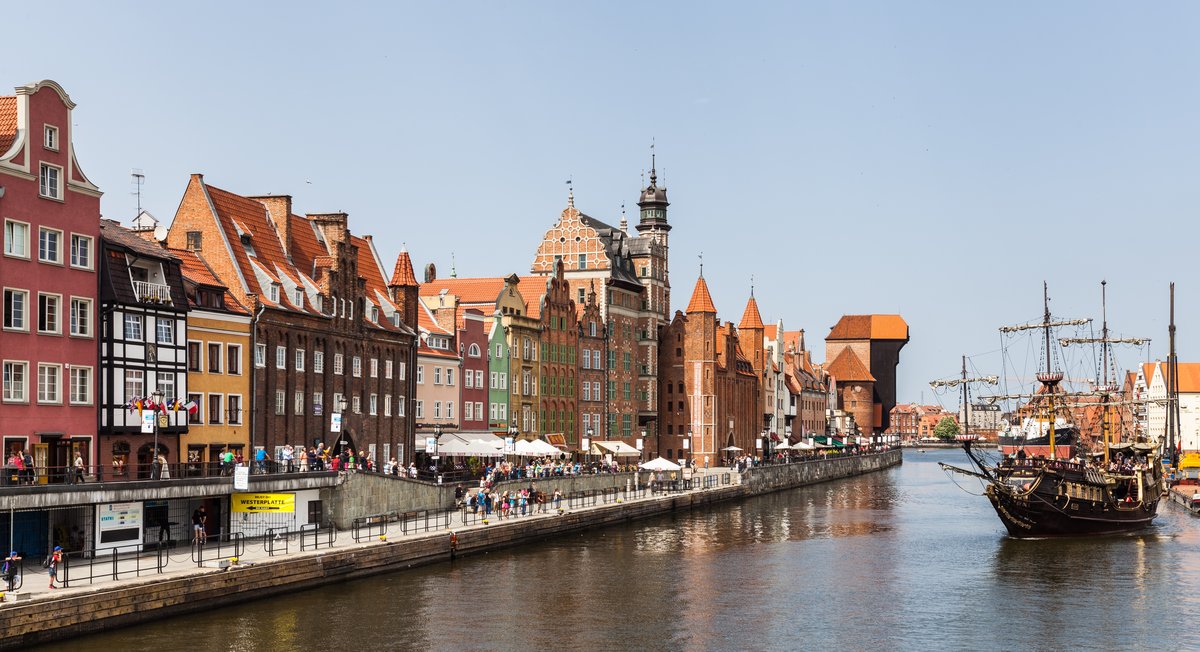
🇵🇱 Gdańsk — Family Travel Guide
Country: Poland Last Updated: February 2026 Airport: Gdańsk Lech Wałęsa Airport (GDN)
Overview
Gdańsk is one of Europe’s most extraordinary and underrated family destinations — a port city on the Baltic Sea where Gothic brick architecture, a living amber trade, pivotal WWII history, and one of Poland’s most beautiful Old Towns converge in a remarkably compact and walkable area. Once known as Danzig under German rule, this is the city where World War II ignited (at Westerplatte, September 1, 1939) and where the Solidarity movement that ultimately toppled European communism was born. Children walk through ruins where history actually happened, touch 40-million-year-old amber with prehistoric insects inside, board 17th-century-style galleons, and explore interactive science in a 19th-century hilltop fortress.
Unlike many European historical cities, Gdańsk is astonishingly affordable — a family of four can eat well, visit world-class museums, and take harbour cruises for a fraction of the cost you’d pay in Western Europe. The city is also exceptionally safe, English is widely spoken in tourist areas, and it forms part of the Tri-City (Trójmiasto) metropolis with Sopot and Gdynia — giving you beaches, seaside resorts, and a naval museum all within a 30-minute train ride.
Why families love it:
- World-class WWII and Solidarity museums that are genuinely moving for older children
- Amber — Gdańsk is the amber capital of the world; you can buy raw pieces, see insects trapped inside, and make your own jewellery
- Galleon boat trips that feel like real adventure
- The colourful, largely car-free Old Town is one of Europe’s most photogenic
- Sopot beach is 20 minutes away by train
- Malbork — the world’s largest brick castle — is 30–55 minutes by train
- Remarkably affordable compared to Western Europe
⏰ Best Time to Visit with Kids
| Season | Conditions | Verdict |
|---|---|---|
| Jun–Aug | 18–23°C, beaches open, long days | ⭐ Best for families — pack beach days with Old Town |
| May / Sep | 15–18°C, quieter, crisp | ✅ Excellent for museums & walking |
| Apr / Oct | 10–14°C, some rain | ✅ Good for history-heavy trips |
| Nov–Mar | 0–5°C, often grey, possible snow | ⚠️ Cold Baltic winters — fine for the Christmas market (Nov–Dec) but not beach |
Pro tip: Late June to mid-July hits the sweet spot — school holidays haven’t fully peaked yet, the weather is reliably warm, and the amber beaches at Sopot are swimmable. August is peak season and prices rise. The Christmas market (late November to late December) is magical and worth a winter visit if you love markets.
🚗 Getting Around
On foot (Old Town) The Old Town (Główne Miasto and Stare Miasto) is almost entirely car-free and very walkable — most major attractions are within a 15–20 minute walk of each other along the beautiful waterfront Motława embankment. Strollers are manageable but the cobblestones can be bumpy.
Public Transport (SKM & ZTM) The urban SKM commuter train is the best way to reach Sopot and Gdynia from Gdańsk Central Station (Gdańsk Główny). Trains run every 10–20 minutes.
- Single fare: ~6–7 PLN (adults), children under 7 travel free, 7–15 at 50% discount
- Day passes available (~20–26 PLN for an adult day pass)
- Trams and buses cover the rest of the city
Car Rental A car is not necessary for Gdańsk itself — but is useful if you plan multiple day trips beyond the train network. Budget €25–40/day for a compact car. Driving into the Old Town is not recommended (very limited parking, cobbled streets).
Taxis / Uber / Bolt
All three apps work well in Gdańsk. Bolt is typically the cheapest. Airport to Old Town: 25–35 PLN (€6–8).
From the Airport Gdańsk airport (GDN) is 15 km from the Old Town.
- Train: From Gdańsk Port Lotniczy station (connected to T2 by footbridge) to Gdańsk Główny — about 25 minutes, very cheap.
- Uber/Bolt:
35–50 PLN (€8–12), 20–30 minutes.
🏰 History & Museums
1. Museum of the Second World War
One of the most important — and best-executed — WWII museums in Europe, possibly the world. The permanent exhibition covers the entire war from multiple national perspectives across 5,000 square metres, largely underground. The museum opens with a cinematic dimming of the lights and an immersive walk through pre-war normalcy before plunging into occupation, resistance, and genocide. For older children (10+), it’s a genuinely powerful educational experience. The Children’s Museum section — three rooms depicting a family home shifting from pre-war comfort to wartime hardship to life under occupation — is specifically designed for younger visitors.
- Rating: 4.8/5 on TripAdvisor — consistently among Poland’s top-rated attractions
- Age suitability: Children’s Museum: 6+; main exhibition: 10+ (some distressing content, handled sensitively)
- Cost: Adult
35 PLN (€8), Concession ~30 PLN. Free on Tuesdays (very busy — arrive early, no advance booking on free days) - Time needed: 2.5–4 hours for full exhibition; 1.5 hours if doing highlights only
- Location: Pl. Władysława Bartoszewskiego 1 (near the Solidarity Centre)
- Book ahead: Timed entry tickets available online — recommended for weekends and summer
- ⚠️ Honest note: Some content (executions, concentration camps) is heavy. The museum handles it with care and context, but preview the exhibition if your children are sensitive. Younger kids (under 8) will likely lose interest after the children’s section.
- Website: muzeum1939.pl
2. European Solidarity Centre (ECS)
The story of how a group of striking shipyard workers in Gdańsk — led by electrician Lech Wałęsa — launched the Solidarity trade union in 1980 and set in motion the fall of European communism is told here in magnificent, intelligent detail. The building itself is extraordinary: its rust-coloured exterior is made of Corten steel referencing the shipyards, while the interior gleams with copper and modern exhibition design. Particularly memorable: reconstructed communist-era interiors (a prison cell, interrogation room, typical family apartment), original Solidarity posters, and a hall dedicated to Lech Wałęsa’s Nobel Peace Prize.
- Rating: 4.5/5 on TripAdvisor
- Age suitability: 10+ for the political history; younger children can explore but will get less from it
- Cost: Adult
45 PLN (€10), Concession ~30 PLN. Family ticket available. - Time needed: 2–3 hours
- Location: Plac Solidarności 1 — right next to the famous Gate No. 2 of the Gdańsk Shipyard, where Solidarity was born
- ⚠️ Honest note: Dense political content — more rewarding if you do a little background reading first. Audio guide recommended (available in English).
- Pro tip: The Gate No. 2 and the Monument to Fallen Shipyard Workers outside are free and very moving — worth visiting even if you don’t go inside.
- Website: ecs.gda.pl
3. Amber Museum (part of Museum of Gdańsk)
Gdańsk has been the world’s amber capital for centuries — and this museum in a Gothic tower (Torture House / Prison Tower complex) explains why, and does it beautifully. The first floor covers amber in nature: how Baltic amber formed from tree resin 40–50 million years ago, how it washed ashore after being dissolved out of sea floor deposits, and — the kids’ absolute favourite — the inclusions: prehistoric insects, spiders, lizards, plant matter, and even air bubbles trapped in amber pieces. The second floor explores amber in art and culture: extraordinary amber chess sets, altarpieces, jewellery, and sculptures. The gift shop sells genuine amber at reasonable prices.
- Rating: 4.4/5 on TripAdvisor
- Age suitability: 5+ (the inclusions fascinate even young children)
- Cost: Adult
20 PLN (€4.50), Reduced ~15 PLN. Free on Mondays. - Time needed: 1–2 hours
- Location: Targ Węglowy / ul. Wielkie Młyny (the gothic brick tower complex near Coal Market Square)
- ⚠️ Honest note: The museum is genuinely excellent but compact — don’t expect a full-day experience. Combine with a walk on Mariacka Street (see below) for amber shopping.
- Website: muzeumgdansk.pl
4. National Maritime Museum — The Crane (Żuraw)
The medieval Crane (Żuraw) is one of Gdańsk’s most iconic structures — a double-towered wooden crane from the 15th century that once loaded ships on the Motława riverfront. Today it’s the centrepiece of the National Maritime Museum complex, which spans both sides of the river. The Crane itself houses a fascinating exhibition on mediaeval crane technology and the history of Gdańsk’s port. The adjoining Maritime Culture Centre (4 floors, brand-new interactive exhibition) is where kids really engage — learn about the sea, marine technology, historic navigation, and the stories of sailors through hands-on displays, simulators, and multimedia.
- Rating: 4.3/5 on TripAdvisor
- Age suitability: All ages; Maritime Culture Centre particularly good for 5–14
- Cost (combo ticket — includes Crane + Maritime Culture Centre + Museum Ship Sołdek): Adult
82 PLN (€18.50), Concession ~60 PLN. Individual sections available separately. - Time needed: 2–3 hours for the full complex
- Location: ul. Szeroka 67/68 (riverfront, Old Town)
- Pro tip: The SS Sołdek — a real Polish steam freighter moored on the river — is included in the combo ticket. Kids can explore the engine room, deck, and crew quarters. The moveable pedestrian bridge on the northern end of Ołowianka islet (where the museum stands) rises and falls every 30 minutes to let boats through — kids love timing their crossing!
- Website: nmm.pl
🔬 Science & Discovery
5. Hevelianum Science Centre
Built on the grounds of a 19th-century Napoleonic hilltop fortress (Góra Gradowa), Hevelianum is a science and history centre unlike anything else in Gdańsk. The name honours Johannes Hevelius, one of the greatest astronomers of the 17th century, born right here in Gdańsk. Four themed indoor exhibition sections (Space, Earth & Climate, Energy, and a weapons/fortification historical section) are entirely hands-on — kids play with magic sand to model geological features, experiment with typhoon-strength wind machines, make finger-shadow art, fire (safely!) at exhibits with light cannons, and explore space phenomena through interactive stations. Outside, the historic fort itself — with bunkers, tunnels, defensive walls, and underground passages — is open to explore free of charge, and the hilltop offers spectacular views of the Old Town, shipyards, and harbour.
- Rating: 4.5/5 on Google, consistently praised by family travel writers
- Age suitability: Best for ages 4–14; adults find it engaging too
- Cost: Adult
20–25 PLN (€5), Child ~15 PLN. Check current prices at hevelianum.pl as they vary by section. - Time needed: 2–4 hours (more if you explore the outdoor fort)
- Location: Ul. Gradowa 6, on Gradowa Hill — 15-minute walk from Old Town
- ⚠️ Honest note: Book a timed entry slot online in advance — it gets very busy, especially on weekends and school holidays. If you arrive without a slot, you may wait 1+ hours.
- Pro tip: Even if you skip the paid interior, the hilltop and Millennium Cross are free to visit and give excellent views. The onsite restaurant is decent.
- Website: hevelianum.pl
⚓ Water & Outdoor Adventures
6. Galleon Cruise to Westerplatte (Galeon Lew / Czarna Perła)
This is Gdańsk’s most theatrical and memorable family experience. Climb aboard a beautifully crafted 17th-century-style galleon ship from the Old Town riverfront and sail down the Motława River toward the Baltic, past the giant Gdańsk shipyards — passing the very gates where Solidarity was born — before reaching Westerplatte peninsula. This is where the first shots of World War II were fired on 1 September 1939, when a German warship bombarded the Polish Military Transit Depot. At Westerplatte, explore the decimated ruins of Guard House No. 5, walk through the War Cemetery, see the Defenders of the Coast monument, and visit the small museum in Guard House No. 1 detailing the heroic 7-day Polish resistance. Live commentary in Polish, English, and German runs throughout the cruise.
- Rating: 4.4/5 on TripAdvisor (Galeon Lew & Czarna Perła Boat Tours)
- Age suitability: 4+ for the boat; Westerplatte content is suitable for 8+ (ruined buildings, not graphic)
- Cost: Return adult
90 PLN (€20), Child ~70 PLN. One-way available. Book at the quay or via getyourguide.com. - Time needed: 30 min crossing each way + 1.5–2 hours at Westerplatte = half day
- Departure: Zielona Brama (Green Gate) area on the riverfront, near Taverna Dominikanska
- ⚠️ Honest note: Weather-dependent — in strong winds the boat may not run. The Westerplatte tour involves walking on uneven ground around ruins, so pack practical footwear. Toddlers may get restless on the boat.
- Pro tip: Buy a return ticket and spend 2 hours at Westerplatte rather than doing a quick loop. Snacks and drinks (including alcohol for parents!) are sold on board.
- Website: galeony.pl
7. Baltic Beaches (Gdańsk & Sopot)
Gdańsk and the Tri-City have long stretches of sandy Baltic beach — not the turquoise Mediterranean, but genuinely lovely wide amber-sand beaches with calm, shallow water that’s perfect for children in summer. The most accessible from Gdańsk:
- Brzeźno Beach (Plaża Brzeźno): Gdańsk’s own city beach, 20 minutes by tram from the Old Town. Sandy, wide, with snack stalls and beach volleyball.
- Sopot Beach (Plaża Miejska, Sopot): The most famous and beautiful — 20 minutes from Gdańsk Główny by SKM commuter train. The beach stretches for km in front of the elegant resort town of Sopot, with the iconic wooden pier (the longest wooden pier in Europe at 515 metres) jutting into the bay. Very family-friendly, lifeguarded in summer.
- Orłowo Beach (Gdynia): In the southern Gdynia district, this quieter beach sits beneath dramatic cliffs and has a charming harbour — great for a less crowded alternative.
Swimming season: Mid-June to mid-September. Water temperatures reach 18–22°C in July/August.
- Cost: Beaches are free; sun lounger hire ~15–25 PLN/day
- ⚠️ Honest note: The Baltic is generally calm but can have jellyfish in late summer. Water quality is good but check local flags — red flag = no swimming.
- Pro tip: Sopot pier (Molo w Sopocie) is a lovely evening walk — entrance ~10 PLN adult, kids free under 7 — with great sunset views over the bay.
🎨 Unique Cultural Experiences
8. Amber Jewellery-Making Workshop
Gdańsk produces an estimated 70% of the world’s amber jewellery, and the workshops here are an unforgettable hands-on activity. Under expert guidance, you and your children learn to sand, polish, and shape Baltic amber and sterling silver into a pendant, ring, or bracelet that you take home as a one-of-a-kind souvenir. You can choose between working with genuine ancient amber or casting modern resin pieces with inclusions of your choice. Suitable for all ages — children aged 7+ can participate independently, younger ones with help.
- Rating: 5.0/5 on GetYourGuide (consistently perfect reviews)
- Age suitability: 7+ independently, 4+ with parental help
- Cost:
170–200 PLN/person (€38–45) including all materials and finished jewellery piece. Book via getyourguide.com (“Gdansk: Jewelry Making Workshop with Amber”). - Time needed: 2–3 hours
- Location: Short drive or rideshare from Old Town (~10 minutes)
- ⚠️ Honest note: Slightly outside central Gdańsk, so factor in transfer time. Pre-booking essential — very popular.
- Pro tip: Pair this with a visit to Mariacka Street (St. Mary’s Street), Gdańsk’s famous amber-shopping lane lined with historic Gothic porches and amber boutiques. This is where to buy amber if you want authentic regional craftsmanship.
9. Old Town Walk: Long Market, Neptune, the Crane & St. Mary’s Basilica
Gdańsk’s Old Town is one of the most striking in Central Europe — largely rebuilt after WWII obliteration but done so faithfully that it feels genuinely ancient. The essential family walk:
- Długi Targ (Long Market): The showpiece street of colourful Dutch-Flemish baroque tenements, the grand Artus Court (Dwór Artusa), and the iconic Neptune’s Fountain (bronze sea-god, 1633 — a favourite for photos with kids)
- Mariacka Street (ul. Mariacka): The most romantic street in Gdańsk — lined with Gothic carved porches, amber shops, and the famous carved gargoyle faces — leading to St. Mary’s Basilica
- St. Mary’s Basilica (Bazylika Mariacka): One of the largest brick churches in the world, dating to the 14th century. The interior is staggeringly vast — children almost always gasp. Climb the tower (409 steps) for panoramic views. Free entry to the church; tower ~15 PLN.
- Żuraw (The Crane): The medieval double-towered crane on the riverfront is one of the most photographed buildings in Poland and a centrepiece of the city’s identity
- Gdańsk Crane / Motława Riverfront: The whole waterfront embankment is lined with restaurants, boat tours, amber shops, and street performers — a perfect late-afternoon walk
- Rating: The Old Town area has 4.8/5 across all major review platforms
- Cost: Free to walk; basilica church entry free, tower ~15 PLN
- Time needed: 2–3 hours at a family pace
- Pro tip: Pick up enormous swirled ice creams from Lody Świderki on Długa Street — a Gdańsk institution. The twisting ice cream towers are taller than a child’s head and cost about 15–20 PLN.
🍽️ Where to Eat
Gdańsk is an outstanding food city for families — Polish cuisine is enormously kid-friendly (pierogi, soups, hearty meat dishes, excellent pastries) and prices are very reasonable by Western European standards.
Recommended Restaurants
Restauracja Gdańska Traditional Gdańsk-style restaurant in a beautifully decorated space with four rooms and seating for 150. Classic Polish comfort food — żurek (sour rye soup), pierogi, bigos (hunter’s stew), flaczki (tripe soup). Very family-friendly atmosphere.
- Location: ul. Szeroka (Old Town waterfront area)
Brovarnia Gdańsk Brewery-restaurant in a historic setting near the Old Town. Great for families — large spaces, generous portions, grilled meats, house-brewed beers for parents. Popular for groups.
Pierogarnia Mandu Dedicated pierogi restaurant — every variety imaginable, including sweet dessert versions filled with strawberries or blueberries. Kids universally love pierogi (Polish dumplings). Very affordable.
Pyra Bar Local institution specialising in regional potato dishes (pyra = potato in local dialect). Casual, affordable, always busy. Great for quick family lunches.
Pellowski Beloved local bakery chain — elegant displays of cakes, pastries, biscuits, and the famous Nutella crepes. Multiple locations around the Old Town. Grab a hot chocolate and crepe while walking Długa Street.
Budget guidance (per person at a sit-down restaurant):
- Child’s meal:
15–25 PLN (€3.50–5.50) - Adult main:
30–55 PLN (€7–12.50) - Drinks: ~5–12 PLN
🏨 Neighbourhood Guide
Old Town / Główne Miasto: Best for families. Walk everywhere. Premium pricing but worth it — you’re immediately in the heart of it. Hotels range from boutique to chain.
Śródmieście (City Centre): A 10-minute walk from the Old Town, more apartment options, slightly cheaper, still very convenient. Good option for self-catering families.
Sopot: If you want beach access every day, consider basing in Sopot and doing day trips into Gdańsk by SKM train (20 mins). Sopot is beautiful and very resort-oriented.
🏰 Day Trips
Day Trip 1: Malbork Castle ⭐ Unmissable
Distance: 55 km from Gdańsk | Travel time: 28–55 min by train from Gdańsk Główny
Malbork Castle is the world’s largest castle by surface area — a colossal Gothic brick fortress built by the Teutonic Knights in the 13th century, now a UNESCO World Heritage Site. The scale is genuinely jaw-dropping; even children who normally have no interest in castles find themselves captivated. The castle complex covers three interconnected sections (Upper, Middle, and Lower Castle) and takes 3–4 hours to explore. Kids particularly love the dungeons, armour rooms, and the sheer impossible scale of the brick walls and towers.
- Rating: 4.7/5 on TripAdvisor — one of Poland’s most-loved attractions
- Age suitability: 4+ (small children need carrying up some staircases)
- Cost: Adult
70 PLN (€16), Child/Student ~50 PLN. Audio guide available and recommended. - Getting there: Train from Gdańsk Główny to Malbork — fastest EIC trains: 28 minutes; standard trains: 40–55 minutes. From Malbork station, the castle is a 20-minute walk through town (or short taxi).
- Time needed: Full day (include travel + 3–4 hours at the castle)
- ⚠️ Honest note: The castle involves a lot of walking on cobblestones and up/down many stairs. In summer, the site can be very busy — book tickets online in advance. Outside areas only in wet weather are not covered.
- Pro tip: The best view of the castle is from across the Nogat River — walk the bridge and look back for the classic photo. A sound-and-light show runs on summer evenings (check website).
- Website: zamek.malbork.pl
Day Trip 2: Sopot & Gdynia Tri-City Explorer
Distance: Sopot 12 km, Gdynia 25 km from Gdańsk | Travel time: 20–30 min by SKM train
Spend a day combining Poland’s most famous seaside resort with its sleek maritime city. Start in Sopot: walk the gorgeous resort promenade, hit the beach, and stroll the legendary wooden pier (Molo) — the longest wooden pier in Europe at 515 metres. Sopot’s grand Kurhaus (casino) and Belle Époque architecture give it a distinctly glamorous atmosphere. Then continue by train to Gdynia, a thoroughly modern city (built almost from scratch in the 1920s) with excellent maritime museums including the destroyer ORP Błyskawica (a real WWII warship you can board) and the Emigration Museum in the beautiful Art Deco liner terminal. Walk Gdynia’s sea cliffs at Kępa Redłowska for dramatic coastal views.
- Cost: SKM day pass or single tickets (~12–24 PLN each way for a family)
- Best for: Mixing beach time with culture
- Pro tip: Sopot’s beach gets packed in July/August — go in the morning or late afternoon. The town centre fills up in the evening with a young, buzzing crowd — great for casual dinners outdoors.
Day Trip 3: Kashubian Lake District & Wdzydze Open-Air Museum
Distance: ~70 km southwest of Gdańsk | Travel time: ~60–75 min by car
The Kashubian Lake District — Poland’s only indigenous ethnic/cultural region — is a wild, pine-forest-and-lake landscape that most international tourists never discover. Drive to Wdzydze Kiszewskie to visit the Kashubian Ethnographic Park (Kaszubski Park Etnograficzny), one of Poland’s finest open-air folk museums (skansen). Traditional Kashubian wooden cottages, windmills, a working forge, a church, and a schoolroom are populated with costumed staff demonstrating traditional crafts — weaving, pottery, blacksmithing. The setting on a lake is idyllic. Combine with swimming in one of the crystal-clear lakes and a walk in the forests. This is the Kashubia you can’t experience anywhere else in the world.
- Rating: 4.5/5 on Google
- Cost: ~15–20 PLN per adult, children under 7 free
- Best for: Nature-loving families who want to escape the city; ages 5+
- ⚠️ Honest note: Car is essentially required — no practical public transport to Wdzydze. Best visited May–September.
💡 Practical Tips for Families
Language: Polish is the local language. English is widely spoken in tourist areas, museums, hotels, and restaurants. Learning a few words (dziękuję = thank you, proszę = please) goes down very well with locals.
Currency: Polish Złoty (PLN). As of early 2026: ~1 EUR ≈ 4.20–4.30 PLN. Cards accepted almost everywhere. ATMs widely available. Do not use currency exchange booths at airports or major tourist streets — rates are poor. Use bank ATMs instead.
Toilets: Public pay toilets throughout the Old Town (2 PLN coins). Most museums and restaurants have free facilities.
Pushchairs/Strollers: The Old Town cobblestones can be challenging. A sturdy, all-terrain pram or carrier is recommended for toddlers.
Medical: Poland has solid public healthcare. EU citizens with an EHIC card can access public health services. Travel insurance strongly recommended for non-EU visitors.
Getting from GDN Airport:
- Train: Gdańsk Port Lotniczy → Gdańsk Główny (~25 min, very cheap ~5 PLN)
- Bolt/Uber: ~35–50 PLN to Old Town (~20 min)
Free Museum Days:
- Museum of the Second World War: Free Tuesdays
- Amber Museum: Free Mondays
- European Solidarity Centre: Check website for free entry days
Useful Apps:
- jakdojade.pl — public transport planner for all Polish cities
- Bolt — rideshare/taxi
- Google Translate (camera mode handles Polish menus well)
📅 Suggested Itineraries
3-Night / 4-Day Family Itinerary
Day 1 — Old Town Arrival & Orientation Morning: Długi Targ, Neptune’s Fountain, St. Mary’s Basilica (climb the tower for views). Lunch on Mariacka Street with amber window shopping. Afternoon: Galleon cruise to Westerplatte (book morning sailing to get there by midday, spend 2 hours). Evening: Riverfront walk, ice cream at Lody Świderki, dinner at Brovarnia Gdańsk.
Day 2 — WWII History + The Crane Morning: Museum of the Second World War (book timed entry). Afternoon: National Maritime Museum (The Crane + Maritime Culture Centre + SS Sołdek ship). Evening: Amber Museum (closes later on some evenings — check hours), dinner at Pierogarnia Mandu.
Day 3 — Malbork Castle Day Trip Full day to Malbork Castle by train. Pack snacks and water. Return to Gdańsk for dinner — try Restauracja Gdańska.
Day 4 — Hevelianum + Sopot Beach Morning: Hevelianum Science Centre (book timed entry in advance). Afternoon: SKM train to Sopot for beach time and Molo pier walk. Dinner in Sopot before returning to Gdańsk.
5-Night / 6-Day Extended Itinerary
Add to the above:
- Day 5: Amber Jewellery Workshop + European Solidarity Centre
- Day 6: Kashubian Lake District day trip (car rental needed) or relax day in Gdynia
⚠️ Honest Downsides
- Weather unpredictability: The Baltic coast can turn grey and rainy with little warning, even in summer. Always pack a waterproof layer.
- Winter cold: November–March is genuinely cold (0–5°C average), with short days and wind off the Baltic. Not recommended for beach-focused families.
- Museum queues: The Museum of the Second World War and Hevelianum get extremely busy in summer — arrive early or book timed entry. Turning up without tickets risks long waits.
- Old Town cobblestones: Beautiful but brutal for pushchairs and tired toddlers. Carriers are your friend.
- August peak prices: Accommodation prices spike significantly in July–August, especially in Sopot. Book well in advance or consider May, June, or September.
- Limited nightlife for older teens: Gdańsk has a good bar and music scene but it’s a relatively quiet city compared to Warsaw or Kraków for teens looking for entertainment.
🔗 Key Links
- Visit Gdańsk (Official Tourism): visitgdansk.com
- Museum of the Second World War: muzeum1939.pl
- European Solidarity Centre: ecs.gda.pl
- Hevelianum: hevelianum.pl
- National Maritime Museum: nmm.pl
- Museum of Gdańsk (Amber Museum): muzeumgdansk.pl
- Galleon Lew (boat tours): galeony.pl
- Malbork Castle: zamek.malbork.pl
- SKM commuter trains: skm.pkp.pl
- PKP Intercity (national trains): intercity.pl