🇧🇪 Ghent — Family Travel Guide
Country: Belgium Last Updated: May 2026
Overview
Ghent is Belgium’s great underrated city — older than Bruges, bigger than Bruges, and in many ways more interesting. Where Bruges is a polished jewel box preserved for tourists, Ghent is a living medieval city with 40,000 university students, a buzzing food scene, and a level of architectural drama that stops adults mid-sentence. For families, it delivers something rare: a place that fires up children’s imaginations (a genuine medieval castle with dungeons and a drawbridge) while also having enough substance to satisfy adults who’ve done the Bruges tick-box tour and want something deeper.
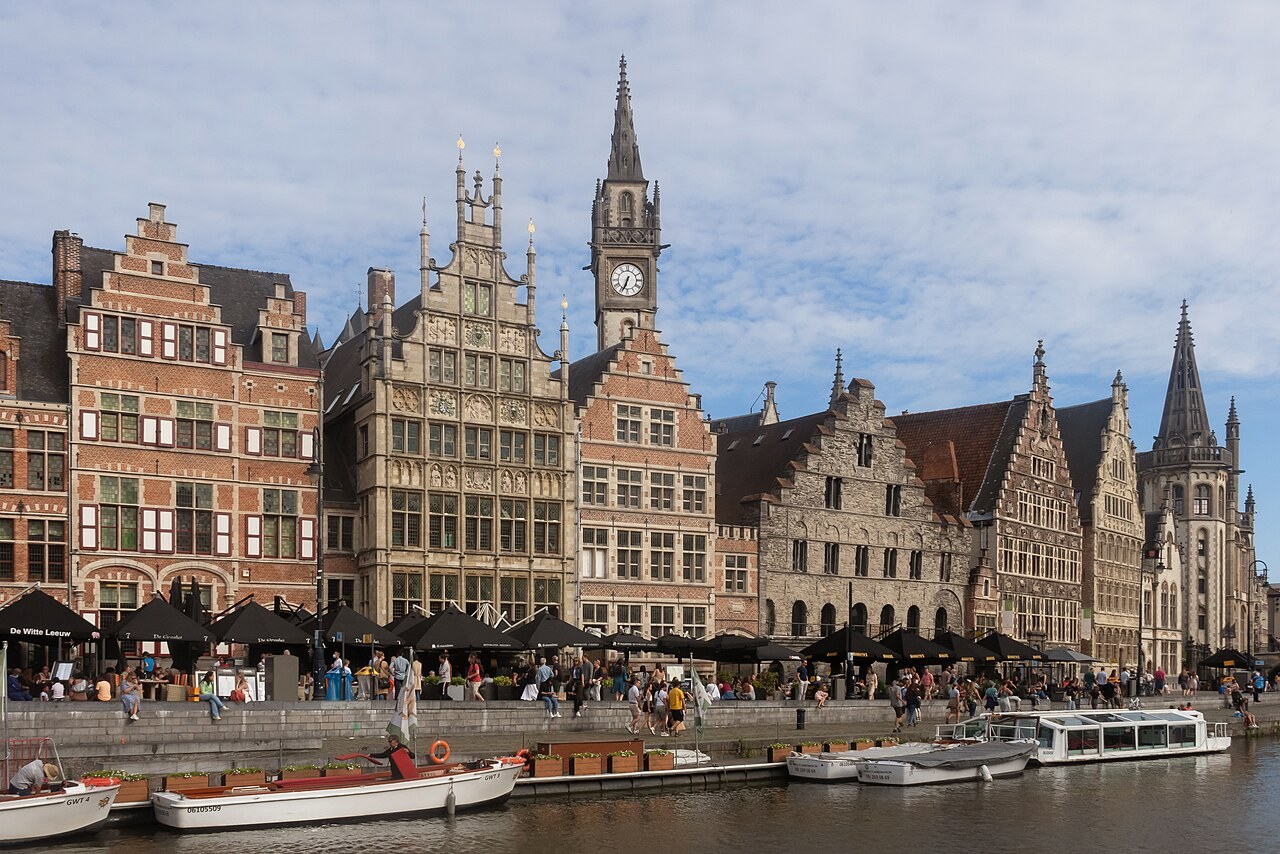
The city’s three medieval towers — Sint-Niklaaskerk, the Belfort, and Sint-Baafskathedraal — rise in a line above the Graslei and Korenlei waterfronts that is one of the most beautiful canal views in Northern Europe. Gravensteen, the Castle of the Counts, is the centrepiece: a 12th-century fortress complete with moat, battlements, dungeons, and a proper torture instrument collection that simultaneously delights and horrifies children aged 8 and up. The Huis van Alijn, a folklore museum set in a gorgeous medieval almshouse, is one of Belgium’s best children’s museums and typically overlooked by visitors who head straight for Gravensteen. And then there’s Ghent’s most famous secret: the Adoration of the Mystic Lamb in Sint-Baafskathedraal — the most influential painting in Western art history, freshly restored, and presented in a dedicated display that even young children find strangely compelling.
Why families love it:
- Gravensteen Castle — a real medieval fortress with dungeons, battlements, and a torture museum that older kids find unforgettable
- Graslei & Korenlei waterfront — Belgium’s most beautiful canal view, boat tours departing every few minutes
- Huis van Alijn — an exceptional folklore museum in a medieval almshouse, genuinely designed for children
- Waterzooi — Ghent’s legendary creamy chicken stew that has been feeding families here since the 16th century
- Cuberdons — the purple cone-shaped candies that are Ghent’s sweet symbol; try them fresh on the Suikerrei
- More local, less tourist-heavy than Bruges — feels like discovering something real
- Under 35 minutes from Brussels; easy day trip from Bruges or overnight stay in Belgium
⏰ Best Time to Visit with Kids
| Season | Conditions | Verdict |
|---|---|---|
| Apr–Jun | 12–22°C, canals and streets gorgeous, lighter crowds | ⭐ Best for families |
| Jul–Aug | 20–26°C, busy but lively, student city remains animated | 🟡 Good — warm, all attractions open |
| Sep–Oct | 14–20°C, quieter, beautiful light, lower prices | ⭐ Excellent |
| Dec | 2–8°C, Christmas market on Sint-Baafsplein, magical | ⭐ Very good — atmospheric winter visit |
| Jan–Mar | 3–10°C, quiet, some wet days | ✅ Fine — quieter, lower prices, Gravensteen never crowded |
Pro tip: Ghent’s Light Festival runs every three years (next 2025, then 2028) and transforms the medieval cityscape with extraordinary light installations — one of Europe’s most impressive free events. If the dates align with your visit, Ghent is an essential stop. Even outside the festival, the evening light on the Graslei waterfront is extraordinary — arrive for golden hour.
🚗 Getting Around
On Foot (Recommended) Ghent’s entire historic core is walkable — from Gravensteen to Sint-Baafsplein to the Vrijdagmarkt is about 15 minutes at an easy pace. The major car-free zone in the centre is genuinely car-free, making it safe and pleasant for families with young children. Pavements are cobblestone in parts (baby carriers beat pushchairs on the worst stretches near Gravensteen).
Tram & Bus Ghent has an excellent tram network (De Lijn). The city centre’s historic core is compact enough that you’ll rarely need it, but trams are clean, cheap, and efficient for reaching the train station from your hotel. Single ticket €2.50; day pass €7.
Canal Boat Tours One of Ghent’s essential experiences — see the dedicated section. Depart from the Korenlei near Gravensteen.
Bicycle Ghent is a cycling city. Bike share (Blue-Bike) and rental shops are plentiful (€10–15/day per adult). For families with children aged 7+ who can ride independently, cycling the Graslei promenade and the quieter residential streets is excellent.
Car Don’t bring one into the historic centre — the Low Emission Zone and parking costs make it impractical. Park at Gent-Sint-Pieters station and take the tram or walk (25 minutes).
From Brussels Airport (BRU) Direct train to Gent-Sint-Pieters: every 30 minutes, approximately 50 minutes, ~€14 adult one-way. From the station, take tram 1 or 4 to the city centre (10 min), or walk in 25 minutes.
From Brussels Charleroi (CRL) Flibco bus to Brussels-Midi (Gare du Midi), then IC train to Gent-Sint-Pieters (~1h). Total ~2h.
From Bruges Train every 30 minutes, 30–35 minutes, ~€8.80 adult return. The simplest Bruges day-trip combination: Bruges first, Ghent second (or vice versa) on consecutive days, with the train as the connector.
🏰 Gravensteen — Castle of the Counts ⭐⭐
1. Gravensteen Castle ⭐⭐
Ghent’s undisputed headline for families — a complete 12th-century feudal fortress built by Philip of Alsace in 1180, set on a moated island in the middle of the old city. Gravensteen has everything children imagine a castle should have: battlements you can walk, a drawbridge, a moat, towers with spiral staircases, a deep dungeon, and a genuine torture instrument collection (the Gravesteenzaal upper level) containing thumbscrews, iron maidens, and an execution sword. Older children find this section extraordinary. Younger children are perfectly happy on the battlements.
The view from the battlements over Ghent’s rooflines and canals is one of the best elevated views in Belgium. The audio guide (included) tells the castle’s history compellingly. Budget 1.5–2 hours.
- Rating: 4.6/5 on Google — one of Belgium’s most visited historic sites
- Age suitability: All ages; torture museum section best for 8+; under-8s love the battlements and dungeon
- Cost: Adults €14 / Children (6–17) €2.50 / Under-6 FREE; family passes available
- Time needed: 1.5–2.5 hours
- Location: Sint-Veerleplein 11, 9000 Gent
- Open: Daily 10am–6pm (last entry 5pm); closed Christmas and New Year’s Day
- ⚠️ Honest note: The torture instrument section is genuinely graphic — old instruments of execution and torture, explained in detail. Most families with children 8+ find it fascinating rather than disturbing. Worth checking your child’s sensitivity in advance. Under-8s won’t be much interested in this section anyway.
- Pro tip: Buy tickets online to skip the queue — in summer the box office line can be 20–30 minutes. Morning visits (10am opening) are quieter. Combine with Sint-Veerleplein square outside for lunch at one of the waterfront cafés.
2. Gravensteen Neighbourhood — Sint-Veerleplein & Patershol ⭐
The neighbourhood surrounding Gravensteen is the oldest part of Ghent. Sint-Veerleplein is the square directly in front of the castle — formerly the site of public executions (the scaffold stood here until 1784), now a pleasant canal-side square with cafés. The Patershol district immediately south is Ghent’s oldest residential quarter: a maze of narrow lanes, tiny restaurants, and historic buildings dating from the 16th century. This is where Ghent’s best traditional restaurants cluster — essential for dinner after the castle.
🎨 The Three Towers & Cathedral
3. Sint-Baafskathedraal & the Ghent Altarpiece ⭐
The most important painting in European art history — The Adoration of the Mystic Lamb (1432), by Jan and Hubert van Eyck — is displayed here in its own climate-controlled room with specialist lighting. The polyptych altarpiece (12 panels, 24 painted scenes) was stolen three times, partly destroyed by iconoclasts, requisitioned by Napoleon, dismantled by the Nazis, and recovered piece by piece over 600 years. The story alone grips older children.
The dedicated display room (separate admission) presents the work with excellent interpretation panels and a multimedia introduction video. Even families who arrive thinking “it’s just a painting” tend to leave understanding why this matters. The cathedral itself is Gothic and imposing, with Rubens’ altarpiece of the Conversion of St Bavo (free to view).
- Rating: 4.7/5 on Google
- Age suitability: Cathedral: all ages / Altarpiece room: best for 9+; the multimedia intro makes it accessible
- Cost: Cathedral free / Altarpiece room: Adults €8 / Children €6 / Under-12 FREE
- Time needed: Cathedral 20 mins / Altarpiece room 45–60 mins
- Location: Sint-Baafsplein 1, 9000 Gent
- Open: Mon–Sat 10am–5:30pm; Sun 1pm–5pm; Altarpiece room opens 9:30am–4:45pm Mon–Sat, 1pm–4:45pm Sun
- Pro tip: Book Altarpiece room tickets online — capacity is strictly limited and it sells out on summer weekends. The audio guide (included with admission) is excellent.
4. Ghent Belfry (Belfort) & Cloth Hall ⭐
One of Belgium’s three UNESCO-listed belfries and the city’s most iconic tower — 91 metres, built in 1380, containing a 54-bell carillon that peals across the city. The Belfry has served as watchtower, treasury, and symbol of civic freedom (the Great Charter of Ghent was stored in a golden dragon at the top, now in the Museum of the City of Ghent). A glass lift takes visitors most of the way up; the final section is stairs. Views of the three-tower skyline and the Graslei waterfront from the top are excellent.
The attached Lakenhalle (Cloth Hall) is the medieval commercial heart of Ghent, built for the wool trade. It’s currently used for events but the exterior and forecourt are worth seeing.
- Rating: 4.4/5 on Google
- Age suitability: All ages; lift available so accessible for young children
- Cost: Adults €10 / Children (6–12) €5 / Under-6 FREE
- Time needed: 45–90 minutes
- Location: Sint-Baafsplein 2, 9000 Gent
- Open: Daily 10am–6pm (last entry 5:30pm)
- ⚠️ Honest note: The museum inside the belfry is modest — the main draw is the tower climb and the view. If you’ve done Brussels’ Grand Place area or Bruges’ Belfort, this is similar but in a slightly less dramatic setting.
5. Sint-Niklaaskerk (St Nicholas’ Church)
The third tower in Ghent’s famous skyline — the oldest of the three, built largely between the 13th and 15th centuries in Tournai blue-stone, giving it a distinctive grey-green colour. The interior is spare and striking — Gothic nave with excellent proportions, and various Van Dyck and Rubens works visible. A free visit; often overlooked in favour of the cathedral, but architecturally more interesting to many.
- Rating: 4.3/5 on Google
- Age suitability: All ages (brief visit)
- Cost: Free
- Location: Cataloniëstraat, 9000 Gent
🚤 The Waterfront & Canal Life
6. Graslei & Korenlei — The Waterfront ⭐⭐
The most photographed view in Ghent and one of Belgium’s most beautiful urban spaces — the two quays flanking the Leie river, lined with unbroken medieval guild houses spanning the 12th–17th centuries. Graslei (east bank) has the more ornate façades — the Spijker (corn house), the House of the Customs Officers, the Stone House, and others built for the grain trade guilds. Korenlei (west bank) is slightly less grand but the view across to Graslei is exceptional.
Walking the waterfront, stopping at cafés, watching the canal boats depart and return — this is Ghent’s finest free experience. Best seen at golden hour (evening light on the guild house façades is extraordinary) or in the early morning before the crowds.
- Cost: Free
- Location: Along the Leie between Sint-Michielsbrug and Korenlei, 9000 Gent
- Age suitability: All ages; excellent for young children with space to run
7. Canal Boat Tours ⭐
Ghent’s canal network is older and more extensive than Bruges’. Open boat tours (40 minutes) depart from the Korenlei near Gravensteen, passing under ancient stone bridges, through the most historic stretches of the Leie and Lys canals, past the Graslei and Korenlei guild houses, and through the quieter residential waterways. Multiple operators depart from the same jetty.
- Rating: 4.5/5 on TripAdvisor
- Age suitability: All ages; excellent for 2–10 year olds
- Cost: Adults ~€9 / Children (3–11) ~€5 / Under-3 FREE
- Time needed: 40 minutes
- Location: Korenlei (jetty near Graslei bridge), 9000 Gent
- Open: Daily March–October, 10am–7pm; weekends November–February (weather permitting)
- Pro tip: Evening boat tours in summer (if available) see the guild house façades in beautiful golden light. Arrive 10–15 minutes before departure to guarantee seats in peak summer.
🎠 Family Museums
8. Huis van Alijn — Museum of Daily Life ⭐
Ghent’s secret weapon for families — a folklore museum set in a restored 14th-century almshouse (a beautifully preserved medieval beguinage courtyard), displaying the everyday life of Flemish people across the 19th and 20th centuries. The exhibits cover holidays, work, leisure, childhood, and urban life through objects, sounds, and recreated environments that children can explore hands-on.
The almshouse setting is extraordinary — a cobbled courtyard of whitewashed medieval cottages that functions as a city-within-a-city. Free to enter the courtyard (museum ticket required for the exhibits). One of Belgium’s most underrated family museums.
- Rating: 4.3/5 on Google
- Age suitability: All ages; best for 5–14
- Cost: Adults €8 / Children (6–25) €2 / Under-6 FREE; family pass (2+2) ~€18
- Time needed: 1–1.5 hours
- Location: Kraanlei 65, 9000 Gent (5-min walk from Gravensteen)
- Open: Tue–Fri 9:30am–5:30pm; Sat–Sun 10am–6pm; closed Monday
- Pro tip: Combine with a walk along the Kraanlei — one of the most atmospheric canal streets in Ghent, lined with historic guild houses, and usually far less crowded than Graslei.
9. STAM — Ghent City Museum
A city history museum in a converted monastery (Sint-Pietersabdij, partially), with an interactive, child-accessible presentation of Ghent’s 2,000-year history. The scale model of medieval Ghent is particularly impressive — a room-filling depiction of the city as it looked in 1534. Well laid out, not overcrowded, with enough interactive elements for children aged 6+.
- Rating: 4.2/5 on Google
- Age suitability: Best for 6+
- Cost: Adults €8 / Children (6–17) €2 / Under-6 FREE
- Time needed: 1–2 hours
- Location: Godshuizenlaan 2, 9000 Gent (Sint-Pietersabdij, near Sint-Pietersplein)
- Open: Tue–Sun 10am–6pm; closed Monday
- Pro tip: The rooftop of the adjacent Sint-Pietersabdij tower offers good views over the Citadelpark. Worth combining STAM with a walk through Citadelpark afterward.
10. Design Museum Gent
Design Museum Ghent occupies a beautiful patrician mansion and houses one of Belgium’s best collections of applied arts, Art Nouveau, and contemporary design. The Art Nouveau gallery — original room installations from the early 20th century — is extraordinary in its preservation. Older children with any interest in how things are made tend to find it genuinely engaging.
- Rating: 4.2/5 on Google
- Age suitability: Best for 10+; the Art Nouveau rooms work for all ages
- Cost: Adults €10 / Under-26 €2 / Under-18 FREE (EU residents)
- Time needed: 1–1.5 hours
- Location: Jan Breydelstraat 5, 9000 Gent
- Open: Tue–Sun 10am–6pm; closed Monday
🌿 Parks & Outdoor Spaces
11. Citadelpark
Ghent’s main public park — a Victorian-era landscaped park of 28 hectares with mature trees, ponds, sculptures, a large playground, and several museums on its edges (SMAK contemporary art museum; Museum voor Schone Kunsten). Good for a morning or afternoon run-around between museum visits. The pond area is pleasant for young children.
- Age suitability: All ages; excellent for toddlers and young children
- Cost: Free
- Location: Citadelpark, 9000 Gent (near Sint-Pietersplein)
12. Vrijdagmarkt (Friday Market Square)
Ghent’s largest medieval square — the site of guild battles, civic assemblies, and public executions for centuries. Dominated by the statue of Jacob van Artevelde, the 14th-century merchant leader who allied Ghent with England. The surrounding café terraces are excellent for lunch, and on Fridays (7am–1pm) a large general market fills the square. One of Ghent’s most local-feeling spaces — much less tourist-heavy than Sint-Baafsplein.
- Age suitability: All ages; Friday market excellent for young children
- Cost: Free
- Location: Vrijdagmarkt, 9000 Gent
🍕 Food Experiences
Belgian food culture is one of Europe’s great pleasures — and Ghent brings its own distinctive spin to it.
Waterzooi — Ghent’s Signature Dish
Ghent’s most famous dish, dating from the 16th century when the city was a major inland fishing port. The original version used fish from the Leie river; today chicken waterzooi (vol-au-vent style, with vegetables in a rich cream and egg yolk sauce) is the standard. It’s deeply comforting, universally child-friendly, and almost impossible to eat poorly in Ghent. Every traditional brasserie serves it. Try it.
Where to go:
- Brasserie Pakhuis (Schuurkenstraat 4) — reliable, atmospheric, excellent waterzooi
- ‘t Vosken (Onderstraat 2) — local institution, traditional Ghent cooking
- Most Patershol restaurants — the whole neighbourhood specialises in Ghent cuisine
⚠️ Honest note: Waterzooi is very filling — a proper two-course meal for most children. Don’t over-order.
13. Cuberdons — Purple Ghent Candy ⭐
Ghent’s most distinctive sweet: cone-shaped purple candies made from gum arabic with a liquid raspberry centre. They go hard after a few days (so they’re never exported successfully), which is why you can only eat them fresh in Ghent. Two rival vendors face each other on the Suikerrei (Sugar Quay, near Gravensteen) and have been competing there for decades. Children are uniformly delighted.
Where: Suikerrei (street between Gravensteen and Graslei), 9000 Gent Cost: ~€2–4 per bag; tasting encouraged
14. Belgian Frites & Brasserie Culture
Ghent has all of Belgium’s core food culture: double-cooked frites in beef fat, moules-frites in season, stoofvlees (beef stew in Belgian ale), and excellent Belgian beer for parents. The Patershol neighbourhood (immediately south of Gravensteen) is the best area for authentic Ghent restaurants — a maze of small streets with 30–40 restaurants of varying styles. Reservations on weekend evenings are essential at the better spots.
Recommended brasseries:
- Pakhuis — vast, atmospheric warehouse conversion, good for families
- Amadeus (Plotersgracht 8) — all-you-can-eat spare ribs, perennially popular with children
- De Tempelier (St-Pietersnieuwstraat) — local institution, excellent Belgian classics
🌊 Day Trips
Day Trip 1: Bruges ⭐ — Belgium’s Other Medieval Marvel
Distance: 55km (30–35 minutes by train)
Bruges and Ghent are Belgium’s twin medieval masterpieces and complement each other beautifully — Bruges for the fairy-tale perfection and canal system, Ghent for the castle, the Altarpiece, and the more lived-in atmosphere. Most families visiting Belgium for 3+ nights sensibly spend 1–2 days in each. Train service is regular (every 30 minutes), journey time ~35 minutes, tickets ~€9 adult return.
Key Bruges additions on top of Ghent: Canal boat tours (smaller and more intimate than Ghent), Choco-Story Museum, Boudewijn Seapark (dolphin shows + rides), and the Markt/Belfort as a slightly different belfry experience.
Day Trip 2: Brussels — Capital City
Distance: 55km (30 minutes by IC train)
Brussels is Ghent’s closest major city and pairs naturally for families doing a Belgium week. Key family stops: the Grand Place (UNESCO, free to wander), Manneken Pis and its enormous wardrobe, the Atomium (distinctive 1958 exhibition structure with interactive interior), Mini-Europe adjacent, the Natural Sciences Museum (European dinosaur skeleton collection — superb for children), and the Belgian Comic Strip Center (dedicated to Tintin, Lucky Luke, the Smurfs, and others).
Getting there: Train from Gent-Sint-Pieters every 30 min; ~30 min journey; ~€8 adult. Children under 12 half price; under-6 FREE.
Day Trip 3: Ghent to Bruges via the Canal (by Bike)
For active families, the 30km cycling route along the Ghent-Bruges canal is one of Belgium’s best family bike rides — flat, largely off-road, passing through polders, small villages, and lock gates. Rent bikes in Ghent, cycle to Bruges, return by train (bikes allowed on Belgian trains off-peak). Half-day or full day.
💡 Practical Tips for Families
Best Areas to Stay with Kids
| Area | Why | Best for |
|---|---|---|
| Historic centre (near Gravensteen) | Walk to everything, atmospheric streets | Families with older kids who explore on foot |
| Near Korenlei/Graslei | Best views, canal-side atmosphere | Families who want the most beautiful setting |
| Near Sint-Pietersplein | Near STAM, Citadelpark, good cafés | Budget options, families with lots of museum days |
| Gent-Sint-Pieters station area | Chain hotels, parking, easy transport | Families arriving by car or wanting cheaper options |
💡 Recommendation: Staying within 10 minutes’ walk of Gravensteen gives you the best of Ghent — the Patershol restaurant neighbourhood on your doorstep, the Graslei at evening strolling distance, and Huis van Alijn a 5-minute walk. The neighbourhood also has a non-touristy local feel that children tend to respond to better than hotel strip areas.
Ghent vs Bruges — Which to Choose?
A question every family planning a Belgium trip asks.
Choose Ghent if: You want a more authentic Belgian city experience, older children who’d appreciate Gravensteen and the Altarpiece, a better food scene (Patershol area is exceptional), and a city that hasn’t entirely transformed itself for tourism.
Choose Bruges if: You have younger children for whom the pure fairy-tale aesthetic works better, you want the world’s best canal boat tours, you’re doing a shorter trip (1–2 nights), or the Christmas market is the priority.
Best answer: Do both. They’re 35 minutes apart by train.
Safety Notes
- 🟢 Ghent is very safe. The university presence keeps the city active and well-maintained.
- 🚲 Cycling: Ghent is a serious cycling city. Cyclists move quickly. Keep children close on cycling paths.
- 🌧️ Weather: Belgium is unpredictable. Bring waterproofs regardless.
- 🧱 Cobblestones: Much of the historic centre is cobbled. Pushchairs with large wheels or baby carriers work better.
- 🍺 Evening atmosphere: Ghent has an active nightlife around the Korenmarkt and Vrijdagmarkt — fine for early evenings, but busier later on weekends.
Belgian Culture Tips for Families
- Language: Ghent is firmly Dutch-speaking (Flemish). English is almost universally spoken. French is not appreciated.
- Speed: Belgian service culture is unhurried. Build in extra time for meals — this is a feature, not a bug.
- Tipping: Not compulsory. Rounding up is appreciated; 10% is generous.
- Museum cards: The Ghent City Card (24h/48h/72h: €31/41/51 adult) covers Gravensteen, Belfry, Huis van Alijn, STAM, Design Museum, and unlimited tram travel. Under-12 pay a much-reduced fee. Worth it if you’re doing 3+ paid attractions.
- Cuberdons: Buy them only from the Suikerrei vendors — the stalls are fresh. Pre-packaged versions from elsewhere aren’t the same.
💰 Money-Saving Tips
- Ghent City Card: Good value for families doing 3+ paid attractions including Gravensteen + Belfry + one museum.
- Church entries are free: Sint-Baafskathedraal and Sint-Niklaaskerk are free to enter (Altarpiece room has a separate charge).
- Huis van Alijn: Remarkable value — children’s admission is €2 with a full-size museum on offer.
- Waterzooi at lunch: Lunch menus at Patershol restaurants often include waterzooi and a drink for €15–18, significantly cheaper than the same dishes at dinner.
- Free Graslei evenings: The most beautiful view in Ghent costs nothing — walk the waterfront at dusk, stop at a café terrace, and soak it in.
📋 Quick Reference: Activities at a Glance
| Activity | Age Best | Cost (family of 4) | Duration | Season |
|---|---|---|---|---|
| Gravensteen Castle | All (torture: 8+) | ~€33 (2A+2C) | 1.5–2.5h | Year-round |
| Canal Boat Tour | All | ~€28 (2A+2C) | 40 min | Mar–Oct |
| Graslei & Korenlei Walk | All | Free | 1–2h | Year-round |
| Sint-Baafskathedraal | All | Free (cathedral) | 20 min | Year-round |
| Ghent Altarpiece | 9+ | ~€24 (2A+2C) | 1h | Year-round |
| Ghent Belfry | All | ~€20 (2A+2C) | 45–90 min | Year-round |
| Huis van Alijn | 5–14 | ~€18 (2A+2C) | 1–1.5h | Tue–Sun |
| STAM City Museum | 6+ | ~€18 (2A+2C) | 1–2h | Tue–Sun |
| Cuberdons tasting | All | ~€5 | 15 min | Year-round |
| Vrijdagmarkt | All | Free | 30 min | Year-round |
| Citadelpark | All | Free | 1–2h | Year-round |
| Day Trip: Bruges | All | ~€18 (train) | Full day | Year-round |
| Day Trip: Brussels | All | ~€16 (train) | Full day | Year-round |
✈️ Getting to Ghent
Main entry: Brussels Airport (BRU) Direct IC train from Brussels Airport to Gent-Sint-Pieters: ~50 minutes, ~€14 adult one-way. Trains run every 30 minutes. From Gent-Sint-Pieters station, tram 1 or 4 reaches the city centre in 10 minutes, or it’s a 25-minute walk to Gravensteen.
Budget entry: Brussels Charleroi (CRL) Ryanair, Wizz Air, and Transavia hub. Flibco/TEC bus to Brussels-Midi (~1h, book ahead), then IC train to Gent-Sint-Pieters (~30 min). Total ~2–2.5h from arrival.
From Malta: No direct flights to Ghent. Via Brussels (BRU) is the straightforward routing — Ryanair flies Malta–Charleroi or Brussels direct; Brussels Airlines flies Malta–Brussels. Total journey: Malta → Brussels → Ghent in under 4 hours including transfers.
From Bruges: 35 minutes by train, every 30 minutes. The easiest combination in Belgium.
By Eurostar / Train (from London): London St Pancras → Brussels Midi (2h by Eurostar), then IC train to Gent-Sint-Pieters (30 min). Ghent is directly on the London–Brussels high-speed rail corridor.
Train in Belgium: Belgian trains (SNCB/NMBS) are clean, on-time, and inexpensive. Book at belgiantrain.be. Children under 12 travel at half price; under-6 FREE with a paying adult.
Guide compiled May 2026. Prices and hours correct at time of research — verify on official websites before visiting. Ghent City Card pricing and inclusions change periodically; confirm current value at visit.gent.be. Gravensteen: book online in summer to avoid queues.