🇲🇪 Kotor — Family Travel Guide
Country: Montenegro Last Updated: May 2026
Overview
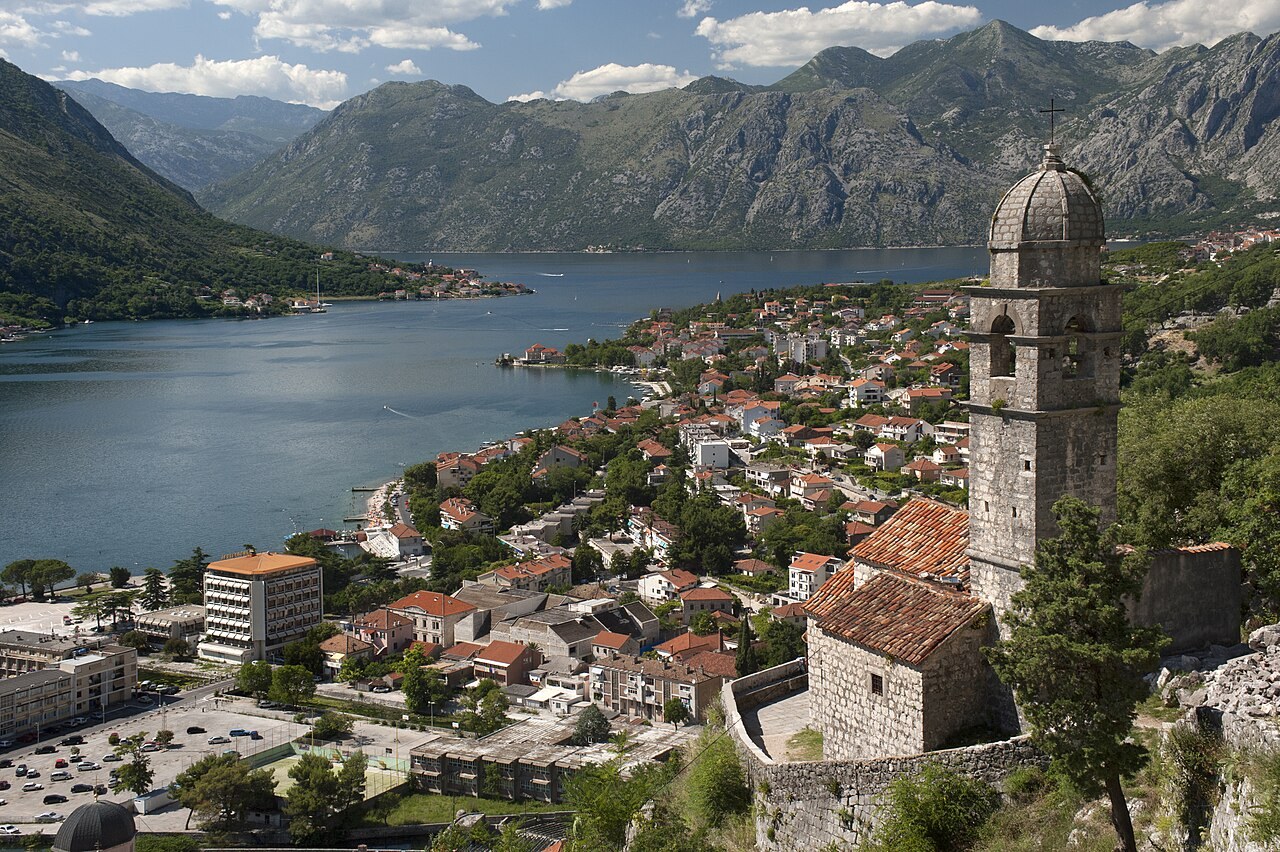
Kotor is Montenegro’s showpiece — a remarkably well-preserved medieval walled city tucked into a dramatic fjord-like bay, encircled by sheer limestone mountains that plunge almost vertically into the sea. It’s simultaneously one of Europe’s most photogenic towns and one of the Adriatic coast’s most family-friendly destinations. The UNESCO-listed Old Town is compact and car-free, the streets are a maze of Venetian architecture, and the resident cats outnumber tourists — at least before the cruise ships arrive.
For families, Kotor delivers something rare: genuine, ancient atmosphere you can actually walk around, touch, and explore — not behind roped-off barriers, but right through it. Kids wander past 15th-century palaces and 12th-century cathedrals on the way to get gelato. You hike 1,350 medieval stone steps to a fortress for extraordinary views. You take a boat to a hand-built island church. It’s the kind of place that feels like a fairy tale.
Why families love it:
- Car-free Old Town — kids can run freely through safe, narrow lanes
- Legendary resident cats — almost universally adored by children
- Dramatic hike up city walls — one of Europe’s best urban fortresses
- Bay of Kotor boat tours with Blue Cave, submarine tunnels, and island churches
- Very affordable by Western European standards
- Day trips to Perast, Budva, and Lake Skadar all within 1–2 hours
⏰ Best Time to Visit with Kids
| Season | Conditions | Verdict |
|---|---|---|
| May–Jun | 22–28°C, sea warming up, pre-cruise crowds | ⭐ Best for families |
| Jul–Aug | 35°C+, packed with cruise ship tourists, very busy | 🔴 Hot & crowded — manage expectations |
| Sep–Oct | 24–30°C, warm sea, crowd-free, quiet atmosphere | ⭐ Excellent |
| Nov–Mar | 10–17°C, some rain, most restaurants open, atmospheric | ✅ Good for culture, not beach |
| Feb | Winter Carnival — Venetian masks, spectacular parade | 🎭 Special occasion |
Pro tip: The biggest crowd management challenge in Kotor is cruise ships. By 10–11am most summer days, buses disgorge hundreds of day-trippers into the narrow Old Town. Arrive before 9am, do the city walls early, and you’ll experience the magic; arrive at midday and you’ll be shoulder-to-shoulder. September is arguably the sweet spot — warm enough for the bay and beaches, but dramatically quieter.
🚗 Getting Around
Car Rental (Strongly Recommended for Families) Kotor’s Old Town is car-free, but everything beyond it — Perast, Budva, Lake Skadar, Lovćen — requires wheels. Car rental is excellent value in Montenegro; budget around €25–45/day. Compare on Localrent for local operators who are often cheaper than international chains. Note: the Kotor Serpentine Road (25 hairpin bends up the mountain) is dramatic — not for nervous drivers.
Bay of Kotor Ferry (Kamenari–Lepetane) Cuts across the bay dramatically, saving a 40km drive around. About €5 per car. Runs frequently. A short hop that kids love as a mini adventure.
From the Airport Tivat Airport (TIV) is just 10–15 minutes from Kotor — one of the most convenient airport-to-destination drives in Europe. Private transfer ~€15–20. Podgorica Airport is the larger hub; private transfer to Kotor costs around €48 and takes 1.5 hours on winding roads (carsickness risk — have bags ready).
Taxis & Transfers Local taxis are very affordable. There’s no proper rideshare app widely used in Montenegro — agree on price upfront or ensure the meter is running.
Parking in Kotor You cannot drive into the Old Town. The most convenient car park is directly in front of the Sea Gate. In summer, it fills fast — arrive early.
🏰 Old Town & Historical Sites
1. Kotor Old Town (Stari Grad) — UNESCO World Heritage Site
The crown jewel. A remarkably intact medieval walled city where narrow cobblestone alleys wind between Venetian palaces, Romanesque churches, and sun-bleached stone buildings festooned with laundry and cats. The Square of Arms (Trg od Oružja) at the Sea Gate entrance is the main piazza — it’s where everyone converges and where kids are happiest running around while parents have coffee.
The Old Town is genuinely small — you can walk end-to-end in 10 minutes — but it rewards slow exploration. Enter through the Sea Gate (built 1555, Venetian lion relief still visible), wander past St. Tryphon Cathedral (Romanesque, built 1166), and get deliberately lost in the backstreets.
Unique to Kotor: Every alley has cats. They lounge in doorways, on ancient cannons, on café chairs. Children are mesmerised. The Kotor cats have been a part of city life for centuries — believed by locals to have arrived with Venetian sailors — and there’s an entire museum dedicated to them.
- Rating: 4.8/5 on Google
- Age suitability: All ages; best from age 3+ for walking
- Cost: Free to enter and explore
- Time needed: 1.5–3 hours for a relaxed wander
- ⚠️ Honest note: Cobblestones are bumpy — strollers can be pushed around but it’s effortful; a baby carrier is easier for very young children. Cruise crowds (typically 10am–4pm in summer) make the Old Town significantly less pleasant. Arrive before 9am.
- Pro tip: The Square of Arms comes alive in the evenings — soft lights, open-air restaurants, the ancient walls glowing gold. A family dinner here on a warm night is the highlight of many trips.
2. Kotor City Walls & San Giovanni Fortress ⭐
One of the most dramatic and rewarding hikes in Europe accessible to families. From within the Old Town, 1,350 ancient stone steps wind steeply up the cliff face through old watchtowers and fortified gates to the San Giovanni Fortress at 280m elevation. The views from the top — the entire Bay of Kotor, the terracotta rooftops of the Old Town far below, cruise ships looking like toys — are extraordinary.
At the halfway point (~650 steps) is the Church of Our Lady of Remedy (16th century, built into the ramparts) — a reasonable turnaround point for younger children, with views already worth the climb.
- Rating: 4.7/5 on Google
- Age suitability: Confident walkers 7+; the halfway church (~650 steps) is achievable for children 5+; full summit best for 8+
- Cost: €15 per person; children under 12 free. Open daily 7am–8pm.
- Time needed: 2–2.5 hours total (45–60 min up, plus time at top)
- ⚠️ Honest note: The steps are worn smooth limestone — genuinely slippery, especially on the descent. Flip-flops are a terrible idea. Fully exposed — no shade on the wall — so July/August midday is punishing. Go at sunrise or early morning.
- Pro tip: Start at 7am in summer: the light is beautiful, the town is quiet, and you’re done before the heat builds and the cruise crowds arrive. Bring at least 1.5L of water per person.
- Hidden alternative: The Ladder of Kotor starts outside the Northern Gate — a centuries-old trade route that zigzags up the mountain and includes a hidden “window” in the fortress wall allowing free access to the ramparts.
3. Cats of Kotor Museum
Kotor’s most charming (and most family-friendly) museum — a small gallery dedicated entirely to the city’s legendary feline residents, with cat-themed art, ceramics, toys, and historical information. The museum supports the local cat welfare community. Kids who’ve fallen in love with the Kotor cats along the streets will want to visit immediately.
- Rating: 4.4/5 on TripAdvisor
- Age suitability: All ages; especially 3–10
- Cost: €1 admission; gift shop also sells small bags of food to feed the local cats
- Time needed: 20–45 minutes
- Location: Old Town, near the Square of Arms
- Pro tip: Buy a bag of cat food from the shop and let kids distribute it to the cats in the surrounding alleys — huge hit with children.
4. Maritime Museum of Montenegro
Housed in a baroque Grgurina Palace in the Old Town, this well-presented museum traces Kotor’s 2,000-year history as a maritime powerhouse — model ships, navigational instruments, historic maps, sailors’ uniforms, and naval weaponry. A compact museum but high quality, and the building itself is beautiful.
- Rating: 4.3/5 on TripAdvisor
- Age suitability: Best for ages 7+; model ships and weapons engage younger curious kids
- Cost: ~€4 per adult; children reduced (under 7 often free — verify on site)
- Time needed: 45 min–1.5 hours
- Pro tip: Pair with the nearby Cats Museum and St. Tryphon Cathedral for a full Old Town morning.
5. St. Tryphon Cathedral
Kotor’s most iconic building — a twin-towered Romanesque cathedral built in 1166, one of the best-preserved medieval churches on the Adriatic coast. The interior features a remarkable 14th-century ciborium, silver reliquary, and fresco fragments. Kids may be more taken with the sheer age of it (“this is older than anything in America by 300 years”).
- Rating: 4.6/5 on Google
- Age suitability: All ages; engaging for history-curious 8+
- Cost: Small entry fee (~€2–3)
- Time needed: 30–45 minutes
- Pro tip: The cathedral treasury upstairs contains extraordinary medieval goldsmithing. The exterior photographed from Cathedral Square is one of Kotor’s signature images.
⛵ Water Activities & Boat Tours
6. Bay of Kotor Boat Tour — Blue Cave, Submarine Tunnels & Our Lady of the Rocks ⭐
The definitive Kotor experience. A 3–5 hour speedboat tour around the inner Bay of Kotor stopping at highlights impossible to reach by land:
-
The Blue Cave: A sea cave where sunlight refracts through shallow water, lighting the interior neon blue. Absolutely stunning — kids react with genuine awe. Swimming inside is possible and magical.
-
Yugoslav Submarine Tunnels: During the Cold War, Tito’s Yugoslavia cut massive tunnels into the coastal cliffs to hide submarines from NATO surveillance. The tunnels are enormous — you boat inside them. Children find the Cold War military-history angle fascinating.
-
Our Lady of the Rocks Island: A man-made island created by sailors who — by a centuries-old vow — dropped a stone on the site each time they returned safely from sea. Over generations, the stones became an island with a church. The legend is genuinely beautiful to tell children. Entry to the church is €3.
-
Perast waterfront: Often included as a stop.
-
Rating: 4.8/5 on TripAdvisor (consistently top-rated Kotor activity)
-
Age suitability: All ages; swimming in the Blue Cave from ~6+
-
Cost: Group tours from ~€25–35/person. Private charter from ~€150–200/boat for 3 hours — excellent value for a family of 4–5.
-
Time needed: 3–5 hours
-
⚠️ Honest note: The Blue Cave gets busy; morning departures are strongly preferred. Life jackets provided.
-
Pro tip: Private charter is only marginally more expensive per person for a family of 4–5 compared to a group tour. Book early in peak season.
7. Kotor Bay Swimming ⭐
Kotor has a small pebble/concrete beach area about 10 minutes’ walk from the Old Town along the bay. The beaches at Dobrota (5 min drive north) and Orahovac are quieter and more enjoyable, with gentle entry into the sea. Bay water is typically warmer than the open Adriatic because it’s sheltered, making it swimmable from May.
- Age suitability: All ages; calm water ideal for young swimmers
- Cost: Free
- ⚠️ Honest note: Bay beaches are pebble/rock — water shoes are useful. Not Malta or Greece quality beaches, but the mountain backdrop makes them uniquely beautiful.
🎭 Festivals & Events
8. Boka Night — Decorated Boat Parade ⭐ (Late August)
One of Montenegro’s most spectacular events. A centuries-old maritime tradition: beautifully decorated and illuminated boats process across the Bay of Kotor from Muo toward the Old Town in a floating parade, with music, lanterns, and lights reflecting on the black water. Ends with fireworks over the fortress walls and dancing in the old city squares.
This is the kind of spectacle that children remember for decades.
- When: Second half of August (exact date varies annually)
- Cost: Free to watch from the waterfront
- Age suitability: All ages
- ⚠️ Honest note: The town is extremely crowded during Boka Night. Book accommodation 6+ months in advance.
9. Kotor Winter Carnival (February)
A 500-year-old tradition of Venetian-style carnival masks and elaborate costumes that fill the narrow streets of the Old Town. The parade ends at the Square of Arms with the symbolic burning of a large effigy representing a public figure blamed for the year’s misfortunes — a uniquely Montenegrin tradition.
- When: February (typically the second or third weekend)
- Cost: Free
- Age suitability: 4+ — costumes and masks are visually stunning
10. Kotor Summer Carnival & Children’s Parade (Early August)
Kotor’s summer counterpart to the February Carnival — colourful Venetian-style procession with masks, costumes, and fireworks. Uniquely, there is a dedicated children’s parade — children in costume march through the Old Town. Foreign visitors with children in fancy dress are warmly welcomed to join.
- When: Early August
- Cost: Free
- Age suitability: All ages; children’s parade particularly special for 4–12
11. KotorArt Festival (July–August)
A multidisciplinary cultural festival: classical music concerts in medieval churches and open-air squares, jazz, ballet, theatre, and traditional Montenegrin folk singing. Family-friendly events are included.
- When: July–August (multi-week)
- Cost: Some events free; ticketed performances typically €10–30
- Website: kotorart.me
12. Fasinada in Perast (July 22nd)
A 572-year-old tradition celebrating the discovery of the icon that inspired the building of Our Lady of the Rocks. Locals decorate fishing boats and form a convoy to the island, throwing stones into the sea to symbolically continue building it. Deeply atmospheric — a remarkable cultural experience for children to witness.
- When: July 22nd, annually
- Cost: Free to watch from the waterfront
- Location: Perast (30 min drive from Kotor)
🌿 Nature & Outdoors
13. Park Slobode Playground
A pleasant small park just outside the Old Town walls with a children’s playground — useful for letting younger kids burn energy after sightseeing.
- Cost: Free
- Location: Just outside the Sea Gate, Kotor
🌊 Day Trips
Day Trip 1: Perast & Our Lady of the Rocks ⭐ (30 min drive)
One of the most beautiful day trips in the Balkans
Perast is a tiny, perfectly preserved Baroque seaside village on the Bay of Kotor — no cars, one waterfront promenade, stone villas with crumbling grandeur, and a setting so cinematic it barely seems real. Two man-made islands just offshore:
Our Lady of the Rocks (Gospa od Škrpjela): The island built by sailors dropping stones across centuries. The small church inside contains hundreds of silver votive plaques and a remarkable ex-voto tapestry embroidered over 25 years by a local woman using her own hair. Boat from Perast: €10 return per person. Church entry: €3.
St. George’s Island: A Benedictine monastery visible from the water — its silhouette against the mountains is one of the Bay of Kotor’s signature images.
- Rating: 4.8/5 on Google (Perast)
- Age suitability: All ages
- Cost: Free to walk Perast; boat to island €10/person return; church €3
- Time needed: Half day (2–3 hours in Perast + islands)
- ⚠️ Honest note: Perast is extremely small — the entire town is one street. The magic is in atmosphere and the island visit.
- Pro tip: Have lunch at Conte Restaurant on the Perast waterfront after visiting the island — excellent seafood with the most spectacular bay views in Montenegro. Book ahead in summer.
Day Trip 2: Budva Old Town & Riviera Beaches (30–40 min drive)
Montenegro’s main tourist resort town has a compact medieval walled Old Town with beach access, plus the famous Sveti Stefan — a tiny walled island-village on a causeway that’s one of Montenegro’s most photographed spots. Budva’s beaches — especially Bečići Beach and Mogren Beach (two connected coves accessible by a clifftop path) — are significantly better for proper beach days than the Kotor Bay beaches.
- Rating: 4.4/5 on Google (Budva Old Town)
- Age suitability: All ages; teens love the beach-resort energy
- Cost: Free to explore Budva Old Town; beaches free; sun loungers ~€8–12/day
- Time needed: Full day
- ⚠️ Honest note: Budva is busier and more commercialised than Kotor — it has a more package-holiday feel.
- Pro tip: Mogren Beach requires a 10-minute walk along a cliff path from Budva Old Town — arrive early.
Day Trip 3: Lake Skadar National Park & Boat Tour (1–1.5h drive)
Montenegro’s largest national park and the Balkans’ largest lake — a vast, still expanse of water rimmed by hills, dotted with monasteries, and alive with wildlife. Home to one of Europe’s largest breeding colonies of Dalmatian pelicans. Water lilies cover huge sections of the lake’s surface in summer.
The best way to experience Skadar with kids is via a traditional wooden boat tour from Virpazar. Local family operators run 1.5–3 hour tours that visit pelican colonies, submerged medieval monastery ruins, and hidden channels overgrown with water plants.
- Rating: 4.7/5 on TripAdvisor (boat tours)
- Age suitability: All ages; wildlife-curious 5+ will appreciate it most
- Cost: National Park entry ~€4/person. Boat tours ~€20–30/person group; private ~€80–120 for the whole boat.
- Time needed: Full day
- Drive time from Kotor: ~1–1.5 hours
🍴 Family-Friendly Food
Konoba Scala Santa — Kotor Old Town ⭐
The standout fine-dining option in the Old Town — innovative takes on Montenegrin and Adriatic cuisine (octopus salad, fresh monkfish, truffle gnocchi) in a beautiful setting inside the historic walls. The cats that wander in are unofficial staff. Book well ahead in peak season.
- Rating: 4.7/5 on TripAdvisor
- Cost: Mains €16–28; booking essential in summer
La Catedral Pasta Bar
A Kotor institution doing one thing brilliantly: fresh, handmade pasta. The truffle tagliatelle is legendary. Many families end up eating here twice in a single stay.
- Rating: 4.6/5 on Google
- Cost: Pasta dishes €10–16
- Pro tip: Arrive when they open (12pm or 6pm) to avoid queuing. Kid-friendly — pasta universally welcomed by children.
Ćatovića Mlini Restaurant — Morinj ⭐
A converted 16th-century watermill in the village of Morinj, 15 minutes’ drive from Kotor. Fresh water springs gurgle through the restaurant’s terraced gardens, ducks wander between tables, and the seafood arrives straight from the bay. One of Montenegro’s most-recommended restaurants for families — the outdoor garden setting is magical for kids.
- Rating: 4.7/5 on TripAdvisor
- Cost: Mains €14–22
- Location: Morinj, Bay of Kotor (15 min drive)
- Pro tip: Book ahead. The running water features and ducks keep children entertained between courses.
Local Food to Know
- Ćevapi: Grilled minced meat sausages — cheap, everywhere, universally loved by kids. €4–6 for a plate.
- Burek: Flaky pastry with cheese or meat, sold from bakeries. €1–2. The local equivalent of Malta’s pastizzi.
- Njeguški pršut: Smoked prosciutto from the mountain village of Njeguši — deeply flavourful, served at almost every restaurant. Buy it at the market.
- Montenegro wine: The local Vranac red and Krstač white are genuinely good and cheap (~€8–12 a bottle in restaurants).
💡 Practical Tips for Families
Best Areas to Stay with Kids
| Area | Why | Best for |
|---|---|---|
| Kotor Old Town | Wake up before the crowds; maximum atmosphere; car-free | Short stays, magical experience |
| Dobrota | 5 min drive from Old Town; quieter; bay views; better beach | Families wanting space + bay access |
| Tivat | 15 min from Kotor; closer to airport; Porto Montenegro marina | Airport convenience; modern amenities |
| Perast | Tiny, tranquil, jaw-droppingly beautiful; limited options | Romantic alternative base, 2–3 nights |
💡 Recommendation for families: Apartments in Dobrota give the best balance — Old Town walkable or a very short drive, your own space with kitchen, and a quieter base than inside the walls.
Budget guide: A private apartment for a family of 4 typically costs €60–120/night in shoulder season, €100–180 in July/August. A full family dinner with drinks at a good Old Town restaurant costs €50–80.
Safety Notes
- 🟢 Montenegro is very safe — one of the safest countries in Europe. Low crime, friendly locals.
- ⚠️ Cobblestones everywhere in Old Town — pushchairs are possible but effortful; baby carriers recommended for infants
- ⚠️ City walls are serious terrain — worn, slippery limestone steps. Children must be supervised closely. Not suitable for toddlers or those uncomfortable with heights.
- ☀️ Heat in summer: July/August temperatures regularly hit 35°C+. Schedule outdoor walks for early morning.
- 🌊 Swimming in the bay: Kotor Bay water is generally calm and safe. Check for sea urchins on rocky entry points — water shoes recommended.
- 🚗 Driving: The Kotor Serpentine with 25 hairpin bends requires care. The Podgorica–Kotor road is notorious for carsickness in children.
- 💧 Water quality: Tap water in Montenegro is safe to drink.
Local Culture Families Should Know
- Montenegrins are extremely warm to children — you’ll be welcomed in virtually every restaurant
- Cash is useful: Montenegro uses euros despite not being an EU member. Some smaller operators are cash only.
- Cats: The Kotor cats are beloved community animals. Children should be gentle; hand washing after petting is essential before eating.
- Sunday pace: Montenegro operates on a relaxed Balkan time — things open late, siestas happen.
- Language: Montenegrin (mutually intelligible with Serbian/Croatian). English is widely spoken in tourist areas.
- Cruise ship rhythm: The Old Town transforms when cruise ships dock (10am–5pm most summer days). Mid-week can be significantly quieter.
💰 Money-Saving Tips
Boat Tours Book a private charter for the whole family rather than individual seats on group tours — for a family of 4–5, per-person costs are comparable and you get flexibility and swim stops.
Eat at the Market Stock up on local pršut, sir (cheese), bread, and fruit at the farmers’ market for picnic lunches — costs €5–8 for a family vs. €30–40 at a restaurant.
City Walls: Go Early or Use the Ladder of Kotor Children under 12 are free on the city walls. The Ladder of Kotor hike (starts outside the Northern Gate) gives access to the fortress walls via a hidden entrance at no charge — although physically more demanding than the main staircase.
Free Festivals Boka Night, both Summer and Winter Carnivals, and the Fasinada in Perast are all free to attend — world-class spectacles at zero cost.
📋 Quick Reference: Activities at a Glance
| Activity | Age Best | Cost (family of 4) | Duration | Season |
|---|---|---|---|---|
| Kotor Old Town wander | All | Free | 1.5–3 hrs | Year-round |
| City Walls & San Giovanni | 7+ | €30 (kids free) | 2–2.5 hrs | Year-round |
| Cats Museum | 3–10 | ~€4 | 30–45 min | Year-round |
| Maritime Museum | 7+ | ~€16 | 1–1.5 hrs | Year-round |
| St. Tryphon Cathedral | All | ~€8 | 30–45 min | Year-round |
| Bay boat tour (Blue Cave + tunnels) | 5+ | ~€100–120 (private) | 3–5 hrs | May–Oct |
| Kotor Bay swimming | All | Free | 1–3 hrs | May–Oct |
| Boka Night boat parade | All | Free | Evening | Late Aug |
| Winter Carnival | 4+ | Free | Half day | February |
| Summer Carnival + children’s parade | All | Free | Half day | Early Aug |
| KotorArt Festival | 5+ | Free–€30 | Evenings | Jul–Aug |
| Fasinada maritime procession (Perast) | All | Free | 2–3 hrs | July 22 |
| Park Slobode playground | All | Free | 30 min | Year-round |
| Perast + Our Lady of Rocks (day trip) | All | ~€52 | Half day | Year-round |
| Budva Old Town + beach (day trip) | All | Free (beach) | Full day | May–Oct |
| Lake Skadar boat tour (day trip) | All | ~€80–100 | Full day | Apr–Oct |
✈️ Getting to Kotor
Tivat Airport (TIV) is the most convenient — just 10–15 minutes from Kotor. Direct flights from many European cities including London, Amsterdam, Frankfurt, and various seasonal hubs. Routes expand significantly May–October. From Malta, the flight is approximately 1.5 hours.
Podgorica Airport is the main international hub — 1.5 hours from Kotor via winding mountain roads. Better flight selection year-round.
From Dubrovnik: A popular approach — Dubrovnik Airport is ~1.5–2 hours by car or transfer. Cross-border transfers available from local operators. Easy to combine Kotor with a Croatia itinerary.
From Split: ~3.5–4 hours by car along the coastal road — a scenic drive worth considering if combining with Split and Dubrovnik.
Guide compiled May 2026. Prices and hours correct at time of research but subject to change — verify on official websites or locally before visiting. Montenegro uses the euro (€) despite not being an EU member state.