🇱🇾 Misrata — Family Travel Guide
Country: Libya
Last Updated: February 2026
⚠️ Critical Safety Notice — Read Before Everything Else
Misrata and Libya are currently rated Level 4 (Do Not Travel) by the US State Department. The UK FCDO advises against all but essential travel to all areas within the city limits of Misrata. This guide is written for completeness and for the benefit of Libyan diaspora families returning to visit relatives, experienced travellers working with established tour operators, and researchers — not for conventional family holidays.
Key risks:
- Ongoing militia activity and occasional armed clashes
- Kidnapping risk (foreigners are high-value targets)
- Unexploded landmines and ordnance scattered throughout the region
- No functioning embassy assistance for most Western nationals
- Erratic flight schedules and limited medical facilities
- Alcohol is completely illegal
If you proceed despite advisories: Travel only with a reputable Libyan tour operator and government-approved guide. Register with your embassy before departure. Purchase specialist travel insurance (very few providers cover Libya — IATI is one). Share your itinerary with someone at home daily.
Overview
Misrata is Libya’s third-largest city and arguably its most resilient. Perched on the Mediterranean coast 211 km east of Tripoli, this city of over 880,000 people carries the weight of recent history more visibly than almost anywhere in North Africa. During the 2011 Civil War, Misrata endured a brutal 6-month siege by Gaddafi’s forces — the longest, bloodiest urban battle of the conflict — and emerged battered but unbroken. That tenacity now defines the city’s identity.
For the adventurous traveller willing to navigate its complexities, Misrata offers something genuinely rare: a real Libyan city — not a tourist construct. The old souk still thrums with textile traders, the port smells of diesel and fresh fish, the War Museum delivers a gut-punch of recent history, and day trips unlock two of the Mediterranean’s greatest Roman ruins. It is not an easy destination. But it is an unforgettable one.
Why visitors come:
- Home to one of Libya’s most important 2011 Civil War memorial museums
- Gateway to the stunning Tawergha Springs natural oasis
- Day-trip access to Leptis Magna — arguably the best-preserved Roman city on Earth
- Authentic Libyan city life largely unfiltered by tourism
- Libya’s commercial and entrepreneurial heartland
- Mediterranean beaches with no crowds (for obvious reasons)
Who should NOT visit: Families with young children travelling for leisure. The infrastructure, safety situation, and logistics are not compatible with conventional family tourism.
⏰ Best Time to Visit
| Season | Conditions | Verdict |
|---|---|---|
| Oct–Nov | 20–28°C, warm sea, cooling evenings | ✅ Best for sightseeing |
| Mar–May | 18–26°C, pleasant, occasional rain | ✅ Good for historical sites |
| Jun–Sep | 30–40°C, extremely hot, humid coast | 🔴 Intense heat; difficult for outdoor exploration |
| Dec–Feb | 12–20°C, some rain | ✅ Comfortable temperatures for the medina and museum |
Ramadan: If visiting during Ramadan (dates shift annually), be aware that restaurants close during daylight hours and the city’s rhythm changes dramatically. Sunset iftars are communal and welcoming events.
🚗 Getting There & Around
Flying In
Misrata International Airport (MRA) operates limited regional flights — primarily to Tunis-Carthage (TUN) and Istanbul (IST). Schedules are erratic; confirm flights multiple times before departure. No major Western airline serves Misrata directly.
Alternative entry: Some travellers fly into Tripoli’s Mitiga Airport (MJI) and travel overland (~2–2.5 hours by private car). This is the most reliable option for international connections.
Getting Around Misrata
- Private car with guide: The only practical option for visitors. Your tour operator will arrange this. ~50–80 LYD/day (approx. $10–17 USD at black market rate).
- Shared taxis (service taxis): Used by locals. Cheap but require Arabic and local knowledge.
- Walking: The old souk, port area, and Tripoli Street are walkable if you’re with a local guide.
- No rideshare apps: Uber and Bolt do not operate in Libya.
Currency
The Libyan Dinar (LYD) is the official currency. There are effectively two exchange rates — the official rate (~4.8 LYD/USD) and a black market rate (often significantly higher). Only exchange money through your guide or trusted local contacts. ATMs are unreliable for foreign cards. Bring USD or EUR cash.
🏛️ Historical & Cultural Attractions
1. Misrata War Museum (متحف مصراتة الحربي)
The single most important sight in Misrata and one of the most visceral conflict museums in the world. Established after the fall of Gaddafi, the museum documents the 2011 Siege of Misrata through captured weapons, military vehicles, photographs, and personal testimonies. Outside are tanks, artillery pieces, and armed pickup trucks — the famous “technicals” that became the symbol of the revolution. Inside, photo displays show the city under bombardment. It is sobering, powerful, and completely unlike any war museum in Europe.
- Rating: ~4.0/5 (limited formal reviews; universally praised by travellers who visit)
- Age suitability: Teens and adults; graphic war imagery is not suitable for young children
- Cost: Free or nominal entry fee (~2–5 LYD)
- Time needed: 1.5–2 hours
- Location: Central Misrata
- Hours: Variable; mornings generally most reliable
- ⚠️ Honest note: Signage is entirely in Arabic. A local guide is essential to contextualise the exhibits. The museum has no café or facilities.
- Why it’s unique: This is the ONLY museum in the world dedicated to the 2011 Libyan revolution at this scale, built by the people who fought the battle in the streets just outside.
2. Old Souk (السوق القديم) — Tripoli Street Markets
Misrata has been a commercial hub for over a thousand years, and the souks near the central square reflect that continuity. Three times a week, merchants spread out luxury carpets, traditional textiles, abayas, and handwoven Jird cloaks that have been produced in the city for centuries. Tripoli Street — Misrata’s main boulevard — is lined with fabric shops, coffee stalls, technology outlets, and family-run workshops that feel genuinely alive. This is not a tourist market. Prices are in Arabic, haggling is expected, and the goods are for locals.
- Rating: 4.2/5 (Google Maps reviews from Libyan visitors)
- Age suitability: All ages; fascinating sensory experience for older children
- Cost: Free to browse; traditional textiles from ~20 LYD, carpets from ~100 LYD
- Time needed: 1–2 hours
- Best days: Market days (typically Mon, Wed, Sat — confirm locally)
- Pro tip: The textile tradition here is hundreds of years old — Misrata was historically famous for exporting wool and specialty cloth to Europe and Turkey. Buying a locally-woven piece is a genuine cultural artefact.
- ⚠️ Honest note: Women travellers should dress conservatively (headscarf recommended). Staring is common. Move with a guide.
3. Qurza Archaeological Site (موقع قرزة الأثري)
One of Libya’s more overlooked ancient sites, Qurza (also known historically as Korzin) covers a 500×300-metre area of ancient Libyan civilisation in a valley east of Misrata. The site contains ancient buildings, rock tombs, and structures dating back well into the pre-Islamic period. It receives almost no formal tourist visits, making it a genuinely unspoiled archaeological site.
- Rating: Limited formal reviews; highly valued by archaeologists
- Age suitability: 8+; older children interested in archaeology
- Cost: Free (no formal ticketing)
- Time needed: 1–2 hours
- Access: Requires 4WD and a guide; not signposted
- ⚠️ Honest note: No facilities. Stay on established paths — this entire region has unexploded ordnance risk. Only visit with a local guide who knows the terrain.
4. Bintlis Archaeological City (مدينة بنتليس الأثرية)
Founded around 1228 AD, Bintlis was a significant Hafsid-era city located near Misrata. Its remains include the governor’s palace, a judge’s palace, and the historical Bintlis mosque — structures that offer a window into medieval North African urban life that is rarely visited. The site fell into decline and was eventually abandoned, but substantial ruins survive.
- Rating: Limited formal reviews
- Age suitability: 10+
- Cost: Free
- Time needed: 1 hour
- ⚠️ Honest note: Very rough access; no signage; Arabic-speaking guide essential.
5. Misrata Grand Mosque & Port Area
The city’s main mosque is a social and architectural anchor. Non-Muslims cannot enter during prayer times and must dress appropriately; however, the surrounding area — particularly the old port of Misrata Marina (the historic Italian-era seaport) — is worth wandering. Fishing boats, the smell of the Mediterranean, and the Suq al-Samak (fish market) at the docks are raw, lively, and completely authentic. Fishermen unload their catch early morning; by 8am the stalls are in full swing.
- Rating: 4.0/5 (port and market area)
- Age suitability: All ages (fish market may be overwhelming for very young children)
- Cost: Free
- Best time: Early morning (6–9am) for fish market
- Time needed: 1–1.5 hours
🌿 Parks & Nature
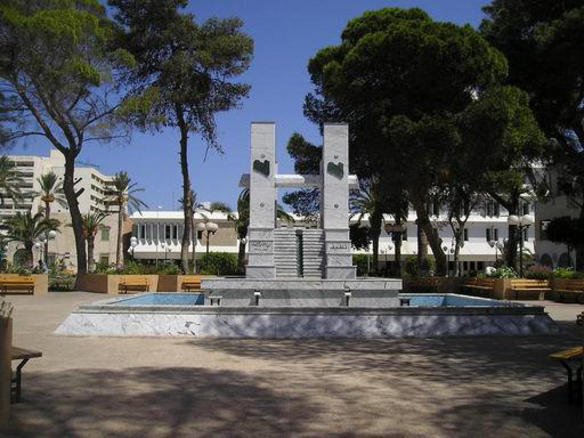
6. Downtown Garden (Martyrs’ Memorial Park)
Misrata’s main public garden and memorial space — a place where the city simultaneously remembers its war dead and continues everyday life. Families picnic here, children play, and monuments to the 2011 martyrs stand amongst the greenery. It’s a poignant and peaceful space that captures Misrata’s determination to rebuild.
- Rating: 4.1/5 (390+ Google reviews)
- Age suitability: All ages
- Cost: Free
- Time needed: 30–60 minutes
7. Almasa Park
A large city park popular with Misratan families — shaded walkways, grass areas, and a more relaxed atmosphere than the memorial garden. Good for a picnic or a slow afternoon walk.
- Rating: 4.0/5 (312 reviews)
- Age suitability: All ages
- Cost: Free
- Time needed: 1–2 hours
🏖️ Beaches
Misrata has Mediterranean coastline, and several beaches are accessible — notably along the resort corridor east of the city. The sea is clean and the beaches largely empty by any global standard. However:
⚠️ Important caveats:
- Western swimwear standards are not appropriate; conservative beach attire required
- Women swimming in public spaces is culturally complex — check with your guide
- Beaches near the port area may have debris or industrial runoff; resort beaches are cleaner
- No formal beach facilities (no lifeguards, rentals, or cafés)
Recommended: The beaches fronting the resort hotels (Misrata Resort, Aman Tourist Resort) are your cleanest, most organised options for a coastal afternoon. Guests and visitors are generally welcomed.
🍽️ Food & Drink
Libyan food is excellent and underrated. Misrata’s restaurant scene is functional rather than sophisticated, but the quality of home-style cooking is high.
What to eat:
- Couscous with lamb or chicken — the national dish, served with a rich tomato-based sauce
- Bazin — Libya’s signature dish: dense barley dough cooked in lamb broth, eaten communally with the hands
- Sharba Libya — hearty lamb and vegetable soup with pasta, spiced with mint
- Asida — porridge-like wheat dish, often served sweet with dates and honey
- Fresh grilled fish — from the port market; simply cooked and extraordinary
Restaurants worth visiting:
- Kudo Restaurant — Most popular in the city; open daily 11am–11pm (closed Fridays); broad menu, affordable, has parking
- Meat House Restaurant — Best grilled meats in Misrata; family floor upstairs; excellent value
- Freedom Turkish Cuisine — Specialty Turkish dishes with free baklava on arrival; slightly pricier
Alcohol: Completely illegal throughout Libya. No exceptions.
⚠️ Note: Restaurant opening hours are fluid and can change. Always confirm in advance, especially during Ramadan.
🏨 Where to Stay
Misrata Resort: The top option for visitors; sea view, restaurants, family-friendly, higher prices reflect the quality (~150–250 LYD/night).
Aman Tourist Resort: Well-organised beachfront resort; praised for fast service and cleanliness; slightly more affordable.
Safari Resort: More affordable; sometimes hosts group tours; reasonable quality.
Budget guesthouses: Exist but are more variable; language barrier can be significant without a guide.
🚗 Day Trips from Misrata
Day Trip 1: Leptis Magna & Al-Khums (~120 km west / ~1.5h drive)
⭐ The unmissable day trip from Misrata — and one of the greatest Roman sites on Earth.
Leptis Magna is a UNESCO World Heritage Site and arguably the best-preserved Roman city in the world — more complete than Rome’s Forum, more spectacular than Pompeii in scale. Birthplace of Emperor Septimius Severus, it was once the third-largest city in Roman Africa. Today it stands almost entirely uncrowded — you walk through a complete Roman city, theatre, amphitheatre, harbour, basilica, and triumphal arch largely alone. The Arch of Septimius Severus here makes Rome’s version look modest.
- UNESCO Status: World Heritage Site (inscribed 1982)
- Rating: 4.8/5 on every travel platform that lists it
- Age suitability: 8+ (significant walking on uneven ground)
- Cost: ~5–10 LYD entry (very affordable)
- Time needed: 3–4 hours minimum
- Drive from Misrata: ~1.5 hours via coastal highway
- ⚠️ Note: The site museum in Al-Khums displays mosaics and artefacts. Check it’s open before making the trip. Bring water, sun protection, and good shoes. No shade over most of the site.
- Why it’s unique: Leptis Magna is the single greatest argument for visiting Libya. There is no comparable Roman site anywhere that you can experience with this level of solitude and scale.
Day Trip 2: Tawergha Springs (~60 km southeast / ~1h drive)
A natural oasis of thermal springs south of Misrata — one of the hidden natural treasures of coastal Libya. The springs produce crystal-clear warm water that pools amid North African scrubland, creating a striking contrast with the surrounding landscape. Visited almost exclusively by locals.
- Rating: 4.4/5 (36 reviews)
- Age suitability: All ages; great for children who want to swim
- Cost: Free
- Time needed: 2–3 hours
- ⚠️ Note: The town of Tawergha has a painful post-war history (its residents were displaced during the 2011 conflict). Your guide should brief you on local sensitivities. Stick to the springs area.
Day Trip 3: Zliten & Sabratha (~100–200 km west)
Zliten (30 km west) is a quiet coastal town with olive groves, a slower pace, and a pleasant old mosque. A good stop en route to larger sites.
Sabratha (~200 km west, ~2.5h) is another UNESCO Roman site — smaller than Leptis Magna but with a spectacularly restored theatre overlooking the sea. Combining a Sabratha day trip with a Tripoli stop (the capital is between Misrata and Sabratha) makes for an extraordinary full-day or two-day excursion. The Arc of Marcus Aurelius in Tripoli’s old medina is a must.
- Sabratha Rating: 4.7/5
- Time needed: Full day (start early)
- ⚠️ Note: The road between Misrata and Tripoli passes through areas with occasional militia checkpoints. Your guide will handle these. Never travel this route independently.
🎭 Cultural Experiences
Libyan Textile Tradition — Misrata’s Living Craft Heritage
Misrata has been famous for textile production for centuries — the Akleem (traditional rug), the Jird (ceremonial cloak), and the Shashiya (headwear) are all produced here and have been for at least 500 years. The city’s identity is bound up in its cloth. Visiting a working textile workshop — which your guide can arrange — is a rare window into a living craft tradition. Watching weavers on traditional looms, then buying a locally-made piece, connects you to something that Marco Polo-era traders would recognise.
Libyan Hospitality — The Real Attraction
In a country that sees so few visitors, the hospitality extended to foreign guests is extraordinary. Being invited for tea, offered dates and sweets, or welcomed into a local café for an extended conversation about life in Libya before and after 2011 is the experience that travellers consistently describe as the most powerful part of visiting. It doesn’t appear on any attraction list. It happens constantly.
💰 Budget Guide (2026 Estimates)
Note: Libyan Dinar exchange rates are complex. USD equivalents use the more favourable parallel rate.
| Category | Cost (LYD) | Approx USD |
|---|---|---|
| Mid-range hotel | 150–250/night | $30–50 |
| Restaurant meal | 15–40 | $3–8 |
| Private car + guide (day) | 200–350 | $40–70 |
| Leptis Magna entry | 5–10 | $1–2 |
| War Museum | Free–5 | Free–$1 |
| Local street food | 3–8 | $0.50–1.50 |
Overall: Libya is extraordinarily affordable by any Western standard. A full day including transport, guide, entry fees, and meals need not exceed $60–80 per person.
🛂 Visas & Entry (2026)
Libya introduced an e-visa system in April 2024 — a significant improvement over the previous painful application process.
- Cost: $63 USD
- Processing time: ~5 working days
- Validity: 90 days from approval to enter
- Apply at: evisa.gov.ly
- ⚠️ Caution: Libya’s systems change frequently. Verify current requirements with your tour operator before applying. Independent travel without a local sponsor/guide is technically prohibited and increasingly enforced.
Israeli passport holders: Entry is not permitted.
⚠️ Safety — Detailed Guidance
Current situation (Feb 2026): West Libya, including Misrata, operates under a ceasefire agreement (signed 2020) between rival factions. Day-to-day life is largely normal. However, the peace is fragile — sporadic clashes occur. Misrata is controlled by militia forces loyal to the Tripoli-based Government of National Unity.
Practical safety rules:
- Never travel without a pre-arranged local guide/sponsor. This is legally required and genuinely protective.
- Don’t photograph military installations, checkpoints, or government buildings. This can result in detention.
- Keep a low profile. Dress conservatively. Don’t draw attention to nationality.
- Carry photocopies of your passport and keep the original secure.
- Know your emergency contacts: Your tour operator, your country’s nearest embassy (Tunis or Rome for most), and a local medical contact.
- Do not venture into rural or southern areas without specific local expertise — landmine risk is real.
- Unexploded ordnance: Stay on roads and established paths, especially around the outskirts of the city and anywhere with obvious war damage.
Medical: Misrata has hospitals but they operate below Western standards. Travel insurance with medical evacuation is essential. Bring any prescription medications in sufficient supply — availability cannot be guaranteed.
🗺️ Sample Itinerary — 3 Days in Misrata
Day 1 — The City
- Morning: Fish market at the port (6–8am), then Old Souk and Tripoli Street
- Midday: Misrata Grand Mosque exterior, Downtown Garden, lunch at Kudo Restaurant
- Afternoon: Misrata War Museum (2 hours)
- Evening: Corniche walk, sunset over the Mediterranean
Day 2 — Leptis Magna
- Full day excursion to Leptis Magna and Al-Khums (~8 hours)
- Stop at the Al-Khums museum en route
- Return via coastal highway for seafood dinner in Misrata
Day 3 — Natural Oasis & Local Life
- Morning: Tawergha Springs (1h drive, swim, picnic)
- Afternoon: Almasa Park, textile workshop visit (arranged by guide)
- Evening: Final dinner at Meat House Restaurant; explore the night café culture on Tripoli Street
📋 Key Facts
| Language | Arabic (Libyan dialect); very limited English |
| Currency | Libyan Dinar (LYD); bring USD/EUR cash |
| Time zone | EET (UTC+2) |
| Religion | Islam (Sunni); conservative dress required |
| Alcohol | Illegal |
| Electricity | 230V, Type L (Italian) plugs |
| Nearest airport | Misrata International (MRA); also Tripoli Mitiga (MJI) |
| Best tour operator | Against the Compass Expeditions (group tours available) |
| Emergency | 193 (police), 1515 (ambulance) |
🏁 Final Verdict
Misrata is not a family holiday destination in any conventional sense. The safety situation, absence of tourist infrastructure, language barrier, and cultural conservatism make it completely unsuitable for leisure travel with young children. The advisories exist for real reasons.
But for experienced travellers — journalists, researchers, diaspora families, and adventure-seekers operating with expert local guidance — Misrata offers something that has become vanishingly rare: an unmediated encounter with a real city in the middle of its own story. The War Museum will stay with you. Leptis Magna will destroy your sense of proportion. The hospitality of Misratan families who lived through the siege will humble you.
Go carefully. Go prepared. Go with a guide. And if you have any doubt, don’t go — there are extraordinary things to see in this part of the world that carry less risk.
Sources: US State Department Travel Advisory (2025), UK FCDO Regional Risks Libya (updated 2025), Against the Compass Libya Guide (Feb 2026), TourInLibya.com, takeyourbackpack.com, evendo.com, Wikipedia (Misrata, Misrata War Museum, Leptis Magna), libyanlife.com