🇧🇦 Mostar — Family Travel Guide
Country: Bosnia and Herzegovina Airport: Mostar Airport (OMO) — small regional airport; most visitors fly into Split (Croatia, ~2.5h drive) or Dubrovnik (Croatia, ~2.5h drive) Last Updated: March 2026
Overview
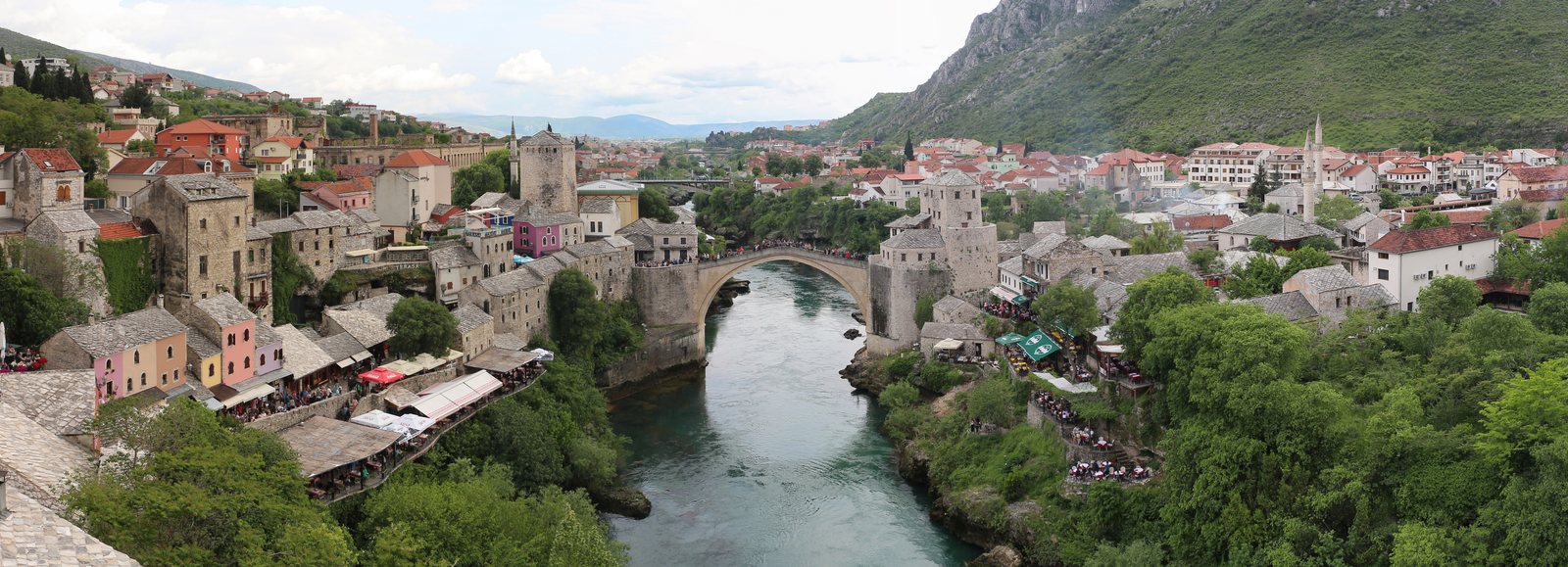
Mostar is one of the most captivating cities in Europe — a place where Ottoman minarets and medieval stone bridges coexist with the raw, visible scars of a 1990s war. It’s simultaneously beautiful and sobering, ancient and still healing. The city sits in the heart of Herzegovina, a sun-drenched southern region of Bosnia, in the valley of the luminous turquoise Neretva River, flanked by dramatic limestone mountains.
The city’s name literally means “Bridge Keeper” — and its defining icon, the Stari Most (Old Bridge), is one of the most photographed structures in the Balkans. A 16th-century Ottoman masterpiece, it was deliberately shelled and destroyed in 1993 during the Bosnian War, then painstakingly reconstructed from the original stone and reopened in 2004. It is now a UNESCO World Heritage Site.
Why families with children love it:
- Visually extraordinary — the Old Bridge, turquoise river, cobbled bazaar, mosque minarets, and mountain backdrop create a genuinely fairy-tale setting
- Extremely affordable — among the cheapest destinations in Europe; even budget-conscious families can eat, do, and see everything
- Perfectly positioned for day trips to Kravica Waterfall, the Blagaj Tekija monastery, and the ancient village of Počitelj
- Living history that’s age-appropriate and gripping — kids who’ve learned about WWII or the Bosnian War find this deeply engaging
- The unique atmosphere of Muslim Bosniak, Catholic Croat, and Orthodox Serb cultures blending (and sometimes clashing) is unlike anywhere else in Europe
- Genuinely compact Old Town walkable in minutes — no exhausting city transport needed
Honest caveat: Mostar is primarily a culture and history destination rather than a “family theme park” destination. Toddlers and very young children can visit, but the real magic here hits harder for families with kids aged 7 and up who can appreciate the extraordinary setting and history. The cobbled streets of Old Town are extremely hard on strollers.
⏰ Best Time to Visit with Kids
| Season | Conditions | Verdict |
|---|---|---|
| Apr–mid-Jun | 18–28°C, rivers swimmable from June, low crowds | ⭐ Best for families |
| Jul–Aug | 38–42°C, peak crowds, intense heat in the valley | 🔴 Hot & very crowded — challenging with kids |
| Sep–Oct | 22–30°C, beautiful light, quieter, Kravica still swimmable | ⭐ Excellent |
| Nov–Mar | 8–15°C, some rain, very few tourists, some closures | ✅ Good for culture; not for swimming |
Pro tip: Mostar sits in a deep valley that traps heat — July and August can hit 42°C, which is punishing for families. Late May and early June are the sweet spot: warm enough to swim in Kravica Waterfall, long days, and the Old Town isn’t yet overrun by Croatian day-trippers. September is equally good.
Day-tripper problem: Mostar is inundated with day-trippers from Dubrovnik and Split every summer day. Buses arrive en masse from 10am–3pm. The Old Town feels dramatically different before 9am and after 4pm — either arrive early or stay overnight to experience the city when it breathes.
🚗 Getting Around
Renting a Car (Strongly Recommended for Families) The most practical option with kids, and essential if you want to do day trips (Kravica, Blagaj, Počitelj). Distances are small, parking is available. Note important rules:
- Do NOT turn right on a red light — this is illegal in Bosnia and Herzegovina and fines are €120+, payable at a post office or bank
- Speed limits are strictly enforced
- If crossing from Croatia, you need a Green Card (proof of insurance) from your car rental company — confirm this before you leave the lot
- Euros widely accepted at fuel stations
Getting to Mostar
- From Split (Croatia):
2.5–3h by car, passing through spectacular countryside. Bus also available (€12 per person, several daily departures) - From Dubrovnik (Croatia): ~2.5h by car; popular day-trip route. Note border crossing — allow 15–30 min extra in peak season
- From Sarajevo:
2h by car or 2.5h by bus (€7) - Mostar Airport (OMO): Small airport with limited international connections; mainly serves charter flights
Local Transport in Mostar
- Most of Mostar’s key Old Town sights are walkable from each other (5–15 min on foot)
- Taxis are cheap (~€3–5 within the city)
- Bus #10/11/12 from Spanish Square (Španski trg) to Blagaj: 2.10 KM (~€1) per person
Currency
- Bosnia uses the BAM (Convertible Mark) — fixed to the Euro at roughly 1.96 BAM = €1
- Euros are widely accepted in the tourist areas of Old Town (restaurants, hotels, bigger shops) but local bakeries and smaller vendors often want BAM
- ATMs available throughout the city; Ziraat Bank reported to have good exchange rates
- Cash is important — not all small vendors accept cards; always carry some BAM
- Restaurant tips: just €1–2 per meal is appropriate (Bosnia is very affordable)
- Credit card machines sometimes fail due to patchy internet — carry backup cash
🌉 The Old Bridge & Old Town
1. Stari Most (The Old Bridge) — UNESCO World Heritage Site
The centrepiece of everything. A single soaring stone arch, 21 metres above the turquoise Neretva, connecting the eastern Bosniak and western Croat parts of the Old Town. It’s breathtaking in a way that photos simply don’t convey — the combination of the pale limestone bridge, the mirror-green river below, the surrounding minarets, and the mountain backdrop is genuinely one of Europe’s great sights.
Walk across it slowly (the surface is extremely slippery when wet — polished stone, no grip). Stop in the middle and look both ways along the river. At night, when the bridge is illuminated against a dark sky, it becomes something almost otherworldly.
- Rating: 4.9/5 on Google — one of the most consistently praised sights in the entire Balkans
- Age suitability: All ages; young children must be held on the bridge (very slippery surface, no central barrier)
- Cost: Free to cross
- Time needed: Walking across takes 1 minute; you’ll want to linger for 30–60 minutes
- Location: Heart of Old Town, Mostar
- ⚠️ Honest note: The slippery polished stone surface has caused falls — wear shoes with grip, not sandals or flip-flops. In summer, the crowd on the bridge at midday is intense; early mornings (before 8am) offer the bridge nearly to yourself.
- Pro tip: The best view of the bridge (rather than from it) is from the rocky river bank below, or from the terrace of a riverside restaurant on either side. The opposite bank from the Kujundžiluk Bazaar (the Tabhana area) offers the classic postcard angle.
2. Stari Most Bridge Divers
One of Europe’s most thrilling spectacles. Local Mostari divers — trained members of the Mostar Diving Club who have been jumping from the bridge for centuries — plunge 21 metres into the icy Neretva River below. They collect donations from watching tourists on the bridge, and once they feel they’ve gathered enough, put on a show: a slow, theatrical build-up of stretching and posturing, then a sudden, breathtaking dive.
The water temperature rarely exceeds 15–16°C even in summer (the Neretva is glacier-fed) and the jump is the equivalent of a 7-storey fall — this is genuinely dangerous, something the divers make very clear with their dramatic preamble.
- Rating: 4.7/5 on TripAdvisor
- Age suitability: All ages to watch; witnessing the dive is electrifying for children 5+
- Cost to watch: Free from the bridge; €2–5 donation per person is customary (and appreciated — these are trained athletes preserving a tradition)
- To participate yourself (adults only): The Mostari Diving Club offers a “Jump from Stari Most” experience — dry-land training then the actual jump. Cost: ~€30–50 total (training + jump). Only for confident swimmers in excellent physical condition. NOT recommended for casual visitors.
- Time needed: Wait time for a dive can be 30–60 minutes; the dive itself is seconds
- Location: On the bridge itself
- ⚠️ Honest note: The divers will NOT jump until they have enough donations — it can be a long wait. If you’re short on time, the Old Bridge Museum tower (see below) gives a top-down view which is arguably better for watching.
- Pro tip: The view from the rocky beach below the bridge gives you the full drama: you see the diver tiny up on the bridge, then the fall, then the splash. Far more visceral than watching from the bridge itself.
3. Old Bazaar — Kujundžiluk
A cobbled lane stretching back from both sides of the bridge, lined with copper-smiths, jewellers, carpet vendors, and souvenir stalls in 16th-century stone buildings. One of the most authentic surviving Ottoman bazaars in Europe. Even if you don’t buy anything, the sensory experience — hammering copper, smell of burek pastry wafting from bakeries, swinging lanterns, tiny mosques tucked between shops — is extraordinary.
Look out for: hand-hammered copper coffee sets (džezve), hand-painted tiles, traditional Bosnian embroidery, and locally produced pomegranate wine or rakija (brandy).
- Rating: 4.5/5 on Google
- Age suitability: All ages; kids love the copper-hammering sounds and the visual chaos
- Cost: Free to walk; you’ll want ~€5–20 for souvenirs if you shop
- Time needed: 30 min–1.5 hours
- ⚠️ Honest note: Many vendors are tourist-trap quality. Look for the actual working artisans (especially copper smiths) rather than shops reselling imported trinkets. Ask if it’s locally made — genuine craftspeople are proud of it.
- Pro tip: Arrive before 9am when the bazaar is quiet and the artisans are setting up — you can actually watch them work. Post-3pm is also calmer as day-trippers depart.
4. Koski-Mehmed Pasha Mosque (Minaret Climb)
A beautiful 17th-century mosque sitting right on the cliff above the Neretva River, just a minute from Stari Most. Non-Muslims are welcome to enter (dress modestly — scarves available to borrow at the door). The real highlight is climbing the minaret — a tight spiral stone staircase leads to the balcony at the top with arguably the single best elevated view of Stari Most and the river valley. Spectacular for photos.
- Rating: 4.6/5 on TripAdvisor
- Age suitability: Ages 6+; the minaret staircase is narrow and involves a steep climb (not suitable for toddlers or those with mobility issues)
- Cost: ~€3 per person for mosque + minaret access
- Time needed: 30–45 minutes
- Location: Steps from Stari Most, on the riverbank
- ⚠️ Honest note: The minaret staircase is very narrow — one person at a time. Young children need to be carried or go very slowly. The mosque itself requests modest dress (knees and shoulders covered).
- Pro tip: Visit at golden hour (late afternoon) when the light is warm on the bridge below. The view from the top is the best in the city for photography.
🏛️ Museums & History
5. Old Bridge Museum (Muzej Stari Most)
Housed in the defensive Tara Tower on the western end of Stari Most, this compact museum tells the story of the original 16th-century Ottoman bridge, its deliberate destruction in November 1993, and the extraordinary international reconstruction effort that reopened it in 2004. Underwater footage of divers recovering original stone blocks from the riverbed is genuinely moving. The climb to the tower’s observation platform gives a unique bird’s-eye view straight down onto the bridge — perfect for watching divers.
- Rating: 4.2/5 on TripAdvisor
- Age suitability: Best for ages 8+; the destruction and reconstruction story resonates most with children who understand some Bosnian War context
- Cost: ~€2.50 per adult; reduced for children
- Time needed: 45 min–1 hour
- Location: Western (Croat) side of Stari Most, in the Tara Tower
- Pro tip: Combine with the Halebija Tower on the opposite (eastern) side — both guard the bridge. The observation platform looking straight down onto the bridge is excellent for watching divers below.
6. Museum of War and Genocide Victims 1992–1995
One of the most important and moving museums in the Balkans. Opened by survivors and researchers in 2016, it documents the siege of Mostar, the destruction of its cultural heritage, the civilian deaths, and the wider genocide of the Bosnian War through photos, documents, and personal testimonies. Unlike many war museums in the region, this one is honest, unflinching, and locally curated — not sanitised for tourists.
- Rating: 4.7/5 on TripAdvisor — extraordinarily highly rated
- Age suitability: Best for ages 12+; the content includes graphic descriptions of war crimes and genocide. Emotionally very heavy.
- Cost: ~€5 adult / ~€3 reduced
- Time needed: 1–2 hours
- Location: Near Old Town, Mostar
- ⚠️ Honest note: This is intense and appropriate material for older children and adults with curiosity about recent history — not suitable for younger or sensitive children. That said, teens who have studied WWII and genocide in school often find this the most powerful experience in the city.
- Pro tip: Visit early in your stay (Day 1 morning) to give the city’s bullet-scarred buildings and divided geography deeper meaning as you explore.
7. War Photo Exhibition
A smaller, older collection of approximately 50 wartime photographs by Wade Goddard — a New Zealand photojournalist who lived in Mostar during the siege. Haunting in its intimacy because the streets and buildings in the photos are ones you’ll recognise from walking the city that same day. Displayed in a western tower near Stari Most.
- Rating: 4.1/5 on TripAdvisor
- Age suitability: Ages 10+; powerful photojournalism of war
- Cost: ~€3 per person
- Time needed: 30–45 minutes
- Location: Near Stari Most, western side
- Pro tip: This is better for those who want an intimate, human perspective on the siege rather than the comprehensive historical account at the Museum of War and Genocide Victims. Do both if you have the time — they complement each other.
🍽️ Food & Cuisine Experiences
8. Ćevapi & Burek — Bosnian Street Food Culture
Bosnia and Herzegovina has some of the finest — and most affordable — traditional cuisine in Europe. Two dishes are essential:
Ćevapi (or ćevapčići): Grilled minced lamb-and-beef sausages, served in soft somun flatbread with raw onions and kajmak (clotted cream). You order 5 or 10 at a time. Rich, smoky, addictive. Kids almost universally love them — they’re essentially Balkan hot dogs.
Burek: Flaky filo pastry filled with meat (or cheese, or spinach, or potato), spiral-coiled and baked, then sliced into generous portions. Traditionally served with yogurt drizzled over the top. One piece is a full meal. The best comes from old-school bakeries (pekara), not tourist restaurants.
- Best spots for ćevapi: Tima Irma restaurant (Mostar; generous portions, riverside setting) or any local ćevabdžinica
- Best spots for burek: Look for a pekara (bakery) in the residential streets away from Old Town, where locals eat — you’ll find it by the smell
- Cost: A full ćevapi portion with drinks: ~€3–5 per person. Burek slice: ~€1.50–2
- Age suitability: All ages; kids love the flatbreads and meat-forward flavours
- Pro tip: Order bosanska kafa (Bosnian coffee) for adults — it’s served in a small džezva pot with lokum (Turkish delight) and is deeply ceremonial. Don’t expect it to be quick — Bosnians drink coffee very slowly and the ritual is the point.
9. Šadrvan Restaurant ⭐
One of Old Town’s most atmospheric and beloved restaurants, set on a terrace directly overlooking the Neretva River with views of Stari Most. The setting is extraordinary — stone walls, trickling fountain, shade from old trees, with the bridge as your backdrop for every meal. Serves traditional Bosnian dishes: lamb stew, grilled meats, Bosnian lonac, stuffed vegetables, fish from the Neretva.
- Rating: 4.4/5 on TripAdvisor — consistently excellent
- Cost: Mains €8–16; kid-friendly options available
- Location: Old Town, near Stari Most
- ⚠️ Honest note: Being directly on the tourist circuit means slightly higher prices than locals pay elsewhere. Still very affordable by Western European standards.
- Pro tip: Book a table in advance in peak season (July–August). Arrive hungry and order lamb — the slow-cooked Bosnian dishes are the highlight, not the grilled meats.
10. Tima-Irma Restaurant
A Mostar institution with a cult following among both locals and visitors. Known for huge, generous portions of traditional Bosnian food — particularly famous ćevapi and mixed grill platters. A family of four can eat very well here for €25–30 total. Riverside location.
- Rating: 4.5/5 on TripAdvisor
- Cost: Mains €5–12; platters to share work well for families
- Location: Near the Old Bridge, Mostar
- Pro tip: Order the mixed meat platter for the table — the chef will advise on portions for your group size. Very family-friendly staff.
11. Herzegovina Wine — Žilavka & Blatina
Herzegovina is a small but serious wine region with 2,000 years of viticulture history. The two local grapes — Žilavka (crisp white, unique to this region) and Blatina (bold red) — are grown nowhere else in the world. For adults, tasting these wines is a genuine local experience unavailable anywhere else on earth.
Wine is poured in virtually every riverside restaurant in Old Town. A full-day Herzegovina Wine Route tour visits family wineries around the Čitluk area (~30 min west of Mostar) — this is a wonderful adult experience if you have older kids who can cope with a winery afternoon.
- Guided wine tours from Mostar: ~€50–70 per adult including transport and tasting (Funky Tours and other operators)
- In restaurants: A glass of local Žilavka: ~€2–3
- Family note: Wineries are very welcoming of families — children enjoy the vineyard settings even if they’re not tasting
🌿 Nature & Outdoors
12. Neretva River Swimming & Sunbathing
Pack a swimsuit. Mostar is landlocked but the Neretva flows right through the city, and on warm days the rocky banks below Stari Most become a local sunbathing spot. The water is a luminous turquoise-green and crystal clear, but cold even in summer (~16–18°C). Confident swimmers who don’t mind cool water love it; younger children may find it too cold for extended swimming.
The best swimming spot in the city is the small rocky beach directly below the bridge — the same spot where you can watch the divers from below. A surreal and uniquely Mostari experience.
- Rating: 4.4/5 on Google (Neretva beach area)
- Age suitability: Ages 8+ for swimming (cold, some current); all ages can sunbathe on the rocks
- Cost: Free
- ⚠️ Honest note: The river has some current — confident swimmers only. The rocky beach requires careful footwork. Not ideal for toddlers or non-swimmers.
- Pro tip: Bring an old towel and water shoes. The turquoise water photos you’ve seen online are real — the colour is extraordinary in direct sunlight.
✨ Unique Experiences
13. Cooking Class in a Medieval Restaurant
Several Mostar restaurants and cultural associations run Bosnian cooking classes — typically teaching burek-making, dolma (stuffed vegetables), and Bosnian coffee preparation in a traditional kitchen. These are excellent family activities: hands-on, delicious, and a genuine cultural immersion. Kids who might not engage with the war history museums often love making and then eating their own burek.
- Rating: 4.8/5 on GetYourGuide
- Age suitability: Ages 6+; hands-on pastry work is great for kids
- Cost: ~€30–50 per person including the meal
- Time needed: 2–3 hours
- Booking: Via GetYourGuide, Viator, or local tour operators in Old Town
- Pro tip: Book at least a day ahead; group sizes are small. This makes an excellent rainy-day activity and a memorable family experience.
14. Karađozbeg Mosque
The largest and finest mosque in Herzegovina, built in 1557 by the Ottoman architect Mimar Sinan (the same architect who designed Istanbul’s great mosques). Beautifully restored, with a peaceful courtyard garden and working fountain. Non-Muslims may enter during non-prayer hours with modest dress. Far less visited than the Koski-Mehmed Pasha Mosque yet arguably more impressive inside — the painted ceiling and carved stonework are exceptional.
- Rating: 4.5/5 on Google
- Age suitability: All ages; children find the decorative interiors interesting
- Cost: Free (donations welcome)
- Time needed: 20–30 minutes
- Location: West side of Mostar, 10 min walk from Old Bridge
- Pro tip: Visit in the morning before the tourist hordes arrive. The courtyard garden with its fountain is a genuinely peaceful spot.
15. Stećci Graveyards — Radimlja Necropolis
About 45 minutes southeast of Mostar, near the town of Stolac, lies the Radimlja Necropolis — a haunting field of medieval stone tomb markers called stećci. These massive carved slabs, dating from the 12th–16th centuries, are decorated with swords, deer, spirals, hands, and hunting scenes and were made by a mysterious medieval Bosnian Church. The entire field of ~133 monuments sits in a raw limestone landscape — it feels genuinely ancient and otherworldly. UNESCO World Heritage Site.
- Rating: 4.5/5 on Google — one of Bosnia’s most underrated sites
- Age suitability: Ages 6+; kids who like mysteries and ancient history find these captivating
- Cost: Free (open field)
- Time needed: 45 min–1.5 hours
- Location: Near Stolac, ~45 min drive from Mostar
- Pro tip: Combine with the stunning ruined Ottoman fortress of Stolac and the nearby Provalije Waterfall for a great southeastern day trip.
🏰 Day Trips
Day Trip 1: Blagaj Tekija & the Buna Spring ⭐ (Recommended — Only 20 Min from Mostar)
20 minutes by car / €1 per person by local bus #10/11/12 from Spanish Square
An absolute must-see. The Blagaj Tekija (dervish monastery) is one of the most visually spectacular buildings in the Balkans — a 16th-century Sufi meditation house built directly into the base of a 200-metre sheer cliff face, at the spring where the Buna River emerges from the rock in a gushing torrent. It’s genuinely breathtaking: the white-and-wood Ottoman building, the cliff above, the turquoise spring pool in front, and the surrounding vegetation create an almost mythically beautiful scene.
Inside, the prayer hall has been beautifully restored and is still used by the Sufi community. Modest dress required (scarves and coverings available).
Several riverside restaurants sit right in front of the tekija — lunch here, watching the spring gush past your feet with the cliff behind, is one of the great simple pleasures of the region.
Getting there:
-
By car: 12km south of Mostar, free parking near the site
-
By bus: #10/11/12 from Španski trg (Spanish Square), 2.10 KM (~€1) per person; ~20 min
-
By taxi:
10 KM (€5) from central Mostar -
Rating: 4.8/5 on TripAdvisor — among the highest-rated sites in all of BiH
-
Age suitability: All ages; the visual drama works for all ages; teens especially find the mystical/spiritual atmosphere compelling
-
Cost: Small entrance fee (~€2–3) to enter the tekija building; the spring/exterior is free
-
Time needed: 1.5–3 hours (including lunch)
-
Open: Year-round; summer hours approximately 8am–8pm
-
⚠️ Honest note: In July–August, the small site gets crowded. Arrive before 9am or after 5pm for the magic. The surrounding village is quiet and pleasant to wander.
-
Pro tip: The best views of the cliff and tekija together are from the far bank of the river — cross the small bridge and look back. Many visitors just photograph from the front and miss this angle. Have lunch at one of the riverside restaurants with your feet nearly in the water.
Day Trip 2: Kravica Waterfall ⭐ (45 Min Drive — Unmissable in Summer)
45 minutes southwest of Mostar, off the road to Ljubuški
One of Bosnia and Herzegovina’s most spectacular natural features — a horseshoe of 25-metre cascades on the Trebižat River, with emerald water pooling at the base into a natural swimming lake. Imagine a mini Niagara Falls in brilliant green, surrounded by trees and cliffs. In summer, the water is warm enough to swim in and the scene is a purely joyful experience: waterfalls, swimming, picnicking, and cliff jumping from the rocks. Often compared to Croatia’s Plitvice Lakes but more accessible and swimmable.
The park includes a café, sun lounger hire, a campground, and several excellent fish restaurants nearby where freshwater trout from local rivers is served grilled.
- Rating: 4.7/5 on TripAdvisor — one of the most beloved day trips in the entire Balkans
- Age suitability: All ages; swimming from ages 5+ (the pool is natural but generally calm)
- Cost: Adults
20 KM (€10) / Students (7–18)10 KM (€5) / Children under 7 free. Cash only at the gate — bring BAM or Euros. - Time needed: 3–6 hours (half-day minimum; full-day recommended with swimming)
- Open: Year-round; best April–October. Summer hours ~8am–8pm approx.
- ⚠️ Honest note: In July–August the park is packed — arrive before 9am to get a good spot by the falls. Avoid weekends in peak season if possible. The access path from the car park to the waterfall is steep — strollers not suitable. The water is not heated, but in summer it’s delightfully refreshing rather than cold.
- Pro tip: Pack a picnic (the café is overpriced in peak season). Bring water shoes — the rocky lakebed is uneven. The waterfalls are best photographed from the left bank (follow the path around). This is genuinely one of the most beautiful natural experiences in Europe — don’t skip it if the weather is warm.
- Website: kravica.ba
Day Trip 3: Počitelj — The Pearl of Herzegovina (30 Min Drive)
30 minutes south of Mostar, just north of the Croatian border
A perfectly preserved medieval Herzegovinian village built into a natural stone amphitheater above the Neretva River. Sometimes called the “Pearl of Herzegovina,” Počitelj’s steep stone lanes, 15th-century Ottoman mosque, medieval clock tower, and crumbling hilltop fortress create a scene of extraordinary photogenic beauty. The village was extensively damaged during the war (particularly the mosque, which was demolished) and has been partially restored, though some ruins remain visible.
Climbing to the fortress at the top rewards you with sweeping views over the Neretva valley toward Croatia. A genuinely magical stop, often combined with Kravica Waterfall on the same day.
- Rating: 4.6/5 on TripAdvisor
- Age suitability: Ages 6+; older children who can manage steep stone steps will love the fortress climb
- Cost: Free to enter the village; small donation box at the mosque
- Time needed: 1–2 hours
- Location: 30 min south of Mostar on the M-17 road toward Čapljina
- ⚠️ Honest note: The climb to the fortress is steep and on uneven stone — very young children need carrying. The village can be combined easily with a Kravica Waterfall day (they’re roughly on the same road, just stop at Počitelj en route).
- Pro tip: Visit in the late afternoon when the golden light catches the honey-coloured stone at its best. Počitelj is small enough that you won’t need more than 90 minutes; combine it with either Kravica or Blagaj for a full-day excursion.
💡 Practical Tips for Families
Best Areas to Stay with Kids
| Area | Why | Best for |
|---|---|---|
| Old Town (Stari Grad) | Steps from the bridge; atmospheric; walkable | Families who want to soak up the atmosphere |
| Near Spanish Square (Španski trg) | More local feel; easy bus access; quieter | Families with a car, wanting local experience |
| West Bank (near Kriva Ćuprija) | Boutique hotels, closer to the western cafes | Older kids, city walkers |
💡 Recommendation for families: Stay in or within walking distance of Old Town, ideally in a private apartment with a terrace — several overlook the bridge directly. Airbnb is excellent value in Mostar and offers family-sized accommodation that hotels can’t match. Even a modest 2-bedroom apartment near Stari Most will have extraordinary views at budget prices.
Cobblestone & Stroller Warning
Old Town’s streets are paved with ancient polished limestone cobbles that are:
- Extremely slippery when wet (or even in damp weather)
- Near-impossible to push a stroller on
- Ankle-twisting for distracted adults and running children
Wear closed-toe shoes with grip. Flat sandals or flip-flops are genuinely dangerous on the wet stone. Stroller families: bring a carrier/sling for Old Town, leave the stroller in the accommodation.
Family-Friendly Restaurant Tips
- Šadrvan: Best atmosphere, riverside views, traditional Bosnian food — book ahead
- Tima-Irma: Best ćevapi and portions; great for families
- Food House Mostar: Friendly, generous, praised for traditional dishes
- Teatar: Quieter terrace with Old Bridge views, slightly further from the bridge so less crowded
- Any riverside restaurant in Blagaj: Order freshwater trout — it’s exceptional
- Goranci village restaurant (20 min drive): Perfect for families — generous shared-plate Bosnian food, adventure playground opposite, surrounded by mountains
- Most Bosnian restaurants are very welcoming of children; expect family-style eating
Understanding the War History with Children
Mostar’s war history is inescapable — bullet holes still pock many buildings, a bombed-out tower block (the Sniper Tower) looms over the new town, and the bridge’s reconstruction is the city’s defining modern story. This can actually be a deeply valuable educational experience for children aged 8 and up:
Age-appropriate framing:
- Ages 6–9: Focus on the bridge — it was a beautiful bridge that was broken, and people worked together to fix it. That’s a story of hope.
- Ages 10–13: The story of how neighbours became enemies in the 1990s, and how the city is still divided but healing. Ask them what they notice about how the city is split (east/west, Muslim/Christian).
- Ages 14+: Visit the Museum of War and Genocide Victims for the full, honest history. This generation can handle it and should understand it.
What to say if kids ask about bullet holes: Tell them the truth — there was a war here in the 1990s, not very long ago, and these buildings were hit by guns and rockets. It happened when their parents were young. The city survived, and it’s safe now.
Safety Notes
- 🟢 Mostar is generally safe for tourists — low petty crime. The Old Town area is well-patrolled and tourist-friendly.
- ⚠️ Slippery cobbles: The single most common cause of tourist injury. Wet stone in Old Town is hazardous — shoes with grip are essential, especially for children running.
- ☀️ Heat: July–August valley heat is extreme (38–42°C). Plan outdoor activity for mornings and evenings; midday is for shade and cold drinks. Keep children hydrated.
- 🚗 Border crossings: If driving from Croatia, the border crossing can be slow in peak season — allow 30–60 minutes. Have passports ready and the Green Card from your car rental company.
- 🌊 River swimming: The Neretva has current, especially after rainfall. Stick to established swimming spots (the beach below Stari Most, Kravica Waterfall lake). Do not let children swim unsupervised.
- 🏛️ Mosque etiquette: Shorts and bare shoulders should be covered before entering mosques. Scarves are usually available at the door. No shoes inside.
- 🚬 Smoking: Still common indoors in many restaurants and cafes. Request outdoor or non-smoking seating when booking. For families with asthma or smoke sensitivity this can be challenging in some venues.
Local Customs Families Should Know
- Greetings: “Dobar dan” (good day) goes a long way — locals are warm and appreciate even minimal Bosnian
- Friday prayers: The mosques are busy on Friday midday — plan museum visits, not mosque visits, for this time
- Driving: No right turns on red! Speed limits are enforced. Many roads in Bosnia have random police checkpoints — have all documents (passports, Green Card, rental agreement) accessible
- Smoking indoors: Legal and common; seek outdoor seating for smoke-free dining
- Division: Mostar is still functionally divided — the eastern side is predominantly Bosniak Muslim, the western side predominantly Croat Catholic. This is visible in the different currencies preferred, signage, and even the coffee. Respectful curiosity is fine; avoid political commentary about who was “right” in the war.
- Language: Bosnian, Croatian, and Serbian are mutually intelligible and all spoken; English is widely spoken in tourist areas by under-40s; less so by older residents. German and Croatian also understood.
💰 Money-Saving Tips
Budget Reality Check Mostar is one of the cheapest cities in Europe for families. A full day of sightseeing, meals, and coffees for a family of four will typically cost €40–60 — including two restaurant meals, site entries, and snacks. Budget €80–100 per day for a family of four (including accommodation) and you will live very well.
Free Things Worth Doing
- Walking Stari Most (free to cross)
- Wandering Old Bazaar Kujundžiluk (free)
- Crooked Bridge (Kriva ćuprija) (free)
- Karađozbeg Mosque courtyard (free)
- Neretva River beach below Stari Most (free)
- Watching bridge divers (tip-based, not mandatory)
- Exploring the Franciscan Bell Tower area (free exterior)
Save by Eating Local
- Ćevapi from a local ćevabdžinica (not a tourist restaurant): €3–4 per person
- Burek from a local pekara: €1.50 per piece
- Bosnian coffee: €1–1.50
- Avoid the premium-priced tourist restaurants right on the bridge — walk 5 minutes into the residential streets for the same food at half the price
Day Trips vs Tours
Renting a car and doing Kravica + Počitelj + Blagaj yourself is far cheaper than booking a group tour (€30–40 per adult). With a family of 4, a car rental for the day (€30–40) plus a tank of fuel is much better value than 4 × tour ticket.
📋 Quick Reference: Activities at a Glance
| Activity | Age Best | Cost (family of 4) | Duration | Season |
|---|---|---|---|---|
| Stari Most (Old Bridge) | All | Free | 30–60 min | Year-round |
| Bridge Divers (watching) | 5+ | €8–20 tip | 30–90 min | May–Oct |
| Kujundžiluk Bazaar | All | Free | 30–90 min | Year-round |
| Koski-Mehmed Pasha Mosque | 6+ | ~€12 | 30–45 min | Year-round |
| Old Bridge Museum | 8+ | ~€10 | 45 min | Year-round |
| Museum of War & Genocide | 12+ | ~€20 | 1–2 hrs | Year-round |
| War Photo Exhibition | 10+ | ~€12 | 30–45 min | Year-round |
| Neretva River Swimming | 8+ | Free | 1–3 hrs | Jun–Sep |
| Bosnian Cooking Class | 6+ | ~€120–200 | 2–3 hrs | Year-round |
| Karađozbeg Mosque | All | Free | 20–30 min | Year-round |
| Stećci Necropolis Radimlja | 6+ | Free | 45–90 min | Year-round |
| Blagaj Tekija | All | ~€8–12 | 1.5–3 hrs | Year-round |
| Kravica Waterfall | All | ~€40 | 3–6 hrs | Apr–Oct |
| Počitelj ancient village | 6+ | Free | 1–2 hrs | Year-round |
✈️ Getting to Mostar
Mostar Airport (OMO) handles limited charter and seasonal flights. Most international visitors arrive via:
- Dubrovnik Airport (DBV): ~2.5h drive (~155km). Direct flights from most European cities. Rent a car in Dubrovnik and drive through spectacular countryside — a beautiful approach.
- Split Airport (SPU): ~2.5h drive (~170km). Also excellent connections.
- Sarajevo Airport (SJJ): ~2h drive (~130km). If combining with a Sarajevo visit, this is ideal.
By bus: Regular services from Dubrovnik, Split, and Sarajevo. The Dubrovnik-Mostar bus is extremely popular (€12–15 per adult, ~2.5h).
Note on border crossings: Bosnia and Herzegovina is not in the EU or Schengen. If driving from Croatia, you cross an international border — have all passports, car rental Green Card, and documents ready. EU citizens can enter visa-free; most Western passports (NZ, AU, US, UK) also visa-free for up to 90 days.
Guide compiled March 2026. Prices in BAM and EUR; 1 EUR ≈ 1.96 BAM (fixed rate). All prices and hours subject to change — verify before visiting. Kravica Waterfall official website: kravica.ba. Blagaj Tekija: no official booking site — just arrive.