🇮🇹 Pisa — Family Travel Guide
Country: Italy (Tuscany) Last Updated: March 2026
Overview
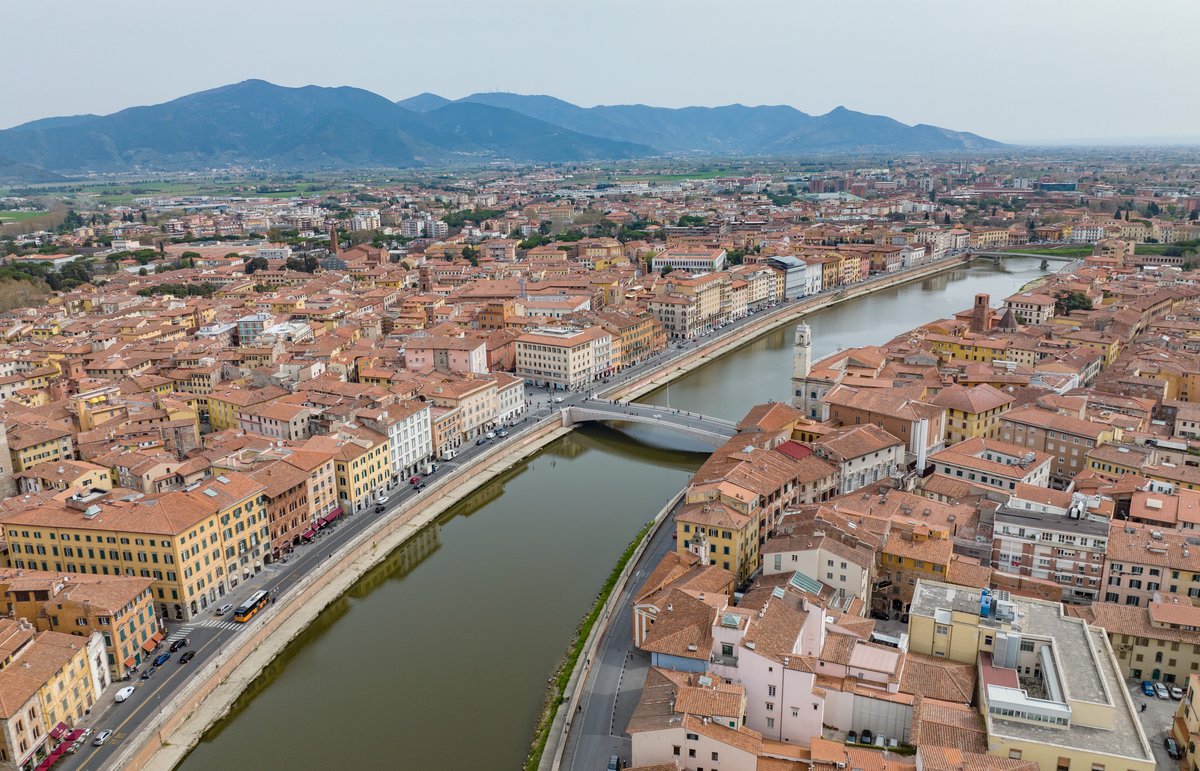
Pisa is one of Europe’s great day-trip surprises — and one of its most underrated overnight destinations. Yes, the Leaning Tower is the reason most people come, but stay longer and you’ll find a compact, walkable medieval city threaded with the Arno River, remarkable intact Roman walls you can stroll on top of, some of Italy’s best family museums, and one of Tuscany’s liveliest summer festival calendars.
The city that gave the world Galileo and Fibonacci punches above its weight. It’s a proper university town (since 1343!), which means good coffee, affordable restaurants, buzzy piazzas, and a genuinely local atmosphere that Florence — overcrowded and expensive — has largely lost. For families, the Campo dei Miracoli alone is worth the trip: the Leaning Tower, the grand Duomo, the Baptistery with its extraordinary acoustics, and the serene Camposanto cemetery all sit together in a single manicured lawn that children actually enjoy running across.
Why families love it:
- The Leaning Tower is a genuine family icon — kids of all ages are entranced
- Compact city centre, almost entirely walkable and stroller-friendly
- University atmosphere means affordable food, gelato on every corner, and lively piazzas
- The ancient city walls (Mura di Pisa) are walkable for families — unique in Italy
- Natural history museum in a working Carthusian monastery 15 min from the centre
- Beach access: Mediterranean coast is just 15 minutes by car
- Superb day trips: Lucca (30 min), Florence (1hr), Cinque Terre (1.5–2hr)
- June brings three spectacular medieval festivals — boat races, candlelit promenades, bridge battles
⏰ Best Time to Visit with Kids
| Season | Conditions | Verdict |
|---|---|---|
| Mar–May | 15–22°C, blooming Tuscany, crowds manageable | ⭐ Excellent — perfect sightseeing weather |
| Jun | 25–30°C, Giugno Pisano festivals | ⭐ Best for culture — three unique medieval events |
| Jul–Aug | 32–37°C, peak crowds at the Tower, high prices | 🔴 Manageable but plan early starts; go in evenings |
| Sep–Oct | 20–28°C, golden Tuscan light, quieter | ⭐ Excellent — arguably the best month |
| Nov–Feb | 8–15°C, some rain, very few crowds | ✅ Good for museums; off-season prices |
Pro tip: If you visit in June, timing around the Luminara di San Ranieri (June 16) or the Gioco del Ponte (last Saturday of June) transforms Pisa into something truly spectacular. Book accommodation far in advance for these dates.
🚗 Getting Around
On Foot (the best option in the centre) Pisa’s historic centre is compact — you can walk from the train station to the Campo dei Miracoli in about 20 minutes through the old town. Almost everything within the walls is walkable and largely pedestrian-friendly. The Arno riverfront promenade is particularly enjoyable for an evening stroll with kids.
By Bus Pisa has a good urban bus network (Autolinee Toscane). The LAM Rossa (Red) bus line connects the train station to the Campo dei Miracoli — useful if you have young children or heavy luggage. Single ticket: ~€1.70; day ticket: ~€4. Children under 10 travel free with an adult.
By Car (for day trips) A hire car is strongly recommended if you want to visit the Natural History Museum at Calci, the beach at Marina di Pisa, or make day trips to smaller Tuscan towns. Parking near the Campo dei Miracoli can be found at Parcheggio Pietrasantina or Lungarno Guadalongo. Within the city walls, traffic is restricted.
By Train (for day trips) Pisa Centrale station is well-connected. Trains to Lucca (30 min), Florence (1hr), La Spezia/Cinque Terre (1–1.5hr) run frequently. Buy tickets at the station or on the Trenitalia app.
🏛️ The Campo dei Miracoli (Field of Miracles)
The undisputed centrepiece of any Pisa visit — a UNESCO World Heritage Site since 1987. The famous green lawn contains four extraordinary Romanesque monuments: the Leaning Tower (Torre Pendente), the Cathedral (Duomo), the Baptistery (Battistero), and the Camposanto cemetery. Under-11s are free to enter the Baptistery, Camposanto, and both museums. Children under 8 cannot climb the Tower.
Website: opapisa.it
1. The Leaning Tower of Pisa (Torre Pendente) ⭐
The world’s most famous accidental architectural blunder — and one of the most joyful family photo opportunities on earth. The tower leans because the soil was too soft on one side during construction (begun in 1173, completed in 1372). Engineers straightened it slightly in the 1990s; it now leans about 3.9 degrees off vertical. Climbing the 294 worn marble steps to the top, feeling the lean intensify as you ascend, and looking out over the Campo dei Miracoli from 56 metres up is genuinely thrilling for older kids.
- Rating: 4.7/5 on Google — one of Italy’s most visited sites
- Age restriction: Children must have turned 8 by December 31 of the visit year to enter. No exceptions.
- Cost: Tower €25 per person — no child discount, no reduced prices. Cathedral entry included free with any ticket.
- Time needed: 45 min–1 hour (including queue and climb)
- Location: Piazza del Duomo, Pisa
- Open: Daily; hours vary by season (summer typically 8am–10pm; winter 10am–5pm). Check opapisa.it.
- ⚠️ Honest note: This is a bucket-list photo stop first, architecture experience second. The steps are steep, worn, and can be slippery — hold handrails. The lean feels very pronounced on the stairs. Young children under 8 will be disappointed to miss out; manage expectations beforehand. No reduced price makes it expensive for a family.
- Pro tip: Book tickets online at opapisa.it as far in advance as possible — time slots sell out weeks ahead in summer. Morning slots (8–9am) mean the lawn is empty for photos. Turn up 30 min before your slot and check bags in the luggage room (bags over 25x30cm are not allowed in the tower). The free Cathedral entry is worth doing — don’t skip it.
- Website: opapisa.it/en/square-of-miracles/tower/
2. Baptistery of St John (Battistero di San Giovanni)
The largest baptistery in Italy — a domed Romanesque-Gothic masterpiece that took 200 years to build. What makes it unmissable for families: a staff member performs an acoustic demonstration every 30 minutes, singing a simple chord inside the vast interior. The dome shape creates extraordinary sustained resonance — a single voice becomes a multi-part chord that hangs in the air. Kids find it genuinely astonishing. Worth lingering inside for the demo.
- Rating: 4.6/5 on TripAdvisor
- Age suitability: All ages; the acoustic demo works particularly well for children 5+
- Cost: €7 (standard ticket for one monument); free for under-11s. Included in the multi-monument pass (Baptistery + Camposanto + Sinopie Museum + Opera del Duomo Museum): €10 adult.
- Time needed: 30–45 min
- Location: Campo dei Miracoli, adjacent to the Cathedral
- Pro tip: Ask when the next acoustic demo is happening as you enter. Time your visit around it — usually every 30 min. Look for the animals carved on the column bases and the intricate pulpit by Nicola Pisano.
3. Camposanto Monumentale (Holy Field)
A 13th-century cloistered cemetery enclosing soil allegedly brought from Golgotha (the hill of the Crucifixion) by Crusaders. The long marble corridors contain an extraordinary collection of ancient Roman sarcophagi and medieval/Renaissance frescoes. The centerpiece — the “Triumph of Death” fresco — is haunting and intense; best for ages 10+ who can appreciate its context. But older children who like history, art, or “creepy” things (in a respectful sense) will find this one of the Campo’s most atmospheric spaces.
- Rating: 4.4/5 on TripAdvisor
- Age suitability: Best for ages 8+; the tomb of Fibonacci (the mathematician) is inside — a great hook for older kids
- Cost: Included in the multi-monument pass (€10 adult); free under-11s
- Time needed: 30–45 min
- Pro tip: Point kids toward finding Fibonacci’s tomb — the mathematician who gave the world the famous sequence was a native Pisan. Look for the Roman sarcophagi with detailed mythological carvings along the corridors.
4. Cathedral of Pisa (Duomo di Pisa)
The grand Romanesque cathedral at the heart of the Campo — one of the finest in Italy, predating Florence’s Duomo by nearly a century. Entry is free with any OPA Pisa ticket or, if you’re not climbing the tower, with a free timed pass from the ticket office. Inside: gilded ceilings, Byzantine mosaics, a bronze pulpit by Giovanni Pisano, and — most significantly for families — the lamp that Galileo reportedly observed swinging, leading him to formulate the laws of pendulum motion.
- Rating: 4.7/5 on Google
- Age suitability: All ages; best appreciated from age 7+
- Cost: Free with any OPA Pisa ticket; or free timed entry pass from ticket offices on site
- Time needed: 30–45 min
- Pro tip: Point out the “Galileo’s Lamp” (the large hanging lamp in the nave) and explain what Galileo figured out by watching it swing — good for sparking scientific curiosity. Can you spot the Medici coat of arms (six balls) in the decorations? The Florentines left their mark everywhere in Pisa after conquering the city.
🏰 Historic Pisa — Beyond the Campo
5. Mura di Pisa (City Walls)
Pisa’s medieval city walls are one of the best-preserved in Italy — and uniquely, families can walk along the top of them for a 3+ km stretch. The wall-top path (2–4m wide) gives extraordinary elevated views over the Campo dei Miracoli, the city rooftops, and towards the Arno and the Apuan Alps. This is genuinely unusual — you can look down at the Leaning Tower from the walls, which is a perspective most tourists never get. The trail connects multiple towers, each with its own character.
- Rating: 4.5/5 on Google
- Age suitability: Best for ages 5+; accessible with buggies at some points (check muradipisa.it for accessible entries). Not suitable for toddlers without carriers on narrow sections.
- Cost: €5 adult / Free under-8 / €3 reduced (schools, residents). A combo discount applies if you also have a Certosa di Calci (Natural History Museum) ticket.
- Time needed: 1–2.5 hours depending on how much of the trail you walk
- Location: Main entry from Torre Santa Maria in Piazza Duomo, or Bastione del Parlascio
- Open: Year-round; Nov–Feb 10am–5pm; Apr–Aug 10am–8pm; seasonal variations
- ⚠️ Honest note: Closed in bad weather (wind/rain) for safety. Some sections are narrow. Bring water and wear comfortable shoes.
- Pro tip: The section above the Campo dei Miracoli gives the famous aerial view of the Leaning Tower — perfect for photos. In summer (late June–August), guided “Walls by Night” tours run on Friday evenings (€8 adult, €3 children 8–under) — a magical experience.
- Website: muradipisa.it
6. Piazza dei Cavalieri (Knights’ Square)
Pisa’s second great square — the political heart of medieval Pisa and the headquarters of the Knights of St Stephen (the Pisan answer to the Knights of Malta). The square is ringed by magnificent sgraffito-decorated buildings including the Palazzo della Carovana (now the elite Scuola Normale Superiore university). The church, Palazzo dell’Orologio, and central statue of Cosimo I de’ Medici create a visually rich ensemble. Just 5 minutes walk from the Campo — a quieter alternative to the crowded tourist zones.
- Rating: 4.6/5 on Google
- Age suitability: All ages; free to wander
- Cost: Free
- Time needed: 20–30 min
- Pro tip: The Palazzo dell’Orologio incorporates the “Torre della Fame” (Tower of Hunger) — where according to legend, Count Ugolino della Gherardesca was locked up and starved to death with his sons and grandsons in 1289. Dante immortalised this in the Inferno. A grim but gripping story for older kids (10+).
7. Italian Army Paratrooper Museum (Museo Aviotruppe)
Pisa’s hidden gem for families — especially those with boys aged 6–14. As the home of Italy’s Folgore Paratrooper Brigade (based at the nearby military airport), Pisa has a dedicated paratrooper museum housing vehicles, helicopters, military equipment, uniforms, and parachutes. Outside, kids can sit inside real vehicles and a helicopter. Inside, realistic dioramas and mannequins in full kit bring military history to life. A proper hands-on experience that most tourists miss entirely.
- Rating: 4.4/5 on Google
- Age suitability: Best for ages 6–16; under-6 enjoy the vehicles outside
- Cost: Free (or minimal donation requested — verify on site)
- Time needed: 1–1.5 hours
- Location: Via delle Cascine, Pisa (requires a 20-minute walk or short taxi/bus ride from centre)
- Open: Check current hours — typically open weekday mornings; confirm before visiting as it’s military-run
- ⚠️ Honest note: Hours can be irregular due to its military operation. Call ahead or check recent reviews. Getting there requires a bit of a walk from the tourist centre.
- Pro tip: There’s a small playground near the museum — good for little ones while older siblings explore inside. The helicopter you can climb into is the consistent highlight.
🔬 Museums
8. Natural History Museum of the University of Pisa — Certosa di Calci ⭐
One of the most underrated family museums in Tuscany — housed in a stunning, working 14th-century Carthusian monastery (Certosa) in the village of Calci, 9km east of Pisa. The museum holds one of the largest cetacean skeleton collections in Europe — whale skulls so big they fill entire rooms — plus dinosaur fossils, minerals, human evolution exhibits, and a wonderful aquarium. The monastery itself is extraordinary: its baroque halls, cloistered gardens, and frescoed chapels are a world apart from city museums. It’s also accessible on the Pisa-Calci historical tram line (a heritage train — kids love it).
- Rating: 4.5/5 on Google
- Age suitability: All ages; excellent for ages 4–14
- Cost: Full ticket (museum + aquarium + “Dinosaurs” exhibition): Adult €15 / Child 6–18: €11 / Child 3–5: €3 / Under-3: free / Family (1 adult + 1 child): €16. (Discounted with Mura di Pisa ticket: €13)
- Time needed: 2–4 hours
- Location: Via Roma 79, Calci (9km east of Pisa) — 15 min by car from city centre; or take the historic electric tram from Via Bonanno in Pisa
- Open: Tue–Sun; check msn.unipi.it for seasonal hours
- ⚠️ Honest note: Requires a car or the historic tram. Not easily walkable from the city centre. Worth the effort — this is a genuinely world-class natural history museum that most Pisa visitors completely miss.
- Pro tip: Check if the historic Pisa-Calci tram is running — the electric tramway dates to 1900 and is a delight in itself. The whale skeleton gallery is the undisputed highlight (multiple full-size whale skeletons hanging from the ceiling). Combine with a stroll around the monastery grounds.
- Website: msn.unipi.it
9. Orto Botanico di Pisa (Botanical Garden)
The world’s oldest university botanical garden (founded 1543), still in active use by the University of Pisa’s science department. Greenhouses, an arboretum, fountains, and plants from five continents make it a pleasant morning or afternoon stop — especially welcome in hot weather (shaded pathways). There’s an adjoining Botanical Museum with specimens and models. Good for curious kids interested in plants, nature, or just somewhere to wander and cool down.
- Rating: 4.2/5 on TripAdvisor
- Age suitability: All ages; best for ages 5+ who can appreciate the variety of species
- Cost: ~€4 adult / reduced for children and students; check current prices at ortobotan.unipi.it
- Time needed: 45 min–1.5 hours
- Location: Via Luca Ghini 13, Pisa (10-min walk south of the Campo dei Miracoli)
- Pro tip: Look for the ancient tree specimens — some are centuries old. The world’s oldest known potted plant is apparently here. The museum inside has colourful botanical illustrations and models that younger children find engaging.
🏖️ Beaches & Outdoor
10. Marina di Pisa — Beach & Arno River Mouth
The sea is only 15 minutes by car (or 30 min by bus) from the Campo dei Miracoli — making Pisa the rare historic city where you can do morning sightseeing and afternoon beach. Marina di Pisa sits at the mouth of the Arno River on the Ligurian Sea. The beach here is distinctive: rocky breakwaters create sheltered pools of calm water that are particularly safe and popular with families with young children. Pine forests fringe the coastline, providing natural shade — unusual for Italian beaches.
- Rating: 4.1/5 on Google
- Age suitability: All ages; the calm pools behind breakwaters are especially good for toddlers and non-swimmers
- Cost: Free beach sections (spiaggia libera) available; sun-lounger hire from beach clubs (stabilimenti) ~€15–25/day for umbrella + 2 chairs
- Time needed: 2–5 hours
- Location: Marina di Pisa (15km west of city centre via Via Aurelia or SS1)
- Open: Year-round; beach clubs typically June–September
- ⚠️ Honest note: This is a Ligurian Sea beach, not the Adriatic — expect more character than the flat sandy Adriatic resorts, but the water clarity is good. The pine forest can attract mosquitoes at dawn/dusk.
- Pro tip: Tirrenia (15 min south of Marina di Pisa) has sandier beaches and the Il Pineto adventure park in the pine forest — good for combining beach and activity. Bus from Pisa Centrale: CTT Nord lines. Weekdays are significantly quieter than weekends.
11. Giardino Scotto (Scotto Garden & Fortress)
A hidden local gem — a public park built within the grounds of the Fortezza Nuova (New Fortress), a 15th-century Florentine fortification on the south bank of the Arno. The park is beautifully maintained with lawns, trees, playground equipment, and the dramatic fortress walls creating a fantastic backdrop. Popular with Pisan families, students, and picnickers. In summer, the fortress hosts an open-air cinema festival. Far less touristy than the Campo dei Miracoli side of the city.
- Rating: 4.4/5 on Google
- Age suitability: All ages; good for young children who need to run
- Cost: Free
- Time needed: 30 min–1.5 hours
- Location: Lungarno Fibonacci / Via Orazio, Pisa (20-min walk east from Campo dei Miracoli, south side of Arno)
- Pro tip: Combine with a riverside walk along the Lungarno (the promenade lining the Arno) — one of Pisa’s most pleasant local experiences. Great place for a picnic from Mercato delle Vettovaglie supplies.
🎭 Unique Events — Giugno Pisano (Pisan June)
June in Pisa is extraordinary — a month-long cultural festival celebrating the city’s patron saint San Ranieri with three unmissable events. If your travel dates allow any flexibility, plan around these.
12. Luminara di San Ranieri — June 16 ⭐
One of Italy’s most beautiful spectacles. Every year on the evening of June 16, the entire waterfront of Pisa (the Lungarni along both banks of the Arno) is illuminated by approximately 70,000 candles and lanterns placed in every window, on every ledge, and along every parapet. The city glows golden from dusk, reflected in the dark water of the Arno. It is genuinely one of those travel moments that stays with you for life — and children are absolutely captivated. The crowds are large but the atmosphere is magical, not crushing.
- Rating: 4.9/5 — consistently described as one of Italy’s most beautiful events
- Cost: Free (street event)
- Date: June 16 annually (evening, beginning at dusk ~9pm in summer)
- ⚠️ Honest note: Book accommodation many months ahead for June 16. The lungarni get very crowded — arrive early for a good riverside spot. Young children may need shoulders or a perch to see over the crowds.
- Pro tip: Position yourself on one of the bridges (Ponte di Mezzo has the best central view) or reserve a table at a lungarno restaurant with river views well in advance. The reflection of 70,000 candles on the water is the centrepiece. End the evening with gelato at one of the riverside spots — the queues are long but worth it.
13. Palio di San Ranieri (Boat Race) — June 17
The day after the Luminara, the four historic districts of Pisa race against each other in traditional wooden frigates on the Arno. Each district is represented by a crew of 8 rowers, a helmsman, and a climber who must ascend a vertical pole at the finish to claim the flag. A colourful river procession precedes the race. Watching medieval-costumed rowers compete on the river through the heart of a candlelit city is an utterly unique experience. A daytime fair runs in Piazza dei Cavalieri throughout the day.
- Rating: 4.6/5 on TripAdvisor
- Cost: Free (riverside viewing); some grandstand seating available (check turismo.pisa.it)
- Date: June 17 annually; race begins ~6pm with river procession; race itself around 7–8pm
- Pro tip: The best free viewing is from the bridges and along the Lungarno Pacinotti (north bank). Arrive at least an hour early for a front-row spot on the embankment. The combination of Luminara (evening before) and Palio (next day) is one of the best two-day cultural experiences in all of Tuscany.
14. Gioco del Ponte (Battle of the Bridge) — Last Saturday of June
Over 700 participants dressed in 16th-century Renaissance armour and costumes parade through the city before taking up positions for the main event: twelve teams of 20 players each attempt to push a 7-tonne cart along rails on the central Ponte di Mezzo (using only their bodies — no hands). The north vs south of Pisa rivalry is fierce and centuries-old. The spectacle of hundreds of armoured warriors battling on a bridge over the Arno is unlike anything else in Italy.
- Rating: 4.7/5 — one of Tuscany’s great pageants
- Cost: Grandstand tickets available (check turismo.pisa.it for prices — typically €15–25 for the best seats); free viewing from the embankments
- Date: Last Saturday of June annually; procession starts early evening, battle ~9pm
- ⚠️ Honest note: Very late finish for young children — best for ages 8+ who can manage an evening out. The procession starts earlier and is suitable for all ages.
- Pro tip: Book grandstand seats for the best view of the pushing battle (it’s worth it). The medieval costume parade through the city streets in the late afternoon is free and impressive on its own.
🍕 Family Food Guide
Cecina & Farinata — Pisa’s Street Food Secret
Pisa’s most beloved street food is cecina (also called farinata) — a thin, crispy chickpea flatbread cooked in a wood-fired oven in large round pans, best eaten hot, cut into wedges, often stuffed into focaccia-style bread with optional fillings. It’s earthy, slightly salty, and universally popular with kids. This is a Pisan and Ligurian specialty — you won’t find it as authentic anywhere else. Look for it at pizzerie and takeaway spots throughout the centre.
- Best spots: Il Montino (Via Monte, near Campo dei Miracoli area) is legendary. Ask locals for their favourite “cecina” spot — it’s a point of Pisan pride.
- Cost: €1.50–3.00 per portion
- Pro tip: Order it wrapped in a folded piece of focaccia — the “5 e 5” (five and five) is the classic Pisan street-food combo: five cents of cecina, five cents of focaccia. Now priced at €2–3 but the name stuck.
15. Bottega del Gelato
Consistently rated Pisa’s best gelato and one of the top gelaterie in Tuscany. Family-run, using traditional methods with seasonal flavours. Located at the end of Borgo Stretto at Piazza Garibaldi, right by the Arno — the perfect end to a riverside walk.
- Rating: 4.7/5 on TripAdvisor
- Cost: ~€2.50–4 per serving
- Location: Piazza Garibaldi 11, Pisa
- Pro tip: The pistachio and the seasonal fruit sorbets are particularly praised. Queue outside is a good sign — avoid gelaterie with bright, artificially coloured gelato piled high in peaks.
16. Gelateria De’ Coltelli
A second outstanding gelato institution with a family history in ice cream-making going back centuries. More central than Bottega del Gelato, near the university area. Famous for creative flavour combinations alongside the classics.
- Rating: 4.6/5 on Google
- Cost: ~€2.50–4.50 per serving
- Location: Lungarno Pacinotti 23, Pisa (also a second location on Via San Francesco)
- Pro tip: Try the “semifreddo” if available — a creamy semi-frozen dessert that kids love.
17. Mercato delle Vettovaglie (Food Market)
Pisa’s covered daily food market in a 17th-century building just off the main pedestrian street. Stalls sell local cheeses, salumi, fresh pasta, seasonal produce, bread, and prepared foods. Great for assembling a budget picnic for the Campo dei Miracoli lawn or Giardino Scotto park. The market piazza has a few café tables and is buzzy and local in atmosphere.
- Rating: 4.3/5 on TripAdvisor
- Age suitability: All ages; good for showing kids where real Italian families shop
- Cost: Free to browse; picnic supplies from ~€5–10 per person
- Location: Piazza delle Vettovaglie, Pisa (2 min from Borgo Stretto)
- Open: Mon–Sat morning until ~1pm
- Pro tip: The fresh pasta stalls often sell pre-made tortellini and gnocchi you can cook that evening if you have an apartment. The cheese sellers are generous with samples.
🏞️ Day Trips
Day Trip 1: Lucca — Medieval Walled City ⭐ (30 min by car/train)
Train: Pisa Centrale to Lucca, ~30 min, ~€4/person. Car: 25 min on A11.
Lucca is the perfect family companion to Pisa — a completely different character despite being just 30 minutes away. The star attraction is the Renaissance city walls (Le Mura) — 4.2km of intact ramparts, wide enough on top for a tree-lined park and bike path where families cycle the entire perimeter. Renting bikes at the walls is one of those experiences children talk about for years: you pedal through medieval gates, past towers, through leafy canopy, over the old moat area, looking down into the city. No cars, no stress.
Key highlights:
- Cycling the walls — Rent bikes from multiple shops near the main gates; family bikes and tag-alongs available (~€4–6/hour per bike). The full loop is 4.2km — about 30–40 minutes at a relaxed pace, or take breaks to explore towers.
- Torre Guinigi — A 14th-century tower with a small oak tree growing on its summit (a holm oak planted up there centuries ago). Climb 230 steps for views. Adult ~€5 / Child ~€3.
- Piazza dell’Anfiteatro — A perfectly oval square built on the footprint of a 2nd-century Roman amphitheatre. No excavation needed — the oval was simply preserved in the medieval urban plan. Kids love spotting the Roman outline. Surrounded by good cafés.
- Gelato and chocolate — Lucca has exceptional gelato; a stop at Gelateria Anfiteatro is well-regarded.
Rating: 4.8/5 on Google (city) Pro tip: Take the first train (8am) to have the walls and streets to yourselves before the crowds arrive from Florence. Combine half-day Lucca with half-day Pisa. The train is easier than driving (parking in Lucca is outside the walls).
Day Trip 2: Cinque Terre — Five Villages on the Ligurian Sea (1.5–2 hr by train)
Train: Pisa Centrale → La Spezia Centrale (1–1.5hr), then local Cinque Terre train between villages.
The five cliff-hugging fishing villages of the Cinque Terre (Riomaggiore, Manarola, Corniglia, Vernazza, Monterosso) are one of Italy’s most breathtaking destinations — colourful houses stacked on vertical cliffs above turquoise Ligurian water. For families: take the local train between villages (runs every 20–30 min), swim in the rocky coves below Manarola and Vernazza, eat fresh seafood, and let older kids (10+) do the easier coastal trail sections.
- Best family villages: Monterosso (the only one with a real sandy beach), Vernazza (best harbour and most photogenic), Manarola (easiest trail access)
- Cinque Terre Card (train + trails): Adult ~€42 full day / Child 4–11 ~€15 (verify current prices at parks.it/parco.nazionale.cinque.terre)
- Ferry option: Seasonal ferries run between villages — more atmospheric than the train, and allows you to see the coastline from the sea. Adults ~€10–20 depending on route.
- Time needed: Full day (leave Pisa by 8am, return by 7pm)
- ⚠️ Honest note: Some hiking trails between villages are closed or require trail bookings (check cinque5terre.it before you go). July–August is extremely crowded; May, June, September are far better. Some trails have steep, uneven steps — not suitable with strollers.
- Pro tip: Start at Monterosso (furthest north, most beach-friendly) and work south by ferry and/or train. Vernazza’s harbour has a small beach perfect for a swim between explorations. Bring snacks — food in the villages is expensive.
Day Trip 3: Florence — The Art Capital (1 hour by train)
Train: Pisa Centrale → Firenze Santa Maria Novella, ~1 hour, ~€10–15/person. Runs frequently.
An hour by fast train puts you in Florence — the Uffizi, Accademia (Michelangelo’s David), Palazzo Vecchio, and the Ponte Vecchio all within a 20-minute walk from each other. For families with older children (8+) who are ready for world-class art, Florence is unmissable. The Palazzo Vecchio has interactive family tours that bring medieval Florence’s political intrigue to life. The Galileo Museum (near the Arno) has original scientific instruments including Galileo’s telescopes and his preserved finger — oddly compelling for children.
- Galileo Museum of History of Science: Adult €10 / Child 6–18 €6 / Under-6 free — a genuinely family-friendly museum with real historical instruments. Rating: 4.4/5 TripAdvisor.
- Uffizi Gallery: Prebook online — queues are huge without booking. Adult ~€25 / Under-18 (EU citizens) free. Best for ages 10+ who have some art context.
- Accademia (Michelangelo’s David): Adult ~€16 / Under-18 (EU) free. The David is overwhelming in person — even small children react to its scale.
- Ponte Vecchio & Oltrarno: Free to walk. The medieval bridge lined with jewellers and the artisan quarter of Oltrarno on the south bank are great for exploration.
Pro tip: An early train (8am) gets you to Florence before tour groups overwhelm the main sites. Pre-book the Uffizi and Accademia online (gebart.it or b-ticket.com) weeks in advance.
💡 Practical Tips for Families
Best Areas to Stay with Kids
| Area | Why | Best for |
|---|---|---|
| Near Campo dei Miracoli | Walking distance to everything; quieter evenings | Short visits, toddler-friendly |
| City Centre / Borgo Stretto | Best restaurants, gelato, market access; lively atmosphere | All ages, particularly teens |
| Lungarno (riverside) | Beautiful views; easy walk to both main areas | Families who want ambiance |
| Near Pisa Centrale station | Budget options; easy train access for day trips | Day-trip-focused visits |
💡 Recommendation: Staying near the Campo dei Miracoli means you can visit the Tower at dawn (before crowds) and again at sunset. An apartment with a kitchen is worth it for families — the Mercato delle Vettovaglie provides excellent picnic and self-catering supplies.
Safety Notes
- 🟢 Pisa is safe — as Italian university cities go, it has low crime. Normal city awareness applies: watch bags in crowded tourist areas around the Campo dei Miracoli.
- ☀️ Sun: The Campo dei Miracoli lawn is fully exposed — bring hats and factor 50 in summer. The marble heats up intensely in July–August.
- 🏛️ Tower safety: The lean is noticeable on the stairs — children should hold handrails. Wear closed, non-slippery shoes (no flip-flops).
- 🚦 Traffic: Cycling lanes exist in the city but traffic on main roads can be fast. On the Mura (city walls), paths are wide but edges can be open — supervise young children.
- 🌊 Beaches: Marina di Pisa’s breakwater pools are calm and family-safe. Open coastline sections can have stronger waves — check with beach staff.
Local Customs Families Should Know
- Italians love children — you will be welcomed warmly at virtually every restaurant and café
- Opening hours: Many shops and some restaurants close 1pm–4pm for riposo. Plan accordingly — a post-lunch gelato walk or park time fills this gap nicely.
- Coffee culture: Italians drink coffee standing at bars. Order at the bar for cheaper prices (servizio al tavolo costs more). Kids get hot chocolate (cioccolata calda) or orange juice (succo d’arancia).
- University atmosphere: Pisa is full of students, which means affordable eating, buzzy evening piazzas, and a lively but generally relaxed city vibe. Very different from Florence’s tourist-heavy streets.
- Sunday: Some smaller shops and markets close. The Campo dei Miracoli is always open. Great day for the Giardino Scotto or a beach trip.
- Tipping: Not mandatory; round up the bill or leave €1–2 at sit-down restaurants.
💰 Money-Saving Tips
OPA Pisa Multi-Monument Pass If you’re visiting more than one Campo dei Miracoli monument (besides the Cathedral, which is free), buy the combo ticket: Baptistery + Camposanto + Sinopie Museum + Opera del Duomo Museum = €10 adult; children under 11 are free to all except the Tower. Buy at opapisa.it or the on-site ticket offices.
Free Attractions Worth Knowing
- Cathedral (Duomo) — free with any OPA ticket; or free timed pass if not buying a ticket
- Camposanto, Baptistery, both museums — free for under-11s
- Walking the city (Arno promenades, Piazza dei Cavalieri, Borgo Stretto) — completely free
- Giardino Scotto park — free
- Giugno Pisano street events (Luminara, Palio, Gioco del Ponte) — free or very low cost
- Mercato delle Vettovaglie browsing — free
Eating on a Budget
- Cecina (chickpea flatbread) €1.50–3: best cheap food in the city
- University bars near Piazza dei Cavalieri: €1 espresso, affordable panini
- Mercato delle Vettovaglie: picnic supplies for fraction of restaurant prices
- Pizza al taglio (by the slice): available throughout the centre, ~€2–4/slice
- Avoid eating directly on the Campo dei Miracoli — restaurants here charge tourist prices. Walk 5 minutes into the city for much better value.
Train Savings Buy Trenitalia tickets online at trenitalia.com — advance bookings (called “offerta”) are often 30–50% cheaper than walk-up fares, especially for Florence day trips.
📋 Quick Reference: Activities at a Glance
| Activity | Age Best | Cost (adult) | Duration | Season |
|---|---|---|---|---|
| Leaning Tower climb | 8+ | €25 pp (no discount) | 45 min | Year-round |
| Baptistery + acoustic demo | All | €7 / under-11 free | 30 min | Year-round |
| Camposanto | 8+ | Included in pass / under-11 free | 30 min | Year-round |
| Cathedral (Duomo) | All | Free | 30 min | Year-round |
| Mura di Pisa (city walls) | 5+ | €5 / under-8 free | 1–2.5 hrs | Year-round* |
| Piazza dei Cavalieri | All | Free | 20 min | Year-round |
| Paratrooper Museum | 6+ | Free | 1–1.5 hrs | Weekdays |
| Natural History Museum, Calci | All | €15 / €11 child | 2–4 hrs | Tue–Sun |
| Botanical Garden | All | ~€4 | 1–1.5 hrs | Year-round |
| Marina di Pisa beach | All | Free | 2–5 hrs | May–Sep |
| Giardino Scotto | All | Free | 30 min+ | Year-round |
| Luminara di San Ranieri | All | Free | Evening | June 16 |
| Palio di San Ranieri | All | Free | Evening | June 17 |
| Gioco del Ponte | 8+ | Free–€25 | Evening | Late June |
| Day trip: Lucca | All | Train ~€4 + bikes ~€6/hr | Full/half day | Year-round |
| Day trip: Cinque Terre | 5+ | Train ~€42 adult | Full day | Apr–Oct |
| Day trip: Florence | 8+ | Train ~€10–15 | Full day | Year-round |
*Mura closed in bad weather
✈️ Getting to Pisa
Pisa International Airport Galileo Galilei (PSA) is one of Tuscany’s main airports — just 2km from the city centre and connected by the PisaMover automated shuttle (5 minutes, €5 per person, runs every 5 minutes) directly to Pisa Centrale train station. Extremely convenient for families arriving by air.
Direct flights operate from throughout Europe and some international connections (seasonal). Check Ryanair, easyJet, Volotea, and British Airways for routes.
By Train: Pisa is a major rail hub. High-speed trains connect to Rome (~3hrs), Milan (~3hrs), and regional trains to Florence (1hr), Lucca (30min), Cinque Terre/La Spezia (1–1.5hr).
Guide compiled March 2026. Prices and hours correct at time of research but subject to change — always verify on official websites before visiting. For the most current Campo dei Miracoli prices and time slots, visit opapisa.it. For city walls: muradipisa.it. For Natural History Museum: msn.unipi.it.