🇧🇦 Sarajevo — Family Travel Guide
Country: Bosnia and Herzegovina Last Updated: March 2026
Overview
Sarajevo is one of Europe’s most genuinely surprising capitals — a city that has lived through the assassination that sparked World War I, hosted the 1984 Winter Olympics, endured a four-year siege in the 1990s, and somehow emerged warm, resilient, and startlingly welcoming. For families, it offers something rare: authentic history you can touch (not theme-parked up), extraordinary outdoor adventure minutes from the city centre, and some of the best-value travel anywhere in Europe.
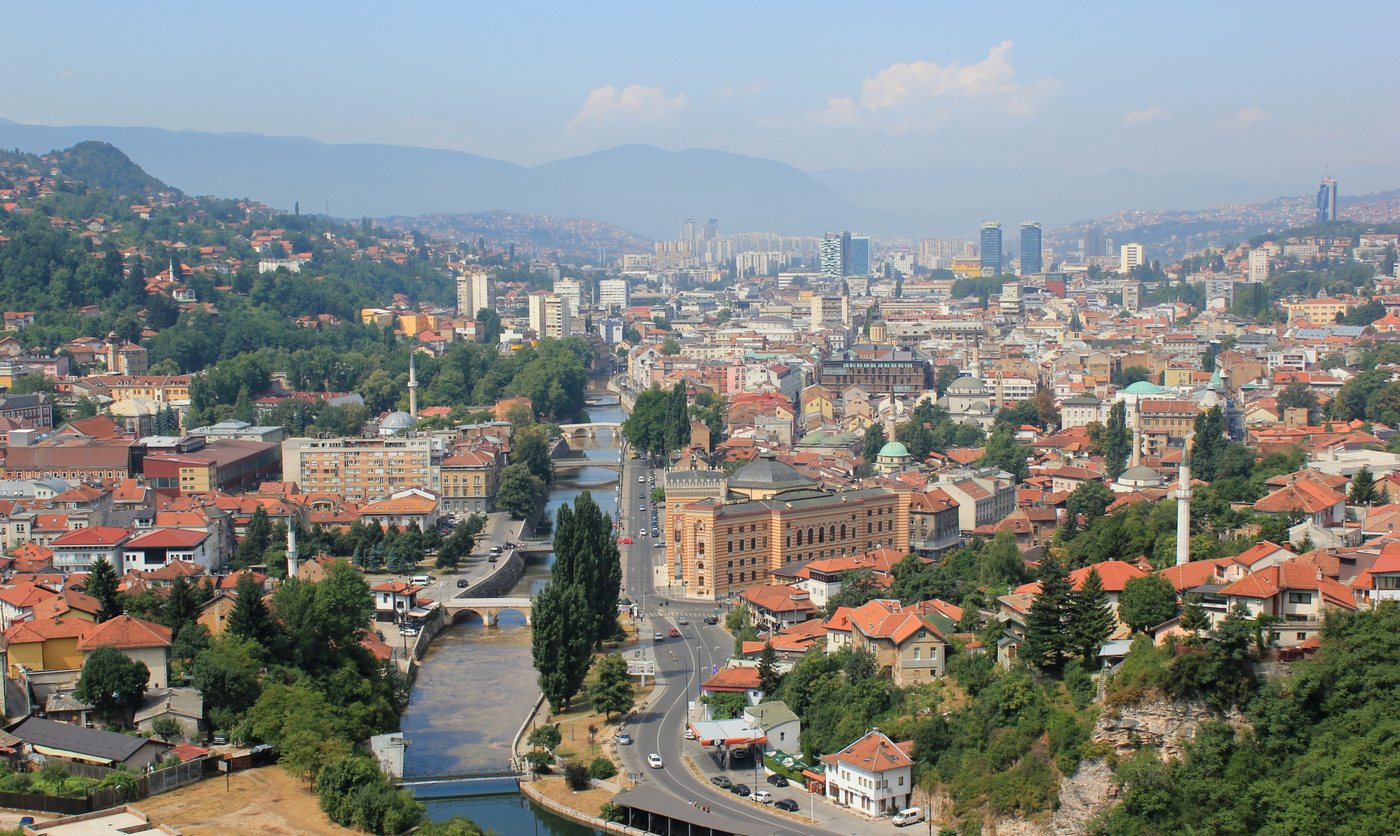
The city sits in a long, narrow valley surrounded by mountains on all sides — the same mountains that hosted Olympic skiing in 1984 and sheltered Bosnian defences in the 1990s. Walk five minutes east from the Ottoman bazaar and you’re in the Austro-Hungarian quarter. Another five and you’re in Soviet-era blocks. It’s a city that wears all its layers at once, and children instinctively pick up on it.
Why families love it:
- Extraordinary history brought to life at human scale — not overwhelming, not sanitised
- Mountains rise right from the city: cable car, alpine coaster, hikes, ski slopes all within 30 minutes
- One of Europe’s most affordable destinations — meals, taxis, and admissions cost a fraction of Western prices
- Very safe, locals are exceptionally warm towards children, English widely spoken in tourist areas
- A day trip to Mostar or skiing at Jahorina can be added to any itinerary
- Genuinely unique experiences (bobsled track graffiti art, tunnel under a siege, Ottoman bazaar life) that kids will remember
Currency note: Bosnia uses the Bosnian Convertible Mark (BAM/KM). The rate is fixed at approximately 1 EUR = 1.96 BAM. Prices below use BAM with EUR equivalents. Most tourist businesses accept euros, and ATMs are plentiful.
⏰ Best Time to Visit with Kids
| Season | Conditions | Verdict |
|---|---|---|
| Apr–Jun | 15–25°C, green hills, low crowds | ⭐ Best for families — comfortable, beautiful, cheap |
| Jul–Aug | 28–35°C, busiest season, Sarajevo Film Festival | ✅ Good — warm enough for mountain activities |
| Sep–Oct | 15–22°C, autumn colours, very pleasant | ⭐ Excellent — quieter and cheaper than summer |
| Dec–Mar | Cold, often snowy (-2°C to 8°C), ski season | ✅ Perfect for winter/ski families; Old Town magical in snow |
Pro tip: Spring (especially May) is the sweet spot — the mountains are lush green, the air is clear, the city isn’t crowded, and prices are lower than summer. The Sarajevo Film Festival in August brings energy and crowds but also events for families. Winter is outstanding if skiing is on the agenda.
🚗 Getting Around
Walking (Best for the Old Town) The historic core — Baščaršija, Latin Bridge, the key mosques and churches, the Yellow Fortress viewpoint — is compact and easily walked in half a day. The city is hilly, so expect some climbing in the upper neighbourhoods.
Tram and Trolleybus Sarajevo has a functioning tram line running east-west through the city along the Miljacka River valley — the main artery connecting Baščaršija to the modern centre and west. Tickets: 1.60 BAM (~€0.82) from kiosks; 1.80 BAM (~€0.92) from the driver. Validate your ticket on board. Very useful for getting from the Old Town to the National Museum or westward attractions without a taxi.
Taxis / Bolt Bolt works well in Sarajevo and is the easiest option for families. Starting fare is low; most in-city trips cost 3–8 BAM (~€1.50–4). Use Bolt over street hailing to get reliable metered fares.
Car Rental (Recommended for Day Trips) Essential if you want to visit Jahorina, Mostar, or Vrelo Bosne independently. City driving is manageable; parking in the Old Town area is tight but there are paid lots just outside. Budget approximately €30–45/day for a small car.
Tram Line 1 (easternmost Baščaršija to Ilidža in the west) covers many tourist areas and is an experience in itself — old Yugoslav-era trams that kids often find fascinating.
🏙️ The Old Town & Historic Core
1. Baščaršija (The Old Bazaar) ⭐
The Ottoman heart of Sarajevo — a 15th-century bazaar of cobblestone alleys, copper workshops, čaršafs and minaret-filled skylines. The Sebilj Fountain in the central square is the city’s symbol; pigeons mob it and children love chasing them. Artisans still hammer copper into plates and ibrik coffee pots in the traditional craft workshops along Kazandžiluk Street. The smell of coffee, the call to prayer, and the clatter of copper create a sensory experience unlike anywhere else in Europe.
Don’t miss:
-
Kazandžiluk (Coppersmiths’ Street) — watch artisans at work; buy a small hand-crafted copper spoon or engraved box for a few BAM
-
Sebilj Fountain — the wooden Ottoman fountain is the classic Sarajevo photo; legend says if you drink from it you’ll return to Sarajevo
-
Brusa Bezistan — a 16th-century covered market (now a museum/shop hybrid), stunning architecture
-
Rating: 4.7/5 on Google, 4.5/5 on TripAdvisor (consistently among the city’s top-rated attractions)
-
Age suitability: All ages; toddlers love the pigeons, older kids love the crafts
-
Cost: Free to wander; individual attraction entry varies (1–5 BAM)
-
Time needed: 1.5–3 hours
-
Location: Stari Grad (Old Town), eastern Sarajevo — the old town is the starting point for almost everything
-
⚠️ Honest note: Some tourist-facing shops are now more souvenir tat than authentic craft. Head for the copper street and the covered markets rather than the Sebilj-adjacent stalls for genuine artisans.
-
Pro tip: Come in the morning (before 10am) when bakers are pulling fresh burek from wood-fired ovens. This is the best time for a pastry breakfast and quiet photos.
2. Latin Bridge & Museum of Sarajevo 1878–1918
A single stone bridge over the Miljacka river — unremarkable to look at, loaded with history. This is where 19-year-old Gavrilo Princip shot Archduke Franz Ferdinand on 28 June 1914, triggering the chain of events that became World War I. The spot is marked with a plaque. The small adjacent Museum of Sarajevo 1878–1918 provides brilliant context on Sarajevo’s Austro-Hungarian era and the assassination. It’s compact (30–45 min) but dense with artefacts and maps that make the day come alive for history-minded older kids.
- Rating: 4.5/5 on TripAdvisor (Latin Bridge), 4.2/5 (Museum)
- Age suitability: Bridge: all ages. Museum: best for 10+; meaningful for kids who understand WWI context
- Cost: Bridge: Free. Museum:
5 BAM (€2.55) adults; children often free or reduced - Time needed: 30–60 minutes total
- Location: Obala Kulina Bana, just south of Baščaršija
- Pro tip: Stand on the bridge and look east toward the spot where Princip stood. The contrast between the mundane present and the enormous historical weight is something children understand viscerally — it’s a powerful moment.
- Website: muzejsarajeva.ba
3. Gazi Husrev-beg Mosque & Courtyard
Built in 1530, this is the most important Ottoman-era mosque in the Balkans and one of the finest examples of Ottoman architecture outside Turkey. The interior is stunning — a vast domed prayer hall with intricate calligraphy, stained glass and geometric tile work. The shaded courtyard with its ablution fountain is peaceful and welcoming. Non-Muslim visitors are welcome outside prayer times, and the experience of entering one of Europe’s most atmospheric mosques is genuinely memorable for families.
- Rating: 4.6/5 on Google, 4.5/5 on TripAdvisor — consistently praised as a highlight
- Age suitability: All ages; children should be quiet and respectful inside the mosque
- Cost: Entry to the courtyard is free; a small donation/entry fee (~2 BAM) is typically requested to enter the mosque interior itself
- Time needed: 30–60 minutes
- Location: Sarači Street, Baščaršija
- ⚠️ Honest note: Dress modestly — covered shoulders and below-knee for both adults and children. Headscarves for women are required and are provided at the entrance. No entry during prayer times (especially Friday noon prayer).
- Pro tip: The small clock tower (Sahat Kula) in the mosque complex is set to Ottoman time — it shows the time of sunset, not standard time, meaning the hands point in a different position than you’d expect. A fascinating talking point for kids.
- Website: vakufgazi.ba
🏔️ Outdoor & Mountain Adventures
4. Trebević Cable Car ⭐⭐
The single best thing to do in Sarajevo. Rebuilt and reopened in 2018 (the original was destroyed in the 1990s war), the cable car whisks you from the old city up to Trebević Mountain in a breathtaking 7-minute gondola ride. The city unfolds below — red rooftops, minarets, the valley — in a way that contextualises everything you’ve seen at street level. At the top (1,160m), pine forest, panoramic viewpoints, and a network of trails await.
What to do on top:
-
Walk to the Olympic Bobsled Track (10–20 min from upper station) — the derelict concrete luge track from the 1984 Winter Olympics is now a surreal graffiti-covered monument in the forest. Children find it completely fascinating: a curved concrete tube snaking through the trees, painted in vivid murals. Free to walk alongside.
-
Sunnyland Alpine Coaster — a few minutes’ drive or a longer walk from the cable car station. See separate entry below.
-
Forest walks and viewpoints — easy, flat-ish trails through pine forest with benches and mountain restaurants.
-
Rating: 4.8/5 on Google — one of Sarajevo’s top-rated experiences
-
Age suitability: All ages; the gondola is enclosed and very stable; children under 7 free
-
Cost: Foreign visitors: one-way
15 BAM (€7.65), round-trip20 BAM (€10.20). BiH citizens: one-way ~4 BAM, round-trip ~6 BAM. Under 7: free. -
Time needed: Half day (including the bobsled track walk)
-
Location: Lower station at Hrvatin bb, Bistrik — 10–15 min walk uphill from Vijećnica/Baščaršija
-
Open: Typically Tue–Sun 09:00–21:00 (summer), shorter in winter. Check official site — Monday often has reduced hours. Hours vary by season.
-
⚠️ Honest note: The walk from the upper station to the bobsled track is uphill and takes 15–20 minutes on a forest path — manageable for all but the very young who may need carrying. The track itself is derelict (intentionally preserved), not a working attraction.
-
Pro tip: Go at golden hour (1 hour before sunset) for extraordinary light over the city. Combine with dinner at one of the mountain restaurants near the upper station. Weekends can have queues at peak times — go on a weekday morning.
-
Website: zicara-trebevic.ba
5. Sunnyland Alpine Coaster & Amusement Park
Perched on the Trebević mountain slope facing Sarajevo, Sunnyland is Bosnia’s first alpine coaster — a gravity-powered steel track that snakes 1,000m down the mountain with stunning city views throughout the descent. Riders sit in individual sleds and control their own speed (brakes in your hands). Beyond the coaster, the park includes two outdoor playgrounds, an indoor play area with a game room, a kids’ café, a synthetic ice rink (year-round), and a mountain restaurant.
- Rating: 4.4/5 on Google — highly praised for the coaster experience
- Age suitability: Coaster: minimum age approximately 3 years (with adult), solo from ~7+ depending on height; playgrounds: all ages; ice rink: 4+
- Cost: Alpine coaster: approximately 15–20 BAM (~€7.65–€10.20) per ride. Check current pricing at the park — combo tickets available. Ice rink: ~10 BAM extra. Playgrounds generally included with park entry.
- Time needed: 2–4 hours
- Location: Trebević mountain, reachable by car (10–15 min from city centre) or after cable car ride + short drive/longer walk
- ⚠️ Honest note: Getting there by public transport is tricky — a car or taxi is strongly recommended. The combination cable car + Sunnyland works best as a full half-day by car, or take the cable car for views and then Bolt to Sunnyland separately.
- Pro tip: The alpine coaster is genuinely thrilling for adults too — don’t leave it to the kids alone. Go at least twice. The synthetic ice rink is a year-round surprise bonus that most visitors don’t expect.
- Website: sunnyland.ba (verify current hours before visiting)
6. Yellow Fortress (Žuta Tabija) Viewpoint ⭐
A short but rewarding 20-minute walk uphill from Baščaršija through the old Ottoman residential neighbourhood of Kovači leads to the Yellow Fortress — a stone bastion perch with the most accessible panoramic view of the city from the old town side. The rooftops, minarets, and the valley framed by mountains make this the classic Sarajevo postcard shot. At sunset, locals and visitors gather here with beer and soft drinks. There’s no barrier between you and the view — genuinely atmospheric.
Continue 10 more minutes uphill to reach the White Fortress (Bijela Tabija) for even wider views and fewer crowds.
- Rating: 4.5/5 on Google (Yellow Fortress); 4.6/5 (White Fortress)
- Age suitability: Best for ages 5+ who can manage the uphill walk; the climb is on stepped cobblestone paths
- Cost: Free
- Time needed: 1–1.5 hours (round trip from Baščaršija including time at the top)
- Location: Above Kovači neighbourhood, walkable from Baščaršija
- ⚠️ Honest note: Some TripAdvisor reviews mention occasional hassle at the White Fortress at night — go in daylight with families. The Yellow Fortress is busier and more supervised.
- Pro tip: Do this walk at sunset — it’s a 20-minute climb rewarded with a city glowing gold. Bring a snack. The views of hundreds of minarets and the mountain ring around the city are uniquely Sarajevo.
7. Vrelo Bosne (Spring of the Bosna) ⭐
One of Sarajevo’s most beloved local escapes — a 600-hectare natural monument at the foot of Mount Igman, about 15km west of the city centre in Ilidža. The park is centred on the crystal-clear spring source of the Bosna river, where dozens of springs bubble up from the ground and flow into a series of turquoise lakes and channels. White swans glide through the clear water, the trees are enormous, and the whole scene is absurdly pretty. Families arrive on weekends for picnics, paddle-boat rides, and horse-drawn carriage trips along the tree-lined alley. It’s Sarajevo’s answer to a royal park.
- Rating: 4.7/5 on Google — Sarajevo’s most popular nature attraction
- Age suitability: All ages; flat paths suitable for strollers and young walkers; paddle boats and carriage rides for children
- Cost: Park entry: free (or very small seasonal parking/entry fee). Paddle boats: ~5–10 BAM/30 min. Horse carriage rides: ~5–10 BAM per person
- Time needed: 2–4 hours
- Location: Ilidža municipality, ~15km west of the city centre. Tram Line 1 runs all the way to Ilidža terminal, then a short walk into the park.
- Open: Year-round; busiest weekends April–October
- Pro tip: Take the old Sarajevo tram (Line 1) all the way to Ilidža — the tram ride itself is a nostalgic experience, and the walk from the terminal to the park entrance takes just 10 minutes past a pleasant Ottoman-era pedestrian street. Bring a picnic. The riverside restaurants at the park serve solid traditional food (burek, grilled meats).
🏛️ Museums & History
8. Tunnel of Hope Museum (Tunel Spasa) ⭐
The most powerful history experience in Sarajevo — and one of the most affecting in all of Europe. During the four-year Siege of Sarajevo (1992–1996), Bosnian defenders dug an 800-metre tunnel beneath the airport runway connecting the besieged city with Bosnian-held territory outside. Through this tunnel flowed food, weapons, medicine, electricity cables, and the will to survive. The original Kolar family house (which served as the tunnel entrance) is now a museum with a documentary film, original equipment and weapons, and around 25 metres of the actual tunnel you can walk through (slightly crouched).
For families with older children who can grasp the context, this is an experience that reframes the entire city visit. The tunnel feels low and close; the family photographs and personal stories on display are deeply human.
- Rating: 4.6/5 on TripAdvisor — consistently in Sarajevo’s top-5 most reviewed attractions
- Age suitability: Best for ages 10+; younger children can visit but the emotional weight requires parental guidance. The tunnel section is low (~1.5m height) — children under 10 generally have no issues
- Cost:
10–15 BAM (€5–8) adults; children often discounted or free under 12 — verify at site as pricing is not always fixed. Guided tour packages from city centre available via tour operators (~€15–25/person, includes transport) - Time needed: 1–2 hours
- Location: Tuneli 1, Butmir (suburb near Sarajevo Airport) — requires taxi/car (approximately 20 min from Old Town, ~8 BAM by Bolt)
- Open: Daily approximately 09:00–17:00 (winter) / 09:00–18:00 (summer). Check visitsarajevo.ba for current hours.
- ⚠️ Honest note: The tunnel walk section is genuine but very short (~25m), and crouched — not suitable for those with claustrophobia or serious back problems. The documentary film (about 20 minutes) is valuable context and worth watching before entering. Getting there without a tour requires a taxi or car; there’s no convenient public transport.
- Pro tip: Hire a guide or join a small group tour from the city centre for maximum context. The guides often have personal connections to the siege and make the story profoundly real. Combine with a visit to the Alipašino Polje neighbourhood on the way back for a glimpse of how Sarajevo’s west looks outside the tourist zone.
- Website: tunelsarajevo.com
9. War Childhood Museum ⭐
Won the Council of Europe Museum Prize in 2018 and made an international impact far beyond its size. The concept is simple: over 100 people who were children during the 1990s Bosnian War were each asked to describe their childhood in one object. Each object — a bicycle, a winter jacket, a set of marbles, a pair of shoes, a drawing — is displayed with its donor’s story. The cumulative effect of the exhibit is devastating and hopeful in equal measure. It’s specifically designed to be accessible to children — interactive family guides for ages 4+ (Ladybugs) and 8+ (Hummingbirds) are available, letting kids engage at their own level.
This is one of the rare museums where children become genuinely engrossed and emotional — not because of graphic content (there is none), but because the stories are told by people who were the same age as your children.
- Rating: 4.9/5 on Google, 5/5 on TripAdvisor — consistently the highest-rated museum in the Balkans
- Age suitability: Ages 7+; the family guides make it accessible from age 4; deeply meaningful for ages 10+
- Cost: Adults: 10 BAM (
€5.10) | Youth 6–17: 5 BAM (€2.55) | Under 5: free | Family pass: 25 BAM (~€12.75) (2 adults + up to 5 children ages 6–17). Free last Thursday of each month 5–7pm - Time needed: 1–2 hours
- Location: Logavina 32, Sarajevo — within walking distance of Baščaršija and the main cathedrals
- Open: Mon–Sun 11:00–19:00 (last entry 18:30). Closed January 1, March 1, May 1, November 25
- ⚠️ Honest note: This is an emotionally intense experience that requires parents to be prepared for difficult questions. It is not graphic or traumatising — it is thoughtfully curated — but the subject matter is heavy. Talk to your children beforehand about what they’ll see.
- Pro tip: Buy the family pass — outstanding value. The interactive children’s guides (Ladybugs/Hummingbirds) are genuinely excellent and help children process the stories. Book group visits (10+) by email in advance.
- Website: warchildhood.org
10. National Museum of Bosnia and Herzegovina (Zemaljski Muzej)
Bosnia’s largest and oldest museum, occupying a grand Austro-Hungarian building with four pavilions arranged around a beautiful botanical garden. Highlights include the Sarajevo Haggadah — a 14th-century illustrated Hebrew manuscript, one of the oldest and most valuable in the world, which has been smuggled from Spain, hidden from the Nazis, and protected through two sieges. Beyond the Haggadah (shown only periodically or in replica), the museum houses remarkable prehistoric and Roman collections including the Daorson stone relief, medieval Bosnian stećak tombstones, and ethnographic displays of traditional Bosnian life. The botanical garden alone is a peaceful half-hour stroll.
- Rating: 4.4/5 on Google
- Age suitability: Best for ages 8+; the botanical garden suits all ages
- Cost: Adults: 20 BAM (
€10.20) | Children 6–18: 2 BAM (€1.02) | Pre-school: free. The €10 adult price is steep by local standards — but the Haggadah display alone justifies it for history-curious adults - Time needed: 1.5–3 hours
- Location: Zmaja od Bosne 3, about 1.5km west of Baščaršija — easy tram ride
- Open: Tue–Fri 10:00–18:00, Sat–Sun 10:00–14:00, closed Monday. Check zemaljskimuzej.ba as hours vary
- ⚠️ Honest note: The Haggadah is not always on public display — it’s kept in a vault and exhibited under special conditions. Check current status before visiting if this is the primary reason for going
- Pro tip: The prehistoric pavilion with its Neolithic figurines is surprisingly engaging for children — the objects are touchable in many cases. The botanical garden is a wonderful 20-minute respite between pavilions.
- Website: zemaljskimuzej.ba
🎡 Amusement & Play
11. Pionirska Dolina Zoo
Sarajevo’s city zoo sits at the eastern end of the Miljacka valley, compact and affordable. Animals include bears, lions, wolves, zebras, llamas, monkeys, reptiles, and birds. The zoo is small enough to cover completely in a couple of hours, making it ideal for young children with short attention spans. Beyond the animals, the site has bumper cars, a carousel, a trampoline, and a large playground with slides and swings — so there’s easily 3 hours of activity here.
- Rating: 4.0/5 on Google
- Age suitability: All ages; perfect for 2–10
- Cost: Very affordable — typically 5–7 BAM (~€2.50–3.60) per person; under-2 free. Check current pricing at the gate
- Time needed: 2–3 hours
- Location: Zmaja od Bosne (northeast Sarajevo, near Koševo hospital) — reachable by trolleybus or short taxi
- ⚠️ Honest note: The zoo is small by European standards and some enclosures are older in style. The main draw is the value and the combination of animals + funfair rides. Not suitable for those with high expectations of a modern natural habitat zoo
- Pro tip: The monkey enclosures and reptile house are particular kid-pleasers. Combine with a picnic in the adjacent Pionirska Dolina park for a relaxed morning.
🍽️ Family-Friendly Food Experiences
12. Ćevapi — Sarajevo’s Essential Food Ritual ⭐
Sarajevo-style ćevapi are arguably the definitive Bosnian food experience — small, hand-rolled cylinders of minced lamb and beef, grilled over charcoal and served inside a thick, pillowy lepinja flatbread with raw onion, kajmak (clotted cream) and ajvar (roasted pepper sauce). A plate of 10 costs about 5–7 BAM (~€2.55–3.55). Children almost universally love them.
The cardinal rule: find a dedicated ćevabdžinica (a cevapi-only restaurant that serves no alcohol). The quality is vastly better than tourist restaurants.
Best spots:
-
Ćevabdžinica Petica (Baščaršija) — one of the oldest and most respected; tiny but the real deal
-
Ćevabdžinica Asdž (Baščaršija) — hugely popular with locals, long lines are worth it
-
Željo II (Kundurdžiluk, Baščaršija) — consistently ranked as the best in the city
-
Age suitability: All ages; children love the soft bread and mild meat
-
Cost: Full serving of 10 ćevapi with lepinja: 5–8 BAM (~€2.55–4.08) per person
-
Pro tip: Skip the fork — eat them the Sarajevo way, torn inside the bread with kajmak. Order extra lepinja (1 BAM extra). Avoid any ćevabdžinica that serves beer — authentic ones don’t.
13. Burek at the Buregdžinica
Bosnian burek is a flaky, baked filo pastry pie — the meat version (burek), cheese version (sirnica), or potato version (krompirusa). Fresh from a wood-fired oven in the early morning, it’s one of the great cheap breakfasts of the world. 2–4 BAM (~€1–2) per serving, plus yoghurt (kefir) on the side. This is the city’s breakfast culture.
Best spot: Buregdžinica Sač (Ćemaluša) — a city institution, with the traditional method of baking under the metal sač (lid). Also look for any buregdžinica near Baščaršija before 10am.
- Age suitability: All ages; the cheese and potato versions are mild for young children
- Cost: 2–4 BAM (~€1–2) per portion + 1.5 BAM for yoghurt
- Pro tip: Go at 8–9am when burek comes fresh from the oven. Order one meat, one cheese, one potato to taste them all. The combination with cold yoghurt is the traditional pairing.
14. Restaurant Dveri ⭐
The most reliable family-friendly traditional Bosnian restaurant in the Old Town — tucked into a historic stone courtyard, offering authentic dishes like begova čorba (the famous bey’s soup — a rich chicken and okra broth), bosanski lonac (the slow-cooked Bosnian pot stew), grilled meats, and fresh trout. The atmosphere is warm and unhurried; staff are experienced with foreign families. Good vegetable and cheese options alongside meat dishes.
- Rating: 4.5/5 on TripAdvisor
- Cost: Mains 18–30 BAM (~€9–15); soups 6–10 BAM; kid-friendly portions available
- Location: Prote Bakovića 12, Old Town — a courtyard space, wonderful in warm weather
- Pro tip: Try the begova čorba — it’s the dish that distinguishes Bosnian cuisine from generic Balkan grills. The bosanski lonac is also extraordinary if you’re hungry. Book ahead on weekends.
15. Sarajevska Pivara & Food Market Atmosphere
The Sarajevo Brewery (Sarajevska Pivara) has been operating since 1864 and still brews the city’s emblematic Sarajevsko pivo. While the brewery itself isn’t a standard family attraction, the area near it and the general culture of the central food market (Markale) is worth weaving into a walk. The Markale Market (a 5-minute walk from Baščaršija) is where locals shop daily — fresh produce, cured meats, local cheeses, spices, and seasonal fruit at very low prices. A good spot to buy snacks and taste the everyday city.
- Age suitability: All ages
- Cost: Fresh fruit: 1–3 BAM/kg; local cheese: 8–12 BAM/kg
- Pro tip: Buy local Sarajevo mead (medovina) or rose hip tea here — excellent value souvenir. The market is most lively in the early morning.
🌿 Parks & Relaxed Activities
16. Safet Zajko Park & Recreation Centre
An outdoor recreation area just 5 minutes from the centre — a sports park with football pitches, running track, tennis courts, a large colourful playground with slides, swings and seesaws, and in summer, a small boat pond where children can paddle in rowing boats. It sits next to the Miljacka river and is accessible directly by tram. Completely free. Sarajevo families use this constantly — it’s the city’s neighbourhood outdoor room.
- Rating: 4.2/5 on Google
- Age suitability: All ages; playground best for 3–12; boat rides for 4+
- Cost: Park entry free; boat rides ~2–3 BAM/30 min
- Time needed: 1–2 hours
- Location: Near Koševo, accessible by tram
- Pro tip: Great afternoon option after a morning of museums. Combine with a picnic — cheap fresh supplies from Markale market.
❄️ Winter Activities
17. Jahorina Ski Resort ⭐ (Winter Only)
One of the 1984 Winter Olympics venues — the women’s alpine events were held here — Jahorina is now Bosnia’s largest and most modern ski resort with 47km of pistes, 13 lifts including gondolas and six-seater chairs, and 3 dedicated children’s ski kindergartens. It sits 30km southeast of Sarajevo at 1,600–1,916m altitude. For families who want to ski at a fraction of the cost of Austrian or French resorts, Jahorina is revelatory.
Ski pass prices (2024/25 season):
- Adults daily: 28.5 BAM (~€14.50)
- Children daily: 20.5 BAM (~€10.50)
- Family 4-day pass: adults
167.5 BAM (€85); first child90 BAM (€46); additional children120 BAM (€61)
Ski and snowboard rental packages are available on-mountain for €10–15/day. Ski schools with English-speaking instructors are well-established.
- Rating: 4.5/5 on Google — excellent reviews from international families
- Age suitability: Children’s ski kindergartens from age 3; full mountain from age 6+
- Distance: ~30km from central Sarajevo (approximately 45 min by car)
- Open: December–March (snow permitting, with snowmaking for key runs)
- ⚠️ Honest note: Accommodation at the resort is cheaper than staying in the city but book ahead in January–February peak season. Mountain restaurants are excellent value by European ski resort standards.
- Pro tip: A day trip from Sarajevo is completely feasible — drive up in the morning, ski all day, return to the city for dinner. Combine a Sarajevo city stay with 2–3 days skiing at Jahorina for a tremendous winter family trip.
- Website: oc-jahorina.com
🌊 Day Trips
Day Trip 1: Mostar — UNESCO Old Bridge City ⭐⭐ (Strongly Recommended)
Distance: 125km, approximately 1.5–2 hours each way depending on route
Mostar is arguably the most visually stunning city in the western Balkans — a city built on the turquoise Neretva river, with the Ottoman-era Stari Most (Old Bridge) arching over the gorge as one of the most photographed sights in Europe. The bridge was destroyed in the 1993 war and lovingly reconstructed stone-by-stone — a story children find deeply powerful when they stand on it. The old town (Stari Grad) is a UNESCO World Heritage site of cobbled streets, minarets, bazaars and Ottoman houses.
Additional Mostar highlights for families:
- Stari Most Bridge — walk across it, photograph it from below; local divers leap from the top in summer (a spectacular show)
- Kujundžiluk bazaar — Mostar’s Ottoman market street, similar to Baščaršija but more tourist-focused
- Blagaj Tekija — a 16th-century Dervish monastery built into the cliff face at the source of the Buna river, 12km from Mostar; one of the most dramatic natural settings in the Balkans
- Kravice Waterfalls — a horseshoe of 25-metre waterfalls on the Trebižat river, about 40km from Mostar; turquoise swimming in summer; accessible via guided tour or self-drive
Practical info:
-
Guided full-day tours from Sarajevo (include Konjic, Mostar, Blagaj, Kravice): €35–50/person via operators like Funky Tours or Meet Bosnia
-
Self-drive: follow M17 south along the Neretva river (scenic route) — allow 2 hours one-way; parking available near the Old Bridge
-
Mostar’s restaurants on the river are excellent for a family lunch: try Labirint or Tima-Irma for fresh trout, grilled meats and the bridge view
-
Rating: Stari Most 4.8/5 on Google; Blagaj Tekija 4.7/5
-
Age suitability: All ages; older children (10+) will absorb the history most deeply
-
⚠️ Honest note: Mostar Old Town is heavily tourist-facing in summer — prices are higher than Sarajevo. The winding mountain road via Jablanica is scenic but requires a confident driver. Some GPS routes take you via a longer motorway route — the M17 riverside road is more beautiful
-
Pro tip: Leave Sarajevo by 8am to arrive before the tour buses, explore for 3–4 hours, stop at Blagaj on the way back (~30 min detour), and return to Sarajevo by early evening. This is genuinely one of the best day trips in the Balkans.
Day Trip 2: Jahorina (see Winter Activities, #17 above)
Year-round outdoor destination — skiing December–March; hiking and mountain air April–November
Even outside ski season, the Jahorina and nearby Bjelašnica mountain (the men’s 1984 Olympic alpine venue) offer rewarding family hiking at high altitude, with straightforward trails through sub-alpine meadows and excellent mountain restaurant food. The drive from Sarajevo takes 30–45 minutes through spectacular mountain scenery.
- Summer hiking from Jahorina summit: rated 4.5/5 on Google
- Bjelašnica (2,067m) has more dramatic summit views and is 35km southwest of Sarajevo
- Restaurant at the Jahorina summit serves jagnjetina ispod sača (slow-roasted lamb under the lid) — a genuinely extraordinary meal
Day Trip 3: Konjic & Neretva Canyon
Distance: 55km south, approximately 1 hour drive
The town of Konjic sits at the point where the Neretva river enters a dramatic canyon. The 16th-century Old Stone Bridge (also destroyed in the war and reconstructed) spans the river in a postcard-perfect setting. Beyond the town, the emerald Jablaničko jezero (Lake Jablanica) stretches through the mountain canyon — a beautiful picnic and swimming spot in summer. The canyon road between Konjic and Mostar is one of the most scenic drives in the Balkans.
For adventurous families: white-water rafting on the Neretva is available from Konjic in summer — a family-friendly stretch suitable for children aged 8+ is offered by several operators.
- Rafting:
50–80 BAM (€25–41) per person, including guide and equipment - Rating: Konjic Old Bridge 4.6/5; Neretva rafting 4.8/5 on Google
- Pro tip: Konjic also houses the famous D-0 ARK Underground — a massive Cold War-era nuclear bunker built by Tito, now an art gallery hosting the world’s biggest underground contemporary art exhibition (open seasonally, May–October; entry ~20 BAM adults). Surreal and fascinating for older children.
💡 Practical Tips for Families
Best Areas to Stay with Kids
| Area | Why | Best for |
|---|---|---|
| Stari Grad (Old Town) | Walk everywhere; atmosphere; authentic; Baščaršija on your doorstep | Families who want immersion |
| Ferhadija / Katedrala area | City centre, tram access, mix of old and new | First-time visitors, good transport hub |
| Ilidža | Quieter, near Vrelo Bosne park, more apartment space | Families wanting space and greenery |
| Marijin Dvor | Modern, central, close to National Museum and tram | Longer stays, family apartments |
💡 Recommendation: The Old Town or Ferhadija area gives you the best family base — you can walk to 80% of the key attractions and use taxis for the rest. Accommodation here ranges from budget hostels to charming guesthouses (pansions) and modern apartments.
Family-Friendly Restaurant Tips
- Restaurant Dveri (Old Town): Best traditional Bosnian; cosy courtyard; great begova čorba
- Ćevabdžinica Asdž / Željo II (Baščaršija): Essential ćevapi experience; not formal, good for families
- To Be or Not To Be (near Latin Bridge): International menu with Bosnian options; more flexible for fussy eaters
- Inat Kuća (Spite House) (Old Town): Beautiful setting in historic house opposite City Hall; pricier but memorable
- Restaurant Kibe Mahala (Trebević area): Mountain setting, traditional food, spectacular valley view — perfect after the cable car
- Most Sarajevo restaurants are relaxed about children; high chairs available in most sit-down restaurants
Safety Notes
- 🟢 Sarajevo is very safe — low petty crime, welcoming atmosphere. Families report feeling completely comfortable throughout the city
- ⚠️ Landmine awareness: Landmines remain a real issue in rural areas outside the city from the 1990s war — yellow warning signs mark affected areas. Stick to marked trails and roads in rural/mountain areas. Urban Sarajevo and all the main tourist sites are completely safe
- ❄️ Winter driving: Mountain roads (Jahorina, Trebević) can be icy or snow-covered — winter tyres are required in Bosnia November–March and are standard on rental cars
- 🌧️ Weather variability: Sarajevo sits in a valley and catches mountain weather quickly. Bring a light waterproof for day trips, especially spring and autumn
- 🦟 Summer mosquitoes: The river valley can have mosquitoes in July–August — insect repellent for evenings
Local Customs Families Should Know
- Coffee culture: Bosanska kafa (Bosnian coffee) is served in a džezva (small copper pot) with a sugar cube and a glass of water. The ceremony of preparing and drinking it is an important social ritual — children will be fascinated by the drama of it
- Dress modestly at religious sites: Mosques require covered shoulders and legs; headscarves for women at mosque entrances (provided). Orthodox churches also appreciate modest dress
- Religious plurality: Sarajevo has functioning mosques, Catholic and Orthodox churches, and a synagogue within minutes of each other — the so-called “Jerusalem of Europe.” This co-existence is a teaching moment for children about tolerance
- Tipping: Not mandatory but 10% is appreciated. Round up the bill at cafés
- Language: Bosnian is the official language; English is widely spoken in the tourist and younger generation. A few words of Bosnian (hvala = thank you, molim = please) are warmly received
- War history sensitivity: Many locals lived through the siege. If guides or locals share personal stories, listen respectfully. Don’t treat the history as spectacle
💰 Money-Saving Tips
Sarajevo is exceptionally good value. A family of 4 can eat a full traditional lunch for 30–50 BAM (~€15–25). Here are the best ways to maximise value:
Free Attractions Worth Knowing
- Baščaršija wandering and atmosphere
- Latin Bridge and the surrounding river walk
- Yellow Fortress and White Fortress viewpoints
- Vrelo Bosne park (free entry, minimal transport cost by tram)
- Safet Zajko recreation park
- Sarajevo’s streets, neighbourhoods, and architecture — half the pleasure is simply walking
Budget Food Strategy
- Ćevapi breakfast/lunch at ćevabdžinica: ~5–7 BAM/person
- Burek morning: ~2–4 BAM/person
- Set lunch (dnevni meni) at a local kafana: typically 8–12 BAM including drink
- Fresh fruit/cheese at Markale Market for picnic supplies
Transport
- Tram (Line 1): 1.60 BAM/journey — covers Old Town to Ilidža; use for Vrelo Bosne
- Bolt/taxi is still very cheap by European standards (~3–8 BAM for most city trips)
Currency & ATMs
- Use ATMs and pay in BAM rather than euros to avoid unfavourable exchange rates at tourist spots
- Airport ATMs are fine but slightly worse rates — wait for city centre ATMs (Raiffeisen, UniCredit widely available)
📋 Quick Reference: Activities at a Glance
| Activity | Age Best | Approx. Cost (family of 4) | Duration | Season |
|---|---|---|---|---|
| Baščaršija Old Bazaar | All | Free | 1.5–3 hrs | Year-round |
| Latin Bridge + Museum 1878 | 10+ | ~25 BAM | 45–60 min | Year-round |
| Gazi Husrev-beg Mosque | All | ~8 BAM | 30–60 min | Year-round |
| Trebević Cable Car + Bobsled | All | ~80 BAM | Half day | Year-round |
| Sunnyland Alpine Coaster | 3+ | ~60–80 BAM | 2–4 hrs | Year-round |
| Yellow/White Fortress | 5+ | Free | 1–1.5 hrs | Year-round |
| Vrelo Bosne Park | All | Free + transport | 2–4 hrs | Apr–Oct |
| Tunnel of Hope Museum | 10+ | ~50 BAM | 1–2 hrs | Year-round |
| War Childhood Museum | 7+ | 25 BAM (family pass) | 1–2 hrs | Year-round |
| National Museum + Haggadah | 8+ | ~48 BAM | 1.5–3 hrs | Tue–Sun |
| Pionirska Dolina Zoo | 2–10 | ~25 BAM | 2–3 hrs | Year-round |
| Safet Zajko Park | All | Free | 1–2 hrs | Year-round |
| Mostar Day Trip | All | €35–50/person (guided) | Full day | Year-round |
| Jahorina Skiing | 3+ | ~100 BAM/person/day | Full day | Dec–Mar |
| Konjic + Neretva Rafting | 8+ | ~50–80 BAM/person | Full day | May–Oct |
✈️ Getting to Sarajevo
Sarajevo International Airport (SJJ) is approximately 6km southwest of the city centre. Despite its modest size, it connects to most major European hubs (Vienna, Istanbul, Frankfurt, London Stansted, Amsterdam, Zurich, Düsseldorf, and others). Bus to city: ~3 BAM. Taxi to Old Town: ~15–20 BAM by Bolt/taxi. Journey time: approximately 20 minutes.
From the airport: Bolt is the easiest option. The airport taxi rank operates fixed-rate taxis (~25–30 BAM to city centre) — slightly more than Bolt but convenient if you have a lot of luggage.
Car rental at airport: All major companies (Europcar, Hertz, Sixt) operate at SJJ. Strongly recommended if you plan day trips to Mostar, Jahorina, or Konjic.
Guide compiled March 2026. Prices and hours are correct at time of research but subject to change — always verify on official websites before visiting. Currency conversion based on 1 EUR ≈ 1.96 BAM. For current official tourist information, visit visitsarajevo.ba.