🇧🇬 Sofia — Family Travel Guide
Country: Bulgaria (Republic of Bulgaria) Last Updated: March 2026
Overview
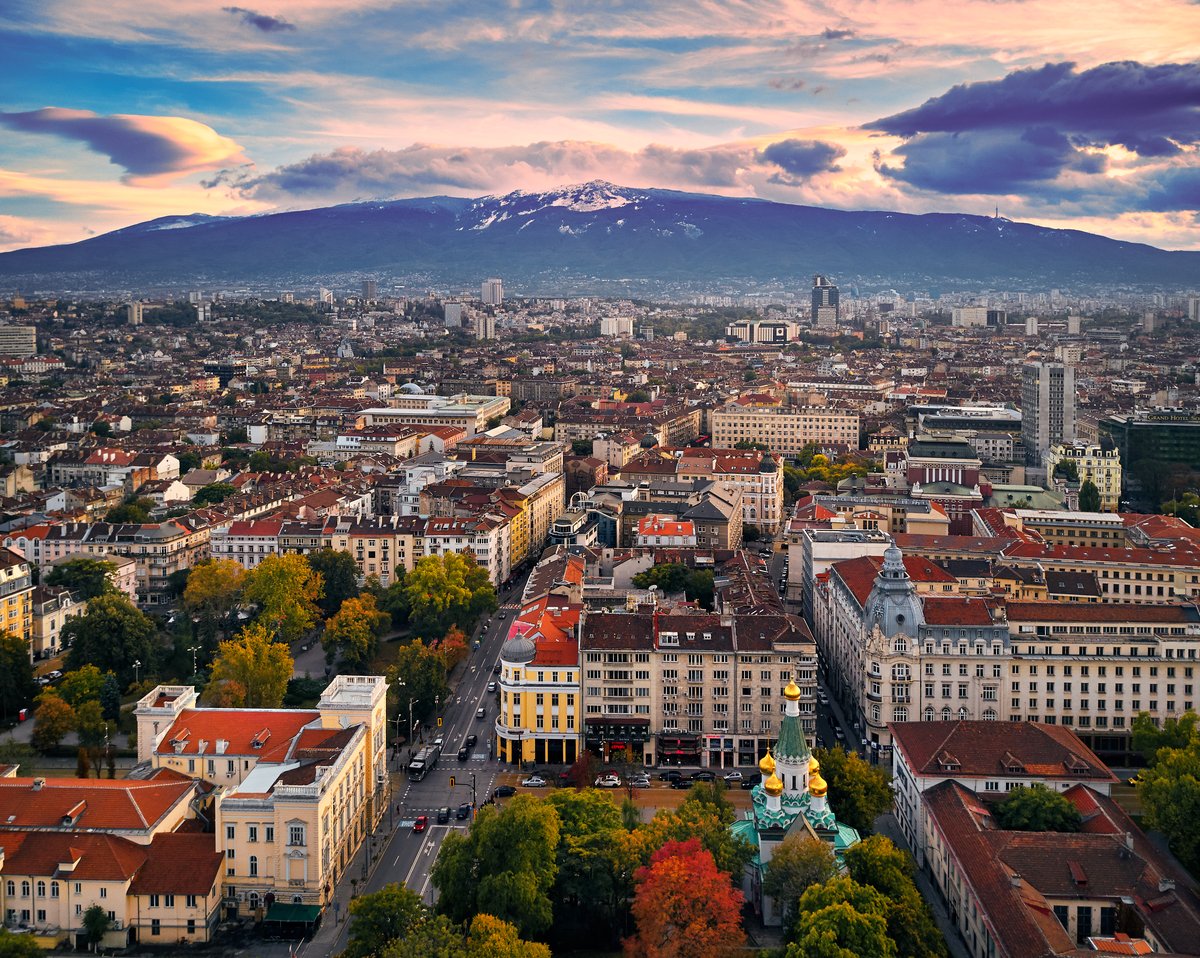
Sofia is one of Europe’s most underrated capitals for family travel — extraordinarily affordable, compact, and stacked with history you can’t find anywhere else. As one of the oldest capital cities in Europe (over 7,000 years of continuous habitation), it layers Roman ruins, Ottoman mosques, Byzantine churches, and Soviet-era architecture into a walkable city centre that genuinely delights curious kids. Mt. Vitosha — a proper mountain with hiking trails and a gondola — rises dramatically right behind the city skyline, meaning you can be picnicking in a national park within 30 minutes of your hotel.
Bulgaria’s currency (the Lev) means your euros stretch significantly further than elsewhere in the EU. A family of 4 can eat well, see everything, and get around easily for €150–200/day all-in — making it one of the best-value city-break destinations in Europe.
Why families love it:
- Remarkably budget-friendly — restaurants, transport, and tickets are 40–60% cheaper than Western Europe
- Compact walkable centre — most landmarks within easy walking distance or a short metro ride
- Muzeiko, one of Eastern Europe’s best children’s science museums, is world-class
- Vitosha National Park is literally at the city’s edge — rare for a European capital
- Ultra-safe for families; very low crime
- Borisova Gradina park has one of the best playgrounds in the Balkans
- Two UNESCO World Heritage Sites within day-trip range (Rila Monastery, Boyana Church)
- Free walking tours daily — kids love the “count the lions” challenge
⏰ Best Time to Visit with Kids
| Season | Conditions | Verdict |
|---|---|---|
| Apr–Jun | 18–25°C, blooming parks, low crowds | ⭐ Best for families |
| Jul–Aug | 28–35°C, very hot, sunny | ✅ Great if you plan outdoor time early/late |
| Sep–Oct | 18–25°C, golden foliage on Vitosha | ⭐ Excellent |
| Nov–Mar | 0–10°C, possible snow, shorter days | ❄️ Beautiful snow in Vitosha, quieter; not ideal for very young children |
Pro tip: Sofia sits at 550m altitude, so even in summer it’s cooler than most Balkan cities. Spring and autumn are the sweet spot — warm, uncrowded, and the parks are gorgeous.
🚗 Getting Around
Metro (Recommended for Families) Sofia has a clean, modern 3-line metro system. The M2 line is particularly useful for tourists, connecting the airport directly to the city centre. Tickets are ~1.60 BGN (€0.80) per ride. Children under 7 travel free. Serdika station even has Roman ruins in the concourse you walk through!
Taxis & Rideshare Sofia taxis are very affordable. The Yellow Taxi and Taxime apps are the most reliable. Insist on using the meter or booking via app. A typical city centre to Boyana Church ride costs 25–30 BGN (~€13). Do not take unlicensed taxis from outside the airport — they overcharge tourists.
Public Bus/Tram Extensive but slower. Useful for some attractions. Same 1.60 BGN fare. Buy a Oyster-style card at metro kiosks for easy tap-on travel.
Car Rental Not needed for Sofia itself, but very useful if you plan day trips to Rila Monastery or Plovdiv. Book in advance with full insurance (request automatic if needed — manual cars are standard). Important: Request child seats via email before arrival — supply is limited. Budget ~€35–50/day for a compact automatic.
Airport: Sofia Airport (SOF) is just 10km from the centre. Metro M2 takes you to the centre in 20 minutes for €0.80/person — one of Europe’s best airport transport deals.
🏛️ Museums & Interactive Learning
1. Muzeiko — America for Bulgaria Children’s Science Center
The undisputed highlight for families with children. Muzeiko is the largest children’s science centre in Eastern Europe — a stunning 2,000m² space spread across three floors, with 130+ fully interactive exhibits designed around the themes of Past, Present, and Future. Every single exhibit is hands-on: you build aqueducts, programme robots, explore the human body, simulate natural disasters, and conduct chemistry experiments. Even adults end up absorbed for hours.
The ground floor has a dedicated play area for toddlers (under 4s) with a slide and soft games. There’s an outdoor skyloft and playground. On-site café with reasonable prices.
- Rating: 4.5/5 on TripAdvisor — “best museum we’ve been to in Eastern Europe”
- Age suitability: All ages; dedicated toddler zone for under-4s; teens love the tech floor
- Cost: Adults ~10 BGN (€5); Children (2–14) ~7 BGN (€3.50); Under 2 FREE; Family ticket
27 BGN (€14). (Verify at muzeiko.bg — prices subject to change.) - Time needed: 2–4 hours minimum
- Location: Studentski Grad (Student City quarter) — near G.M. Dimitrov metro station
- Open: Tuesday–Sunday, 10am–6pm (closed Mondays). Ticket valid all day — you can come and go.
- ⚠️ Honest note: A 20-minute bus/metro ride from city centre — not walkable from most tourist hotels. Go midweek if possible; school groups on weekdays can make it busy Friday mornings.
- Pro tip: Go early; the most popular interactive stations get busiest after 11am. Pack snacks for a break on the outdoor skyloft.
- Website: muzeiko.bg
2. National Museum of Natural History
Bulgaria’s National Museum of Natural History is surprisingly vast — one of the largest in the Balkans, housed in a stately building. Two full floors of zoological specimens, minerals, fossils, and prehistoric finds. Children are genuinely impressed by the scale of animal displays and the mineral collection (Bulgaria has remarkable geological diversity). The entrance fee is tiny — one of the best value-per-hour attractions in Sofia.
- Rating: 4.0/5 on TripAdvisor
- Age suitability: Best ages 5+; teens find the fossil and mineralogy sections genuinely fascinating
- Cost: ~3 BGN (€1.50) per person — essentially free by Western standards
- Time needed: 1–2 hours
- Location: Tsar Osvoboditel Boulevard, central Sofia
- Open: Daily 10am–6pm (summer); 10am–5pm (winter)
- ⚠️ Honest note: Displays are somewhat old-fashioned; some taxidermy cases look dated. No interactive elements — it’s a traditional natural history museum, not a modern science centre. But for the price it’s excellent.
- Pro tip: Combine with a walk to Alexander Nevsky Cathedral (5 minutes away).
- Website: nmnhs.com
🏰 History & Landmarks
3. Alexander Nevsky Cathedral & Crypt Museum
One of the most visually spectacular buildings in Eastern Europe — Sofia’s magnificent neo-Byzantine Orthodox cathedral was built in the early 20th century to honour the 200,000 Russian, Ukrainian, and Bulgarian soldiers who died liberating Bulgaria from the Ottoman Empire in 1877-78. The gold-plated central dome soars 45 metres and gleams even on grey days. The interior is breathtaking: acres of marble, gold leaf, painted icons, and hanging chandeliers.
Beneath the cathedral, the Crypt Museum holds what is claimed to be the largest collection of Orthodox Christian icons in Europe — hundreds of works from monasteries across Bulgaria, many dating back to the medieval period.
The cathedral itself is completely free. The crypt museum costs 6 BGN (~€3) for adults — outstanding value.
- Rating: 4.5/5 on TripAdvisor — consistently cited as Sofia’s #1 landmark
- Age suitability: All ages; younger children will be wowed by the sheer size and gold; older children appreciate the icon museum
- Cost: Cathedral FREE; Crypt Museum ~6 BGN (€3) adults, children often free (verify on site)
- Time needed: 45–90 minutes (cathedral + crypt)
- Location: Alexander Nevsky Square, city centre — hard to miss
- Open: Cathedral open daily from ~7am. Crypt museum: Tuesday–Sunday 10am–6pm
- ⚠️ Honest note: The cathedral can be crowded on Sunday mornings during services; enter quietly and dress modestly (shoulders and knees covered). Photography is not permitted inside the main cathedral.
- Pro tip: Stand in the square outside around sunset — the dome glows gold in the fading light. Excellent photo spot.
4. Boyana Church — UNESCO World Heritage Site
Sofia’s UNESCO gem — a small medieval church tucked in the southern suburb of Boyana, at the foot of Vitosha Mountain. The church dates from the 10th century, but its fame comes from extraordinary 13th-century frescoes that are considered among the finest and most important examples of medieval art in Europe. Painted in 1259, they were remarkably ahead of their time — the faces are naturalistically painted with real emotion, predating the Italian Renaissance by a century.
Visits are strictly controlled to protect the frescoes (temperature and humidity are carefully managed). Groups are limited to 8 people, for 10 minutes inside. This means you really must book in advance — tickets sell out weeks ahead in peak season.
- Rating: 4.5/5 on TripAdvisor — “one of the most important art sites in Bulgaria”
- Age suitability: 7+; very young children may struggle with the strict 10-minute visit and no-photography rule
- Cost: ~12 BGN (€6) per adult; reduced for children (verify on boyanamuseum.bg)
- Time needed: 30–45 minutes including waiting and grounds
- Location: Boyana suburb, southern Sofia. ~25 min taxi (25–30 BGN) from city centre; or bus 64/107.
- Open: Tuesday–Sunday 9am–5:30pm (winter), 9am–6pm (summer); closed Mondays
- ⚠️ Honest note: The actual time inside is only 10 minutes — which feels short for the journey. No photography permitted. The experience is brief but genuinely moving for adult history-lovers. Younger children may feel underwhelmed. Book months ahead for peak summer.
- Pro tip: Combine with a visit to Vitosha Mountain — the church sits right at the mountain’s base. Book tickets online well in advance at boyanamuseum.bg.
- Website: boyanamuseum.bg
5. Serdica Roman Ruins (Free — at Metro Station)
One of the coolest incidental discoveries in Sofia: when the metro was being extended in the 2000s, construction crews broke through into the ruins of Serdica — the ancient Roman city that eventually became Sofia. Rather than relocate the metro, the city built the station around the ruins. You can now walk through an extensive outdoor and indoor complex of Roman streets, buildings, and artefacts as you enter/exit Serdika metro station — entirely FREE, open 24/7, bilingual signs in English. Kids love the unexpected “Roman city under the modern city” experience.
- Rating: 4.5/5 — “hidden gem,” “kids were fascinated”
- Age suitability: All ages; great for curious 6+ year olds
- Cost: FREE
- Time needed: 20–40 minutes
- Location: Serdika metro station, city centre
- ⚠️ Honest note: Can be confusing to navigate — look for the outdoor plaza near the metro entrance.
6. Rotunda of St. George — Oldest Building in Sofia
Hidden inside the courtyard of the Presidency Building in central Sofia, the Rotunda of St. George is the oldest standing structure in the city — a Roman circular building constructed in the 4th century AD, when Sofia was still Serdica. Inside are remarkable early medieval frescoes. Entry is free, and it’s genuinely extraordinary to be standing in a 1,700-year-old building surrounded by modern Sofia. Often missed by tourists who don’t know to look for it.
- Rating: 4.5/5 — “totally unexpected,” “best free thing in Sofia”
- Cost: FREE
- Time needed: 20–30 minutes
- Location: Banya Bashi Mosque area, city centre — look for the Presidency Building courtyard
🌿 Parks & Outdoor
7. Borisova Gradina — Sofia’s Best Park & Playground
Sofia’s oldest and largest park is an absolute essential with kids. Borisova Gradina is vast (over 1.1km²) with a lake, flower gardens, winding paths, stone sculptures, and sports facilities. But the reason families come back again and again is the playground — regularly described as one of the best in the Balkans. It features stone slides, massive wooden climbing structures, climbing nets (graduated difficulty levels so younger and older kids both participate), and wide open space.
There’s also an outdoor exercise area that older kids try out, and a small amusement park section near the main gate.
- Rating: 4.5/5 — “best playground we’ve found anywhere in Eastern Europe”
- Age suitability: All ages
- Cost: FREE
- Time needed: 2–4 hours
- Location: South-east of city centre; M1 metro from Serdika to Joliot Curie, then 10 min walk (or 30 min walk from centre)
- ⚠️ Honest note: Weekends get very busy with local families — go on a weekday morning for the best experience. The walk from the hotel is long — take the metro or a taxi.
- Pro tip: Pack a picnic and plan to spend a half-day here. The lake area has benches and shade.
8. Vitosha National Park — Mountain Right at the City’s Edge
Sofia’s most extraordinary natural asset: a 22,000-hectare national park beginning literally at the city’s southern outskirts. Cherni Vrah peak reaches 2,290m. For families, the Simeonovo Gondola (cablelift) is the easy entry — it takes you up to the Aleko hut area (1,800m) in about 15 minutes, with spectacular views over Sofia and the Balkans.
From Aleko, easy trails lead through subalpine meadows and the famous Stone River (Zlatnite Mostove / Golden Bridges) — a bizarre natural river of huge glacial boulders that children find endlessly fun to scramble over. In winter, there’s skiing at Aleko and Dragalevtsi ski runs.
- Rating: 4.5/5 on TripAdvisor
- Age suitability: All ages; gondola ride itself excites children; Golden Bridges walk suits ages 5+
- Gondola cost:
10–12 BGN return (€5–6) per person; children under 7 may be free (verify on site — operates weekends/holidays primarily in summer 2025) - Getting there: Bus 122 from Metro Vitosha runs to Simeonovo gondola base; taxi ~20 BGN
- Time needed: Half day minimum
- ⚠️ Honest note: The gondola operates mainly weekends in summer and is weather-dependent. Check operating status before going (search “Simeonovo gondola Sofia”). Weather can change rapidly at altitude — bring a light jacket even in summer.
- Pro tip: The Golden Bridges boulder field (Zlatnite Mostove) is reachable by car or minibus 68 from Hladilnika bus stop — an excellent family picnic spot.
🎭 Unique Experiences
9. Free Sofia Tour — Find the Lions!
Sofia’s free walking tour (by the 365 Association) has become something of an institution. Daily tours in English run from 11am and 6pm from the Palace of Justice. The highlight for families: guides challenge kids to count the lions hidden in statues, reliefs, and decorations around the city. By the end, most kids have tallied over 20. The guide keeps children engaged while adults absorb the real history (fascinating Cold War and Ottoman layers that most guides elsewhere skip). Tip-based — pay what you think it’s worth.
- Rating: 4.5/5 on TripAdvisor — “our guide was fantastic,” “the lions game kept our kids going for 3 hours”
- Age suitability: 5+ for the walking; the lion game works brilliantly for 6–12 year olds
- Cost: FREE (tips expected, ~10 BGN/adult is fair)
- Duration: 2–3 hours
- Meeting point: Palace of Justice, city centre — check freesofiatour.com for exact times
- ⚠️ Honest note: The tour is long (2–3h) and all walking. Best in mild weather; quite tough on very hot summer afternoons.
- Website: freesofiatour.com
10. Taste the Free Mineral Water
Outside the Sofia History Museum (the city’s former 1913 mineral baths — a gorgeous Ottoman-influenced building worth seeing in itself), there are public mineral water fountains where locals fill huge jugs of warm, slightly sulphurous water for free. Kids find it a memorable and slightly gross experience to taste. It’s completely safe, just different. The building and surrounding garden (Halite) is one of Sofia’s most photogenic corners.
- Cost: FREE
- Location: Central Mineral Baths, Maria Louisa Boulevard, city centre
- Pro tip: The baths building now houses the Sofia History Museum (recommended — good exhibits on the city’s history, affordable entry).
🍴 Food & Drink
Bulgarian cuisine is a revelation — hearty, fresh, richly flavoured, and extremely affordable. Think: thick soups, grilled meats, fresh salads with briny cheese, flaky pastries, and rich yogurt everywhere.
Must-try dishes with kids:
- Shopska Salad — tomatoes, cucumbers, peppers, and generous shredded sirene (white brine cheese). Refreshing and universally kid-approved.
- Banitsa — flaky filo pastry filled with cheese (or spinach, or meat). The perfect on-the-go snack from any bakery.
- Shkembe chorba — tripe soup (adventurous kids only)
- Kyopolou — roasted aubergine and pepper dip, smoky and delicious
- Lukanka — dried spiced sausage, sold everywhere
- Fresh yogurt — Bulgarian yogurt is world-renowned; it’s richer and tangier than Greek. Try it with honey.
Family-friendly restaurants:
Made in Home — Traditional Bulgarian dishes in a cozy, warmly decorated space. Generous portions at very fair prices. Great for families wanting authentic food without pretension. Central location. Mains ~10–20 BGN (€5–10).
Manastirska Magernitsa (“Monastery Kitchen”) — A living museum of Bulgarian food, set in a 19th-century townhouse. The menu is sourced from old monastery recipes: wild boar stew, rabbit braised in Bulgarian wine, banitsa, sarmi. Ask for the garden courtyard table in summer. Book ahead. Mains ~15–25 BGN (€8–13).
Happy Bar & Grill — Reliable Bulgarian chain, kid-friendly menu, consistent quality. Good for fussy eaters or when you need something quick. Multiple central locations.
Vitosha Boulevard — The main pedestrian street has dozens of cafés and restaurants; a good street to wander and pick somewhere that appeals.
Budget tip: Street food from any bakery (banitsa, pizza, pastry) costs 1–2 BGN (€0.50–1.00). A full family dinner at a mid-range restaurant rarely exceeds 80–100 BGN (€40–50).
🏨 Where to Stay
Best areas for families:
- City Centre / around Vitosha Blvd: Most walkable, close to metro, near parks and restaurants
- Near Borisova Gradina: Quieter, great for families with young children who want park access
Budget note: Sofia accommodation is among the most affordable in the EU. A decent 3-star family room costs €50–80/night. Airbnb apartments (common in the centre) often offer better family value — look for 2-bedroom apartments with kitchen for €70–100/night.
Recommended hotel tier: 4-star centrally located hotels run €80–130/night and are genuinely comfortable — equivalent standard to €200+ in Paris.
💰 Budget Guide
| Item | Cost (BGN) | Cost (EUR approx.) |
|---|---|---|
| Metro ticket | 1.60 BGN | €0.80 |
| Taxi to Boyana Church | 25–30 BGN | €13–15 |
| Muzeiko family ticket | ~27 BGN | €14 |
| Boyana Church (adult) | 12 BGN | €6 |
| Alexander Nevsky Crypt | 6 BGN | €3 |
| Full restaurant meal (family of 4) | 60–100 BGN | €30–50 |
| Banitsa pastry (per piece) | 1.50–2.50 BGN | €0.75–1.25 |
| Bus/tram ticket | 1.60 BGN | €0.80 |
| Zoo family ticket | 25 BGN | ~€13 |
Note: Bulgaria uses the Bulgarian Lev (BGN), pegged to the Euro at 1.96 BGN = €1. Bulgaria is an EU member but not yet in the Eurozone. Euros are accepted at some tourist sites but you’ll get better rates paying in Lev. ATMs are widely available; draw cash on arrival.
🚌 Day Trips from Sofia
Day Trip 1: Rila Monastery + Boyana Church (UNESCO Double Header)
Distance: Rila ~120km south (1.5–2h drive) Best for: Ages 6+
Bulgaria’s most visited attraction and spiritual heart — the Rila Monastery (founded 10th century, current buildings mostly 19th century) is a jaw-dropping complex of striped arches, vivid frescoes, a medieval tower, and church with an interior so ornate it verges on sensory overload. The monastery sits in a deep forested gorge of the Rila Mountains — the scenery alone is worth the drive.
Combine with Boyana Church (UNESCO, see above) on the way out/back — both UNESCO sites in one day.
Options:
- Self-drive: Most flexible for families; ~1.5h from Sofia, parking available.
- Guided tours: Multiple operators run daily tours from Sofia; typically €25–40/person including guide and transport. Traventuria (traventuria.com) has excellent family-rated tours.
- Museum inside monastery: 8 BGN (~€4) adult. The monk dormitory tour is surprisingly fascinating — kids love seeing the tiny cells.
⚠️ Notes: Dress modestly (covered shoulders and knees required; scarves/skirts available to borrow at entrance). Summer weekends are very crowded — try to arrive before 11am.
Day Trip 2: Plovdiv Old Town
Distance: ~150km south-east (1.5h drive on motorway) Best for: Ages 5+
Bulgaria’s second city is widely regarded as one of the most charming old towns in the Balkans. The Old Town (Staria Grad) is a steep hilltop of beautifully preserved Bulgarian National Revival-era houses, cobblestone streets, Roman ruins (including a magnificent 2nd-century amphitheatre still used for concerts), and independent galleries. The Archaeological Museum has excellent kids-friendly displays. European Capital of Culture in 2019 — the arts scene is vibrant.
Plovdiv is very walkable and noticeably relaxed — a lovely contrast to Sofia’s energy.
- ⚠️ Note: Old Town streets are steep cobblestones — strollers are extremely difficult. Backpack carrier recommended for toddlers.
- Pro tip: The Roman Amphitheatre (free entry, just walk in from the Old Town) is one of the most impressive open-air ruins in the country. Kids can run on the ancient seats.
Day Trip 3: Seven Rila Lakes (Семте Рилски езера)
Distance: ~160km south (2–2.5h drive) Best for: Ages 8+, physically active families
Seven glacial lakes stacked in an almost perfect ascending staircase up the Rila Mountains — arguably the most spectacular natural landscape in Bulgaria. The lakes are at 2,100–2,500m altitude and range from emerald to deep blue depending on the light. A gondola from Panichishte takes you most of the way up (8 BGN return), and then it’s a moderate 2–3h hike in a loop past all seven lakes.
Honest assessment for families: This is a proper mountain hike. Children need to be reasonably fit (ages 8+ recommended) and the weather can change rapidly. Not suitable for young children or those without proper walking shoes. But for older active families, it’s an absolutely unforgettable day in nature.
- ⚠️ Notes: Altitude can cause mild headaches. Bring warm layers even in summer. Gondola doesn’t run in bad weather. Check weather forecast the night before.
- Tour option: Combined Rila Monastery + Seven Lakes full-day tours available from Sofia (~€45/person).
⚡ Practical Tips
Language: Bulgarian is the official language. English is widely spoken in tourist areas, hotels, and by younger locals, but staff at some attractions (including the Zoo ticket office) may only speak Bulgarian. Having a translation app handy helps.
Cash vs. Card: Cards are accepted at most hotels and restaurants, but many smaller attractions (including the Zoo), some taxis, and market stalls are cash only. Always carry some Lev. ATMs are plentiful in the centre.
Safety: Sofia is very safe for families. Standard urban precautions apply (watch for pickpockets on busy Vitosha Boulevard). Traffic can be chaotic — use pedestrian crossings.
Strollers: The old town’s cobblestones and uneven pavements make strollers challenging in some areas. A baby carrier is very useful for navigating historic streets.
Pharmacies: Excellent and well-stocked. Look for the green cross sign.
Tipping: 10% is standard and appreciated in restaurants.
Connectivity: Sofia has excellent 4G/5G coverage. Local SIM cards are very cheap — a data SIM from Telenor or A1 at the airport costs ~5–10 BGN for a week of data.
🗓️ Sample Itinerary (4 Days)
Day 1 — City Orientation Morning: Free Sofia Walking Tour (join the 11am tour, kids count lions). Afternoon: Alexander Nevsky Cathedral and Crypt Museum, St Sofia Church, Serdica Ruins (at metro station). Evening: Dinner at Manastirska Magernitsa.
Day 2 — Museums & Parks Morning: Muzeiko Science Museum (2–3h). Afternoon: Borisova Gradina park and playground (2–3h). Evening: Stroll Vitosha Boulevard, dinner at a boulevard café.
Day 3 — Day Trip: Rila Monastery + Boyana Church Full day excursion. Depart 8am. Visit Boyana Church on the way out (book tickets in advance). Rila Monastery midday. Return Sofia by evening.
Day 4 — Vitosha Mountain Morning: Gondola up to Aleko, walk to the Golden Bridges boulder field, picnic. Afternoon: National History Museum or Sofia History Museum + mineral water tasting. Evening: rest or explore local neighbourhood restaurant.