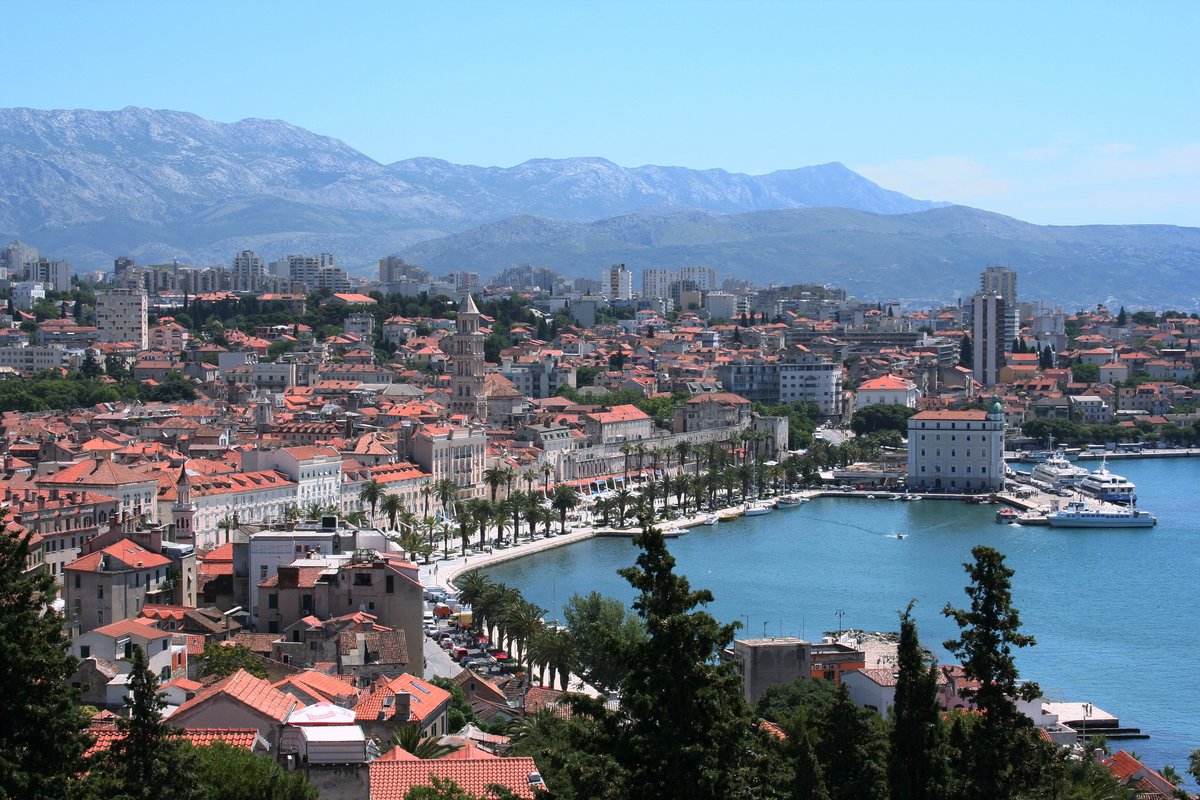
🇭🇷 Split — Family Travel Guide
Country: Croatia (Dalmatia) Last Updated: May 2026
Overview
Split is Dalmatia’s beating heart — a city of extraordinary contrasts where a 1,700-year-old Roman emperor’s palace forms the literal living core of the city, people eat breakfast in its ancient courtyards and hang laundry from its medieval archways, and five minutes away the Adriatic shimmers in that very specific shade of blue that makes you forget everything else. Croatia’s second-largest city is not just a transit hub to the islands (though it does ferry thousands of people to Hvar, Brač, and beyond). For families who give it proper time, Split delivers something rare: world-class history, excellent beaches, dramatic nature in easy reach, an exceptionally safe local culture, and a food scene built around fresh Adriatic seafood and slow-cooked Dalmatian classics.
Why families love it:
- Diocletian’s Palace — a UNESCO World Heritage site you live inside, not just visit
- Bačvice Beach: sandy (rare in Croatia), shallow, 5 minutes from the Old Town
- Dramatic nature a short drive away (Krka waterfalls, Cetina canyon, Brač Island)
- Croatia is one of Europe’s safest countries; Split is exceptionally welcoming to children
- Euro currency since January 2023 — no confusing kuna exchange
- Klapa singing, Game of Thrones filming locations, and a ball game played only here
⏰ Best Time to Visit with Kids
| Season | Conditions | Verdict |
|---|---|---|
| May–Jun | 22–28°C, sea warming up, manageable crowds | ⭐ Best for families |
| Jul–Aug | 33–38°C, absolute peak crowds, highest prices | 🔴 Overwhelming — manageable but plan carefully |
| Sep–Oct | 24–30°C, sea warmest of the year, crowds drop dramatically | ⭐ Excellent |
| Nov–Mar | 10–18°C, occasional bura wind, quiet | ✅ Good for Old Town/history; no beach |
Pro tip: September is the sweet spot — sea temperatures peak (25°C+), children are back in Croatian schools so beaches empty out, and the light is extraordinary. July–August in Split can feel overwhelming — the Old Town lanes are packed shoulder-to-shoulder with cruise ship passengers and the heat is relentless.
Special events to aim for:
- St. Domnius Day (7 May): Split’s patron saint celebration — daytime procession through the palace, traditional klapa music, a rowing contest in the harbour, and a street fair. Completely free and genuinely special.
- Diocletian Days (late August): Gladiator re-enactments, Roman legionaries, and historical spectacle inside the palace — brilliant for older kids who love history.
🚗 Getting Around
Walking (Old Town — recommended) If you stay inside or near the Old Town/Varoš district, you genuinely don’t need transport for most sights. Diocletian’s Palace, the Riva promenade, Bačvice beach, and Marjan Hill are all within 20–30 minutes on foot from anywhere in the historic core.
Car Rental (Strongly Recommended for Day Trips) Essential for reaching Krka, Cetina, Trogir, and most natural attractions. Rates from ~€35–55/day. Parking inside the Old Town is impossible — park in the harbour area or outer districts.
Public Buses (Promet Split) Frequent, air-conditioned, and cheap (€1–2 per journey). Lines 12 and 21 serve beaches in both directions. Good for trips to outer beaches (Žnjan, Kaštelet).
Bolt / Uber Both operate in Split. Short city rides €5–7. Useful for airport transfers and evening trips.
Ferries (Jadrolinija + Krilo) Jadrolinija runs from Split port to Brač (50 min), Hvar (1h), Vis, and more. Ferry terminal is a 5-minute walk from the palace. Book in advance in summer — car spaces fill fast.
Airport Split Airport (SPU) is 25km north of the city. Bolt runs €25–35. Atlas Airport Bus runs to the bus terminal for ~€8 per adult.
🏛️ Historical Sites (Kid-Friendly)
1. Diocletian’s Palace — The City IS the Palace ⭐
There is nowhere else in the world quite like this. When Roman Emperor Diocletian retired in 305 AD, he built himself a 30,000m² coastal palace-fortress at what is now central Split. After his death, Dalmatian refugees moved in — and never left. Today, approximately 3,000 people still live inside the ancient walls. The palace is the city: its grand peristyle courtyard doubles as a café terrace, medieval apartments cling to Roman columns, and the main street runs through what was once Diocletian’s entrance hall.
Children love ducking through unexpected archways, climbing worn stone steps, and finding the ancient black Egyptian sphinx (3,500 years old — older than Rome) crouching in the peristyle square. The Cellars (Substructures) — vaulted basement chambers below the imperial apartments — are the best-preserved section. Game of Thrones fans will recognise the main cellar hall as where Daenerys kept her dragons in Meereen (Season 4).
- Rating: 4.8/5 on Google
- Age suitability: All ages; best appreciated from 5+
- Cost: Palace grounds — free to enter. Cellars: Adult €10 / Children (7–18) €5 / Under-7 free. Cathedral of St Domnius + Bell Tower: ~€8 adult / €4 child
- Time needed: 2–4 hours (full day if you linger)
- ⚠️ Honest note: In July–August, the peristyle and main lanes get unbearably crowded by 10am. Early morning (before 9am) or evening is transformative.
- Pro tip: Enter via the Golden Gate (north) and follow kids’ instincts into random alleyways. Rub the big toe of the Gregory of Nin statue outside the Golden Gate for good luck — kids find this hilarious.
2. Klis Fortress — Game of Thrones Meereen ⭐
A medieval fortress perched on a clifftop ridge 12km north of Split, with jaw-dropping views over the city and islands. Klis held out against 25 years of Ottoman siege in the 16th century before finally falling. For many families today, the draw is the Game of Thrones connection: this is Meereen from Seasons 3–5, with a small GoT exhibition confirming filming details.
Beyond GoT, the fortress is genuinely impressive — ancient ramparts, original armour and weapons, and some of the best views in Dalmatia. Live reenactment events (Knights vs Ottomans) occasionally happen on summer weekends.
- Rating: 4.4/5 on TripAdvisor
- Age suitability: Best for ages 6+; GoT fans 8+ particularly engaged
- Cost: Adult €12 / Children under 15 €4 / Under-7 free
- Time needed: 1.5–2.5 hours
- Location: Village of Klis, 12km from Split (20–30 min by car)
- ⚠️ Honest note: Path within the fortress can be uneven and steep — good shoes required. No café inside; bring water.
- Pro tip: Go early (9am) before tour coaches arrive. Combine with a swim at Kaštela Bay on the way back.
- Website: tvrdava-klis.com
3. Cathedral of St. Domnius & Bell Tower
Built inside what was Diocletian’s mausoleum — the only Christian cathedral built directly inside a Roman imperial tomb. The irony is thick: Diocletian persecuted Christians zealously, and his tomb became one of the world’s oldest cathedrals. The bell tower offers panoramic views over the palace rooftops (narrow, steep climb — best for ages 10+).
- Rating: 4.3/5 on TripAdvisor
- Age suitability: Cathedral good for all ages. Tower best for 10+.
- Cost: Cathedral + Bell Tower + Baptistery combo: ~€8 adult / €4 child
- Time needed: 45 min–1.5 hours
- Location: Peristyle, inside Diocletian’s Palace
- Pro tip: Go inside the mausoleum-cathedral even briefly — the coffered ceiling is extraordinary.
🏖️ Beaches & Water Activities
4. Bačvice Beach — Sand, Shallows & Picigin ⭐
Split’s most loved city beach — famous for picigin, an acrobatic ball game invented here in 1908 that is played only in Split and is on Croatia’s UNESCO intangible cultural heritage list. Players stand in very shallow water (ankle to knee depth) and keep a small ball from touching the surface using theatrical one-handed dives. Locals are usually happy to involve visitors’ kids.
The beach itself is a rarity in Croatia: genuinely sandy, in a sheltered bay with reliably calm water perfect for young swimmers. Just 10 minutes from the palace.
- Rating: 4.3/5 on TripAdvisor
- Age suitability: All ages; the shallow picigin zone is perfect for toddlers and young children
- Cost: Beach entry free; sun loungers ~€8–12/day
- ⚠️ Honest note: Very crowded on summer afternoons. Can be noisy from beach club side in evenings.
- Pro tip: Go before 10am. Ask to try picigin — locals are friendly and the game is addictive.
5. Bene Beach — Pine Forest Shade & Playground
Tucked into the western Marjan Peninsula, Bene is ideal for families who need shade. A dense Mediterranean pine forest comes right down to the pebble shore. There’s a playground set on the rocks for young children, a café-restaurant, and calm turquoise water. Reach it by walking through Marjan Forest Park (25–30 min from Old Town) or by taxi.
- Rating: 4.4/5 on Google
- Age suitability: All ages; playground particularly for ages 3–10
- Cost: Free entry; sun loungers ~€8–10
- ⚠️ Honest note: Rocky/pebbly beach — water shoes essential for young children.
- Pro tip: Walk to Bene through Marjan Forest. On the way back, take the steps up to the Vidilica viewpoint for the most photographed view of Split.
6. Žnjan Beach — Modern Facilities, Playgrounds, Lifeguards
The largest organised beach in Split, about 4km east of the Old Town. Modern facilities: playgrounds, a skate park, beach volleyball, lifeguards in season, multiple cafés, and showers. Less atmospheric than Bačvice but far better equipped for families wanting proper facilities.
- Rating: 4.1/5 on Google
- Age suitability: All ages; playground excellent for 3–12
- Cost: Free; sun loungers ~€10
- Location: Žnjan district — ~20 min by bus (bus 12 or 17)
7. Marjan Forest Park & Viewpoints — Split’s Green Lung ⭐
A pine-forested peninsula jutting west from the Old Town, Marjan is Split’s treasured escape from heat and crowds. Shaded paths wind through Mediterranean vegetation, past ancient hermit churches carved into rock, to panoramic viewpoints. The Vidilica viewpoint (20 min climb) shows the entire city spread below with islands floating in a silver sea.
The forest shelters Bene Beach and a small zoo (Zoološki vrt Marjan) with indigenous animals including deer, wolves, owls, and wildcats — admission ~€3 adult / €1.50 child.
- Rating: 4.7/5 on Google
- Age suitability: All ages; viewpoint walk best for ages 5+
- Cost: Free (zoo extra ~€3)
- Time needed: 2–4 hours for a loop including viewpoint and Bene beach
- Pro tip: Start early (before 9am) for the viewpoint in golden light. The Marjan stairs through the Varoš neighbourhood are the quickest way up. Evening walks here are magical.
🎭 Cultural Experiences
8. Klapa Singing — UNESCO-Listed Harmony
Klapa is Croatia’s traditional unaccompanied male vocal music — multiple voices in harmony, no instruments. It originated in Dalmatia and Split is its spiritual home. The sound is haunting and completely unlike anything most families will have heard. In summer (May–September), klapa groups perform regularly in the palace courtyards, on the Riva, and at St. Domnius Day. Hearing klapa echo off 1,700-year-old stone walls on a warm evening is unforgettable.
- Age suitability: All ages (young children better suited to courtyard informal performances)
- Cost: Street and courtyard performances: free. Ticketed concerts: €10–25.
- When: Summer evenings, May–September
- Pro tip: Don’t plan this — stumble upon it. On any warm summer evening, walking through the palace or along the Riva, you’re likely to hear klapa groups spontaneously performing.
9. Picigin at Bačvice — Croatia’s Most Unique Beach Game
Worth calling out separately as a standalone cultural experience: picigin was invented on Bačvice Beach in 1908 and is played only in Split. The game has its own championship, its own subculture, and it’s genuinely one of the most joyful things you’ll see on any beach in Europe. The acrobatic moves — diving through ankle-deep water to keep a small ball aloft — look impossible until you try it. You simply cannot experience this anywhere else in the world.
🔬 Museums & Learning
10. Split City Museum (Muzej Grada Splita)
Housed in a beautifully restored Gothic palace (Papalić Palace) within Diocletian’s Palace, this museum traces Split’s history from Diocletian through medieval times to the 20th century. Well-curated, manageable in size, and the building itself is as interesting as the exhibits. A rare Egyptian sphinx — 3,500 years old — is displayed here.
- Rating: 4.2/5 on TripAdvisor
- Age suitability: Best for ages 8+
- Cost: Adult ~€6 / Reduced ~€3
- Time needed: 1–1.5 hours
- Location: Papalića ul. 1, inside Diocletian’s Palace
- Pro tip: One of the least crowded sights in the palace — go midday when the lanes are packed and enjoy some quiet history.
11. Meštrović Gallery (Galerija Meštrović) ⭐
Ivan Meštrović (1883–1962) was Croatia’s greatest sculptor — his work is in the Vatican and MoMA. His personal home/studio in a magnificent 1930s villa overlooking the sea houses approximately 200 sculptures indoors and in the sculpture garden. The scale is extraordinary. Children who engage with art will be captivated; the outdoor sculpture garden against a sea backdrop is beautiful regardless of artistic interest.
- Rating: 4.4/5 on TripAdvisor
- Age suitability: All ages for the garden; best appreciated 8+ for interior
- Cost: Adult ~€10 / Reduced ~€5; includes entry to Kaštelet (his biblical wood reliefs in a 15th-century chapel)
- Time needed: 1.5–2.5 hours
- Location: Šetalište Ivana Meštrovića 46, western waterfront
- Pro tip: The garden café has lovely sea views. The Gregory of Nin statue outside the Golden Gate is also by Meštrović — a good conversation starter.
- Website: mestrovic.hr
🍕 Food Experiences for Families
12. Peka — Croatia’s Greatest Dish ⭐
Peka is Dalmatia’s most treasured cooking method: lamb, veal, or octopus is placed in a heavy dish with vegetables, olive oil, and herbs, covered with a domed lid (the peka) and buried under glowing embers for 2–3 hours. The result is impossibly tender meat with caramelised vegetables that children typically love. Must be ordered 24 hours in advance.
- Best places: Konoba Fetivi (Šperun 3, Varoš neighbourhood — 4.5/5 Google); Konoba Nikola (Branka Radice 10)
- Cost: Peka for 2 people typically €35–55
- Pro tip: Book the peka when you arrive at your accommodation — a day ahead is usually enough. Eat it for Sunday lunch.
13. Burek for Breakfast — Split’s Morning Ritual
Flaky filo pastry filled with cheese, meat, or spinach — the Balkans’ great street food. Families can grab a hot burek and a yoghurt drink for €2–3 per person from a local pekara (bakery), eat on a bench on the Riva, and watch the harbour come to life. Simple morning moments kids remember for years.
- Best places: Zvrk (Domaldova ul. 9 — local legend); ST Burek (Ul. bana Jelačića); any pekara sign in the Varoš neighbourhood
- Cost: €1.50–2.50 per portion
- Pro tip: Arrive before 9am for freshly baked — the first batch is always the best.
14. Fresh Seafood on the Riva
For families, the Riva promenade tables have the best setting (watching harbour life). Restaurant Dvor (4.5/5 Google) has spectacular views, fresh daily catch, and a relaxed atmosphere welcoming to children. Villa Spiza inside the palace (Petra Kružića 3) is a local favourite — tiny, no reservations, but authentic Dalmatian cooking at honest prices.
Must-try dishes:
- Crni rižot (black risotto with cuttlefish ink) — looks alarming, tastes extraordinary
- Grilled brancin (sea bass) — mild, fresh, reliably kid-friendly
- Pašticada (beef slow-braised in wine and prunes) — Split’s signature meat dish, with gnocchi
- Grilled calamari — Dalmatian staple, unfailingly good
🌿 Parks & Outdoor
15. Riva Promenade — Split’s Living Room
The marble waterfront promenade running along the southern face of Diocletian’s Palace is the social heartbeat of Split — where everyone walks, meets, sits, and simply is. Lined with palm trees, outdoor cafés, and the palace wall on one side and the open harbour on the other. Completely free, permanently interesting, and a wonderful place to burn off toddler energy in the evenings.
- Rating: 4.5/5 on Google
- Cost: Free
- Age suitability: All ages — toddlers can run freely on the flat marble; older kids watch the ferries
- Pro tip: Evening aperitivo culture is strong here — families sit at cafés from about 6–8pm, children running around while parents have a Spritz. This is the local tradition and visitors are welcomed naturally.
🌧️ Rainy Day Activities
16. Etnografski Muzej Split (Ethnographic Museum)
Located inside the Vestibule of Diocletian’s Palace, this small museum covers traditional Dalmatian folk costumes, crafts, and way of life. Small enough not to overwhelm, and the folk costumes section genuinely delights younger children.
- Rating: 4.0/5 on TripAdvisor
- Age suitability: Best for ages 5+
- Cost: Adult ~€5 / Child ~€3
- Time needed: 45 min–1.5 hours
- Location: Inside Diocletian’s Palace (Vestibule area)
17. Croatian Maritime Museum (Pomorski Muzej)
Housed within the 17th-century Gripe Fortress east of the Old Town, this museum covers Croatia’s maritime history — navigation, shipbuilding, naval battles. The model ships and submarine sections are engaging for children. Small outdoor cannon display and views from the fortress walls make it feel more active than a typical museum.
- Rating: 4.1/5 on TripAdvisor
- Age suitability: Best for ages 7+; model ships good for 6+
- Cost: Adult ~€7 / Child ~€3
- Time needed: 1–1.5 hours
- Location: Glagoljaška ul. 18, Gripe Fortress (15 min east of Old Town)
🗺️ Day Trips
Day Trip 1: Krka National Park ⭐ (Most Recommended)
Distance from Split: ~80km, 1–1.5h by car
One of Croatia’s most spectacular national parks — a canyon river system studded with waterfalls. Skradinski Buk, a cascade of 17 interlocking falls tumbling into emerald pools, has a boardwalk loop (about 3km) suitable for strollers. Swimming is permitted at the waterfall pools in designated areas from 1 June to 30 September — children lose their minds swimming next to an active waterfall. An included boat trip from Skradin adds adventure.
- Rating: 4.6/5 on TripAdvisor and Google
- Age suitability: All ages; boardwalk walkable with strollers; swimming from 3+ with supervision
- Cost (2025): Peak season: Adult ~€30 / Youth (7–18) ~€15 / Under-7 free. Shoulder: Adult ~€20 / Youth ~€10
- Time needed: Full day (4–6 hours in the park)
- Getting there: Car is easiest (1h 15min). Organised tours from Split (~€40–55/adult) are excellent value for non-drivers.
- ⚠️ Honest note: Swimming restrictions have fluctuated — confirm current rules at npkrka.hr. Buy tickets online in advance to skip queues.
- Pro tip: Enter via Skradin for the boat cruise approach. Go May–June or September for waterfalls at their fullest with smaller crowds.
Day Trip 2: Trogir — UNESCO Island City ⭐
Distance: ~27km, 30–45 min by car or bus
A tiny medieval city built on a small island connected by a bridge — a UNESCO World Heritage Site. One of the best-preserved medieval cities in the Adriatic. The Cathedral of St. Lawrence has one of the finest Romanesque-Gothic portals in Europe. Compact enough to see properly in 3–4 hours, the waterfront promenade is flat and stroller-friendly, and gelato shops are everywhere. The Kamerlengo Fortress at the waterfront has views older children enjoy.
- Rating: 4.6/5 on Google
- Age suitability: All ages; flat and compact — good for strollers; best appreciated 7+
- Cost: Free to walk. Cathedral: ~€5 adult. Kamerlengo Fortress: ~€5 adult / €2 child
- Time needed: 3–5 hours
- Getting there: Bus 37 from Split bus terminal — 40 minutes, ~€2 each way. Or car.
- Pro tip: Arrive at 9am on a weekday for near-empty lanes. Pair with seafood lunch on the Trogir waterfront.
Day Trip 3: Cetina River & Omiš — Rafting + Pirates ⭐
Distance: ~30km to Omiš, ~45 min by car
Omiš is a small coastal town at the mouth of the Cetina River Canyon — in the Middle Ages a pirate stronghold. Today the draw is the canyon and Cetina River Rafting through it: Grade II–III rapids that are genuinely exciting but safe for children from age 6+. The route passes through dramatic cliff scenery, shaded forest tunnels, a cave, and ends near the Radmanove Mlinice watermill area with a swimming hole and traditional restaurant.
- Rating: 4.6/5 on TripAdvisor for Cetina rafting
- Age suitability: Rafting from age 6+; Omiš town all ages
- Cost: Rafting: Adult ~€35–45 / Child (6–14) ~€25–30. Tours from Split: ~€45–60 adult including transport
- Time needed: Half day for rafting + lunch; full day with Omiš exploring
- ⚠️ Honest note: Under-6s cannot raft but can enjoy Omiš beach and town.
- Pro tip: Book rafting directly with Rafting Experience Cetina. Go in the mornings — cooler and the canyon light is best.
💡 Practical Tips for Families
Best Areas to Stay with Kids
| Area | Why | Best for |
|---|---|---|
| Old Town / Diocletian’s Palace | Walk to everything; unique atmosphere; magical evenings | Families who want immersion |
| Varoš | Just west of the palace; quieter; authentic neighbourhood; 5 min to Bačvice | Families wanting a local feel |
| Bačvice area | Steps from the best family beach; 10 min walk to palace | Families prioritising beach access |
| Spinut/Zenta | Modern apartments; residential; short bus/Bolt to beach | Families wanting more space |
💡 Recommendation: Stay in or near the Varoš neighbourhood for the best combination of atmosphere, access to Marjan Hill, proximity to Bačvice, and quieter streets at night.
Safety Notes
- 🟢 Croatia is exceptionally safe — consistently ranked among Europe’s safest countries. No significant pickpocket hotspots, police presence in tourist areas.
- ⚠️ Rocky beaches: Most beautiful swimming spots are on rocks and pebbles — water shoes are essential for children. Croatia’s number one family tip.
- ☀️ Sun intensity: Mediterranean summer sun is intense — SPF 50 on fair children, hats required June–September.
- 🌊 Sea currents: Split’s main beaches (Bačvice, Bene, Žnjan) are sheltered and safe.
- 🌡️ Summer heat: July–August midday temperatures hit 35–38°C. Plan indoor activities or shaded beach time for 11am–4pm.
💰 Money-Saving Tips
The SplitCard A discount card covering multiple museums, galleries, and attractions. Available at the Tourist Office (Peristil, inside Diocletian’s Palace). A family pass is available — worth calculating against your planned itineraries.
Krka After 3pm Discount In peak months, Krka National Park offers discounted entry after 15:00.
Free Attractions Worth Knowing
- Diocletian’s Palace grounds (wander freely; pay only for specific sites)
- Marjan Forest Park and all viewpoints
- Riva promenade
- Bačvice, Firule, Kaštelet beaches — all free
- Gregory of Nin statue and toe-rubbing
- Klapa singing performances in summer (free in courtyards and on Riva)
📋 Quick Reference: Activities at a Glance
| Activity | Age Best | Cost (family of 4) | Duration | Season |
|---|---|---|---|---|
| Diocletian’s Palace (free wander) | All | Free | 2–4 hrs | Year-round |
| Palace Cellars / Cathedral | 6+ | ~€45 | 1–2 hrs | Year-round |
| Klis Fortress | 6+ | ~€32 | 1.5–2.5 hrs | Year-round |
| Bačvice Beach + picigin | All | Free | 2–5 hrs | May–Oct |
| Bene Beach + forest walk | All | Free | 2–5 hrs | May–Oct |
| Marjan Hill + zoo | All | Free (zoo ~€9) | 2–4 hrs | Year-round |
| Meštrović Gallery | 7+ | ~€30 | 1.5–2 hrs | Year-round |
| Cathedral Bell Tower | 10+ | ~€20 | 45 min | Year-round |
| Klapa music evenings | All | Free | Evening | May–Sep |
| Krka National Park | All | ~€55–100 | Full day | Apr–Oct |
| Trogir day trip | All | ~€10–20 + transport | 3–5 hrs | Year-round |
| Cetina River Rafting (6+) | 6–16 | ~€120–160 for family | Half day | May–Oct |
| Burek breakfast | All | ~€8 for family | 30 min | Year-round |
| Peka dinner | All | €50–70 (feeds 3–4) | 2 hrs | Year-round |
✈️ Getting to Split
Split Airport (SPU) is 25km north of the city, near Trogir. Direct seasonal flights from most European cities (London, Amsterdam, Paris, Vienna, Dublin, Malta, etc.). Fewer routes in winter. Atlas Airport Bus runs to Split bus terminal for ~€8 adult. Bolt/taxi to city centre: €25–35.
By ferry from Italy: Jadrolinija and SNAV run overnight ferries from Ancona to Split (~9 hours) — a wonderful way to arrive from Italy.
Guide compiled May 2026. Prices and hours correct at time of research but subject to change — always verify on official websites before visiting. For current Krka National Park pricing and swimming rules: npkrka.hr. Split tourism: visitsplit.com.