🇬🇪 Tbilisi — Family Travel Guide
Country: Georgia Airport: Tbilisi International Airport (TBS) Last Updated: March 2026
Overview
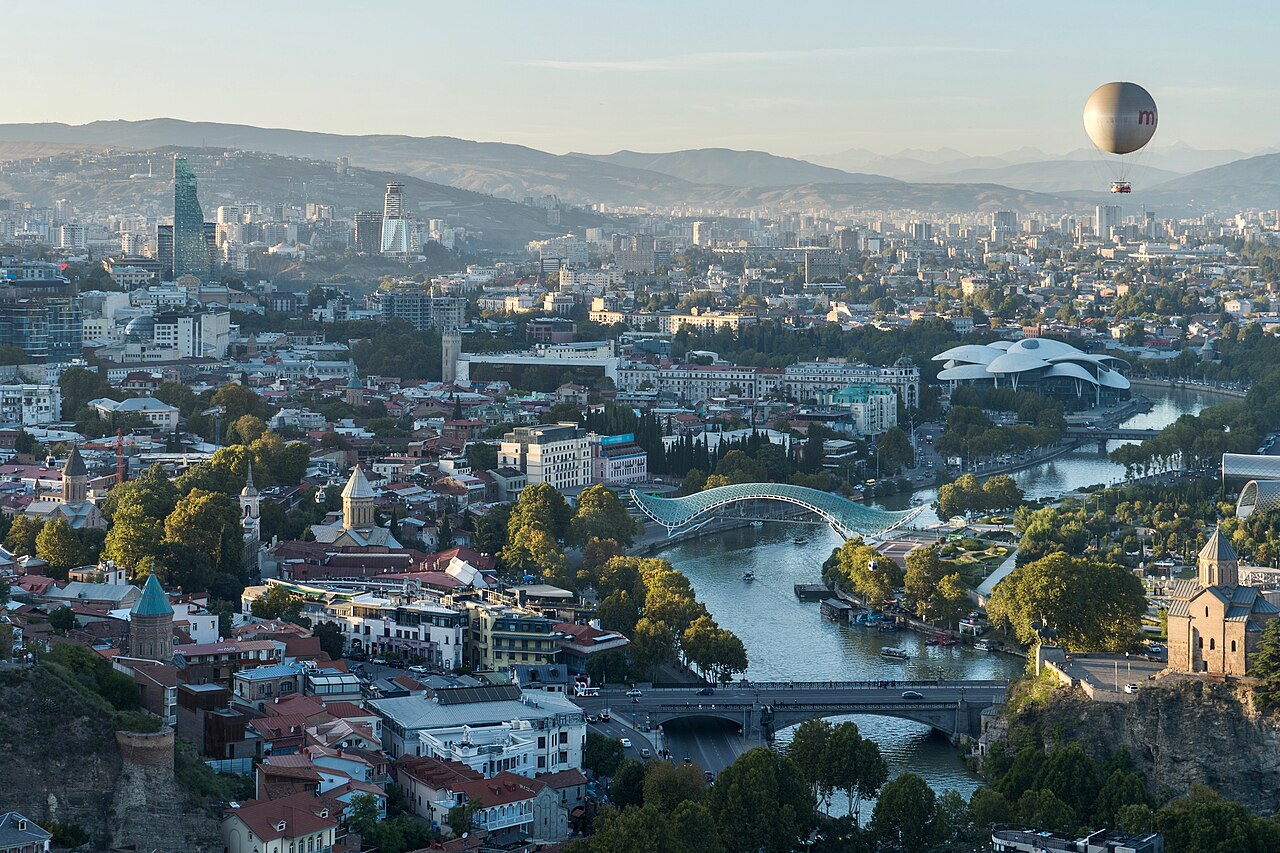
Tbilisi is one of the most unexpectedly brilliant family destinations in the world. Georgia’s ancient capital — population 1.1 million — sits at the junction of Europe and Asia, cradled between the Caucasus mountains and the Mtkvari River, with a 1,500-year-old history visible on every corner. Cobblestone streets lined with colourful wooden balconies tumble down to sulphur-steaming bathhouses; Soviet-era funiculars climb to fortress ruins above the old town; mountain day trips to 14th-century churches above glacier-carved valleys are achievable in an afternoon.
The city is extraordinarily affordable, extraordinarily safe, and — thanks to a deeply-rooted culture of family reverence — extraordinarily welcoming to children. Georgians treat every child as a collective treasure. You will be offered food in shops, charmed at restaurants, and helped across streets whether you want it or not. The food alone — the cheese-stuffed bread, the soup dumplings, the walnut-loaded salads — is a family adventure in itself.
Why families love it:
- Jaw-dropping setting: mountains, gorges, old-town streets, rooftop cafés
- Extraordinarily cheap — a full day’s activities and meals rarely exceeds €50 for a family of 4
- Georgian people are among the most hospitable on earth; children are treated like royalty
- The city itself gave families its name: Tbilisi derives from the Georgian word tbili — meaning “warm”
- Unique experiences unavailable almost anywhere else: sulphur bathhouses, polyphonic song, ancient cave towns, 14th-century mountain churches
⏰ Best Time to Visit with Kids
| Season | Conditions | Verdict |
|---|---|---|
| Apr–Jun | 18–26°C, blooming, low crowds, ideal for day trips | ⭐ Best for families |
| Jul–Aug | 32–38°C, very humid, crowded | 🔴 Hot & sweaty — manage expectations |
| Sep–Oct | 20–28°C, harvest time, golden light, festivals | ⭐ Excellent — peak harvest season |
| Nov–Mar | 3–12°C, some snow in Dec–Feb, most attractions open | ✅ Good for history/food, not parks |
Pro tip: September is arguably the best month — the Rtveli grape harvest brings outdoor celebrations and wine-pressing events to the Kakheti region. Temperatures are perfect and the Caucasus mountains glow in autumn light.
🚗 Getting Around
Bolt Taxi App (Strongly Recommended) Bolt is ubiquitous, reliable, and absurdly cheap in Tbilisi. A cross-city ride rarely costs more than 5–8 GEL (~€1.70–2.70). Download it before you land and you’ll never need to negotiate with a street taxi. Yandex Taxi (Go) is the backup option. Child seats are not standard — bring your own for young children if needed.
Metro Tbilisi’s Soviet-era underground has 2 lines and 23 stations. Fares are just 1 GEL (~€0.34) per trip with a Metromoney card (card itself 2 GEL). The stations are architecturally striking and the metro is clean and safe. Useful for reaching Freedom Square and the main axis of the city. Gets crowded 8–10am and 5–7pm.
Cable Cars & Funiculars
- Rike Park → Narikala Fortress Cable Car: One-way 2.5 GEL (~€0.85). Kids love it; cash only.
- Mtatsminda Funicular: One-way 6 GEL (~€2). Vintage railway climbing steeply up the mountain face.
On Foot The Old Town (Kala), Abanotubani (bath district), and Rike Park are all walkable and interconnected. The Old Town’s narrow lanes are stroller-navigable with some effort on the cobblestones. Comfortable walking shoes are essential on the uneven surfaces.
Currency Note Georgia uses the Georgian Lari (GEL). €1 ≈ 2.9–3.0 GEL (verify before travel). The city is dramatically cheaper than Western Europe; a family of 4 can eat exceptionally well for €20–30.
🎢 Theme Parks & Amusement
1. Mtatsminda Park & Funicular Railway
The city’s most iconic family attraction. Mount Mtatsminda towers over Tbilisi at 770m, and its summit is home to a traditional amusement park with a Ferris wheel (the view is extraordinary), roller coaster, bumper cars, carousels, water slides, a children’s mini-train, and carnival games. The funicular railway up to the park — passing over rooftops and sheer cliff faces — is a thrilling experience in itself for kids.
At the top: the Mamadaviti Pantheon (burial ground of Georgia’s greatest poets and artists) adds a surprisingly moving cultural moment. Parents can sip coffee on the summit terrace with a panoramic sweep of the entire Tbilisi basin while kids ride.
- Rating: 4.3/5 on Google; 4.2/5 TripAdvisor
- Age suitability: All ages; rides for tots and thrill-seekers alike
- Cost: Park entry FREE | Funicular one-way: 6 GEL (
€2) | Rides: 3–10 GEL each (€1–3.40) | Day ride card purchased at box office; card itself 2 GEL - Time needed: 3–5 hours
- Location: Summit of Mount Mtatsminda (funicular departs from Chonkadze Street, near Freedom Square)
- Open: Park open daily; funicular hours approx 11am–midnight (check seasonal hours)
- ⚠️ Honest note: The rides are vintage and modest by international standards — don’t expect Alton Towers. The real magic is the setting, the views, and the funicular ride itself. The park gets busy on summer weekends and holidays.
- Pro tip: Take the funicular up and walk down through the wooded hillside on the nature path — 30–45 minutes of beautiful descent through pine forest. Alternatively, the cable car descent offers different views.
2. Gino Paradise Aquapark (Tbilisi Sea)
Georgia’s largest water park, set on the shores of the Tbilisi Sea reservoir — a 13-hectare complex with over 10 pool types and dozens of slides including high-speed drop slides, lazy river, wave pool, and a dedicated younger children’s splash zone. The open reservoir swimming (where a diving board launches you into actual open-water) is the crowd favourite and unlike anything in most European parks.
- Rating: 4.0/5 on TripAdvisor (mixed but solid)
- Age suitability: All ages; young children’s zone available; height restrictions on major slides
- Cost: Approximately 35–55 GEL per person (~€12–19) depending on season and time of day; after-5pm rates are cheaper. Check ginoaquapark.ge for current pricing — website prices and door prices have differed historically so verify.
- Time needed: Full day
- Location: Gino Seaside Tbilisi, Tbilisi Sea shore (20 min Bolt from city centre)
- ⚠️ Honest note: Outside food and drink is prohibited and strictly enforced — on-site catering is available but overpriced. Some reviews note inconsistency with pricing. Go mid-week to avoid weekend crush. Bolt back to the city can involve a wait — factor this in.
- Pro tip: Pair with a stop at the Chronicles of Georgia Monument (free, 5 minutes from Gino Paradise) — the towering stone columns are genuinely awe-inspiring for older kids, especially as they tower over the reservoir.
3. Mushthaid Garden
A gentler, shaded amusement park in the heart of the city, on the riverfront — perfect for younger children or as a relaxed supplement to other activities. Features bumper cars, small train rides, classic carnival games, and a pleasant garden setting with big trees providing shade. Much less intense (and less expensive) than Mtatsminda Park.
- Rating: 4.1/5 on Google
- Age suitability: Best for ages 2–8
- Cost: Individual rides 1–3 GEL (~€0.35–1); no entry fee
- Time needed: 1–2 hours
- Location: Chubinashvili Street, near the right bank of the Mtkvari River
- Pro tip: Stop here before or after the nearby Rike Park for a combined afternoon outing. Great for keeping young children happy while older ones explore Rike Park independently.
🏛️ Museums & Learning
4. Open Air Museum of Ethnography ⭐
One of Tbilisi’s hidden gems for families — a sprawling 52-hectare outdoor museum set on a forested hillside near Turtle Lake. Traditional homes, farmhouses, mills, watchtowers, and churches have been relocated from every corner of Georgia and reconstructed in their authentic form, creating a walk-through Georgian village across time. Artefact-filled interiors show how Georgians actually lived across different regions and centuries. The forested setting makes it feel like an adventure rather than a classroom.
- Rating: 4.5/5 on TripAdvisor — consistently praised as a Tbilisi highlight
- Age suitability: All ages; the outdoor, walk-through format keeps kids engaged even at ages 4–5
- Cost: Adult 1.5 GEL (~€0.50!) / Children under 18: 0.5 GEL / Under-6: FREE | Guided tour (up to 10 people): 25 GEL — available in English, Georgian, Russian, German
- Time needed: 2–4 hours
- Location: Turtle Lake area, Vake district, western Tbilisi
- Open: Daily (confirm hours locally — typically 10am–6pm)
- ⚠️ Honest note: Signage is minimal without a guide — the guided tour adds enormous context and is well worth the 25 GEL. The hillside paths are uneven and involve some climbing — good for kids 5+ who can walk independently.
- Pro tip: Combine with nearby Turtle Lake (see below) for a full half-day in the Vake area. The museum’s highest point has views over the city. A guide can be booked at the entrance gate.
- Website: National Agency for Cultural Heritage Preservation of Georgia
5. Experimentorium Science Museum (Tamada Space)
Tbilisi’s hands-on interactive science museum — over 100 physics, chemistry, and biology exhibits where children conduct experiments, generate electricity, create optical illusions, and explore the natural world. Staff run scheduled laboratory sessions (included in some packages) that children and parents can participate in together. Guides available in English.
- Rating: 4.4/5 on Google; 4.3/5 TripAdvisor
- Age suitability: Best for ages 5–15; lab experiments work best for ages 8+
- Cost: Approximately 20–25 GEL per child (
€7–8.50); guided tour 39 GEL (€13) — check experimentorium.ge for current pricing - Time needed: 2–3 hours
- Location: Tbilisi city centre (check current address — has moved previously)
- ⚠️ Honest note: Smaller than major European science museums but well-designed. The English-guided tour significantly improves the experience for non-Georgian speakers.
- Pro tip: Book in advance and time your visit around one of the scheduled laboratory shows — these sell out and are the highlight of the visit.
6. Georgian National Museum
Georgia’s flagship museum traces 300,000 years of continuous human history in one of the world’s oldest continuously inhabited regions. The Dmanisi Skull exhibit — showcasing a 1.85-million-year-old Homo erectus discovery made just 85km from Tbilisi — is a genuine world-class archaeological highlight. The Treasury section holds extraordinary gold jewellery and artifacts from Georgia’s ancient kingdoms. For families interested in history, this is not to be missed.
- Rating: 4.2/5 on TripAdvisor; 4.3/5 on Google
- Age suitability: Best for ages 8+; younger children may find it overwhelming
- Cost: Adult
15 GEL (€5) / Children5 GEL (€1.70) - Time needed: 2–3 hours
- Location: Rustaveli Avenue, city centre (the main cultural boulevard)
- Open: Tue–Sun 10am–6pm; closed Mondays
- ⚠️ Honest note: The museum is large and some sections feel dated. Focus your visit on the ground-floor archaeological collection and the Treasury — these are world-class. Skip the upper floors unless time allows.
- Pro tip: The Rustaveli Avenue location makes it easy to combine with the nearby Tbilisi Digital Space (immersive digital art exhibitions — visually spectacular for all ages; approx 20–25 GEL per person).
7. Museum of Illusions
A crowd-pleasing collection of optical illusions, visual puzzles, sensory tricks, and interactive installations — perfect for keeping older children and teens engaged. The photo opportunities are spectacular (rooms where perspective warps, holograms, infinity mirrors) and the 60–90 minute visit is reliably enjoyable.
- Rating: 4.2/5 on Google
- Age suitability: Ages 4+; best for 6–15
- Minimums/maximums: Under-5 free
- Cost: Adults 31.5 GEL (
€11) / Children 5–16: approx 21 GEL (€7) - Time needed: 1–1.5 hours
- Location: Erekle II Street, Old Town
- ⚠️ Honest note: A fun diversion but not a full day’s activity. Some visitors note it feels pricey for its size. Best combined with an Old Town walking day.
- Pro tip: The Old Town location means you can walk here after exploring Narikala Fortress or the sulphur bath district. The illusion rooms produce hilarious family photos — worth the entry fee for that alone.
🏰 Historic Sites & Unique Experiences
8. Narikala Fortress & Old Town Walk ⭐
Tbilisi’s 4th-century hilltop fortress looms over the Old Town and bath district, forming the city’s most iconic skyline. The fortress itself is partially ruined (portions were destroyed by an 1827 earthquake) but the views from the battlements over the rooftop-and-balcony patchwork of the old city and the sulphur steam rising from Abanotubani below are extraordinary. The approach via cable car from Rike Park is half the experience — a 2-minute gondola ride high above the old town streets.
Below the fortress, the Old Town (Kala) is a maze of carved wooden balconies, vine-covered courtyard restaurants, crumbling but beautiful architecture, and artisan workshops. The Leghvtakhevi Waterfall — a genuine waterfall hidden deep in a narrow canyon right in the heart of the old town — is a magical find for kids.
- Rating: 4.6/5 on Google (Narikala + Old Town area)
- Age suitability: All ages; confident walkers 5+ for the fortress climb
- Cost: Cable car one-way 2.5 GEL (~€0.85) — cash only | Fortress entry FREE | Old Town walking: FREE
- Time needed: 2–4 hours for the full area
- Location: Old Town (Kala), eastern Tbilisi — easily reached on foot from Freedom Square
- ⚠️ Honest note: Narikala’s main interior was partially closed for reconstruction in 2025 — check current status. The ramparts and views are accessible regardless. Uneven cobblestones and steep steps — not suitable for strollers without a carrier.
- Pro tip: Ride the cable car up, walk the fortress battlements, descend on foot through the old town alleyways to the Leghvtakhevi Waterfall, then through Abanotubani’s dome-topped bathhouses. This 2-hour circuit is the single best introduction to Tbilisi for families.
9. Sulphur Baths of Abanotubani — Private Family Room ⭐
This is the experience that makes Tbilisi unlike any other European capital. The Abanotubani district (literally “bath district”) sits in a crater below Narikala Fortress, its distinctive Persian-style brick domes leaking sulphurous steam into the air above the old town. Natural hot sulphur springs bubble up here as they have since the 5th century AD — it was literally the reason Tbilisi was founded. The baths are THE unique Tbilisi experience.
For families, the trick is booking a private room — these contain a traditional tiled pool with piped hot and cold sulphur water, steam room, and plunge pool, bookable by the hour for your group alone. Children love the warm pools; the smell is initially shocking (strong sulphur/egg) but you quickly stop noticing it.
- Rating: 4.2/5 on TripAdvisor (private rooms); 4.4/5 Chreli-Abano bath specifically
- Age suitability: All ages in private rooms; public baths are adults-only/gender-separated
- Cost: Public baths: 10–15 GEL/person (
€3.40–5) | Private rooms: 50–150 GEL/hour for the room (€17–51) — fits a family of 4 comfortably, so cost is very reasonable per head. Add masseur service if desired (~30 GEL/person extra). - Time needed: 1–2 hours
- Location: Abanotubani district, below Narikala Fortress — on foot from the Old Town
- Top baths for families: Chreli-Abano (4.4/5, most prestigious, beautiful dome interior) and Gulo’s Thermal Spa (4.2/5, popular with tourists, good English service)
- ⚠️ Honest note: Not all baths have the same quality of private rooms — check recent reviews and book ahead in summer. Some tourist-facing baths are overpriced relative to quality. The sulphur smell is powerful and clings to swimwear — bring old swimsuits.
- Pro tip: Book a private room for 1.5 hours. The bath attendant (who scrubs you down with a rough mitt) is optional but adds to the authentic experience for older kids and adults. Combine with the Old Town/Narikala walk for a full half-day.
10. Mother of Georgia Statue & Panoramic Views
A 20-metre aluminium figure of a woman in Georgian national dress stands on a hilltop above Narikala Fortress — sword in one hand (for enemies), wine bowl in the other (for friends). A perfect symbol of Georgian character. Reached via the cable car from Rike Park or by walking up from Narikala, the statue and surrounding viewpoint offer some of the best city panoramas available. Free to visit; no lines.
- Rating: 4.5/5 on Google
- Age suitability: All ages
- Cost: Free (cable car 2.5 GEL one-way from Rike Park)
- Time needed: 30 minutes
- Pro tip: Best visited at golden hour before sunset — the city glows extraordinary orange and the mountain backdrop behind Tbilisi is spectacular. Combine with the botanical gardens descent below.
11. Tbilisi Botanical Garden
Hidden in a gorge behind Narikala Fortress, the botanical garden descends through bamboo groves, winding paths, and waterfalls into a completely serene world just minutes from the bustling old town. The garden covers 128 hectares and includes a miniature waterfall, streams children can wade in, and panoramic lookout points over the old town’s rooftop chaos above. A perfect counterpoint to the city’s intensity.
- Rating: 4.4/5 on TripAdvisor
- Age suitability: All ages; best for confident walkers 4+
- Cost: Adult 2 GEL (~€0.70) / Children 1 GEL | Camera fee 2 GEL extra
- Time needed: 1.5–2.5 hours
- Location: Below Narikala Fortress — entrance on Botanikuri Street
- Open: Daily 10am–8pm (summer); 10am–6pm (winter)
- ⚠️ Honest note: The paths are uneven and descend steeply in places — not pushchair-friendly. Good walking shoes essential. Some sections can be muddy after rain.
- Pro tip: The upper entrance is reached from below the cable car station; you exit into the old town at the lower gate — this creates a natural circular route through Narikala, the statue, and back down through the garden. Allow 3–4 hours for the full loop.
🌿 Nature & Outdoors
12. Rike Park & Bridge of Peace
Tbilisi’s most modern public park sits on the north bank of the Mtkvari River opposite the old town — and is a superb family base. The park has bike and scooter rentals for kids, singing and dancing fountains (a massive hit with under-10s), a giant chess board, climbing walls, playgrounds, and the famous Bridge of Peace — a luminescent glass-and-steel pedestrian bridge that glows with LED patterns at night, connecting the park to the old town.
- Rating: 4.5/5 on Google
- Age suitability: All ages
- Cost: Park FREE | Bike/scooter rental approximately 5–8 GEL/hour
- Time needed: 1–2 hours
- Location: Right bank of the Mtkvari River, opposite the old town
- Pro tip: The dancing fountains run on a schedule in summer evenings — check locally for show times. The park at dusk, with the lit-up Bridge of Peace and the fortress ruins above, is genuinely magical. A perfect pre-dinner activity.
13. Turtle Lake (Kus Tba)
A small forested lake in the hills of western Tbilisi — a beloved city escape with a shaded promenade, pedalos, barbecue areas, and summer swimming. The forest surrounding the lake has walking paths through pine trees, and the lake itself is clean enough for swimming in warmer months. Families from Tbilisi come here to escape summer heat.
- Rating: 4.3/5 on Google
- Age suitability: All ages
- Cost: Free to enter | Pedalo hire ~5 GEL/30 min
- Time needed: 1–3 hours
- Location: Vake district, western Tbilisi (near the Open Air Museum of Ethnography)
- Pro tip: Combine with the Ethnography Museum for a full Vake-area half-day. The lake is quieter in the mornings — arrive before 11am on summer weekends.
14. Dedaena Park & Vake Park
For families who want simple green space, playgrounds, and local life rather than tourist attractions, these two parks are excellent.
Dedaena Park (Old Town adjacent): Compact but punchy — skate park, good playground, dog park, food trucks at weekends, and water fountains that children run through constantly in summer. An authentic local experience.
Vake Park: Tbilisi’s largest green space — sprawling tree-lined paths, multiple playgrounds, quiet corners, and a secret viewpoint at the back. Has an indoor rock climbing gym (perfect for teens) and feels genuinely local.
- Rating: 4.2/5 both
- Cost: Free
- Pro tip: Hit Dedaena Park on a Saturday when food vendors set up — a great casual Georgian street food experience. Pack spare clothes for the water fountains in summer.
🍽️ Family-Friendly Food Experiences
15. Georgian Dumpling Ritual — Khinkali Culture ⭐
Eating khinkali — twisted, soup-filled Georgian dumplings — is a participatory event that children understand instinctively and love. The ritual: pick up the dumpling by its topknot, bite a small hole in the side, slurp the broth, eat the filling and dough, leave the stem (the topknot, called the kudi) on the plate. Count the stems to compare who ate the most. Kids aged 4+ grasp this immediately and turn it into a competition.
Khinkali come filled with spiced beef and pork, mushrooms, potato and cheese, or plain cheese. At 1.5–2 GEL per piece (€0.50–0.70), they’re extraordinary value. A family of 4 can be completely full for under 30 GEL total.
Best spots:
-
Zakhar Zakharich (4.5/5, Old Town) — renowned khinkali, lively atmosphere, good with families
-
Pasanauri restaurant chain (4.2/5) — reliable quality, multiple locations, English menus
-
Any roadside khinkali house in the Old Town — the unassuming ones are usually best
-
Cost: ~1.5–2 GEL per piece / Family of 4 typically orders 20–30 pieces
16. Khachapuri Breakfast — Georgia’s Cheese Bread
Khachapuri is Georgia’s national comfort food — a boat-shaped bread baked with cheese and topped with a raw egg and butter that you stir in tableside. The Adjaruli style (boat shape with egg) is the most famous. Children universally love the stretchy cheese filling. For breakfast or lunch, ordering khachapuri for the table is mandatory.
Best spots:
-
Retro Café (4.4/5, Old Town) — excellent Adjaruli khachapuri, charming setting
-
Machakhela restaurant chain (4.2/5) — reliable, tourist-friendly, English menu
-
Local bakeries (puris sakhe — “bread house”) for simple cheese-filled rounds
-
Cost: Adjaruli khachapuri
12–18 GEL (€4–6) per bread — easily shares between 2–3 people
17. Churchkhela — Georgia’s Unique Street Snack
Long candle-shaped confections made by dipping walnuts or hazelnuts strung on thread repeatedly into thickened grape juice — Georgia’s ancient “energy bar.” Available at every market, street stall, and tourist shop. Kids are fascinated by the process, the strange rubbery texture, and the sweet grape-walnut flavour. An experience that’s completely unique to Georgia.
Where to buy: Dry Bridge Market, any Old Town stall, or take a Kakheti wine region day trip to buy them at source
- Cost:
3–5 GEL per stick (€1–1.70) - Pro tip: Try the walnut and grape version (classic) and hazelnut version side by side. Churchkhela lasts weeks — makes great take-home gifts.
18. Tsiskvili Restaurant (Mill) — Full Georgian Supra Experience
For a proper sit-down Georgian feast (a supra — the traditional multi-course spread with toasting culture), Tsiskvili offers a spectacular, purpose-built family restaurant complex outside the city centre, set around a working watermill. The theatrical spread of Georgian dishes — pkhali (walnut-herb vegetable bites), lobiani (bean-filled bread), jonjoli (fermented spring onion pickles), mtsvadi (BBQ skewers), and much more — arrives continuously. The setting is beautiful. Occasionally hosts cooking demonstrations.
- Rating: 4.4/5 on TripAdvisor
- Age suitability: All ages
- Cost: Full meal per person
30–50 GEL (€10–17); children eat comparably cheaper portions - Location: Tskneti Highway (outside the city — 15–20 min Bolt from centre)
- Pro tip: Book in advance especially for groups. Ask for a table near the watermill. This is the meal to do when you want to understand Georgian food culture properly — the variety, generosity, and flavour are remarkable. Some packages include optional wine-making demonstrations.
🎭 Unique Cultural Experiences
19. Georgian Polyphonic Singing & Folk Performance
Georgia’s polyphonic singing tradition is UNESCO-listed as Intangible Cultural Heritage — multiple independent melodic lines woven together without any conductor. Hearing it live, especially in a church or at a traditional concert, is one of the most distinctive sonic experiences in the world. The ancient harmonics seem to resonate physically.
Best options for families:
-
Tbilisi State Academy of Music — occasional free or low-cost evening concerts
-
Ensemble Rustavi or Basiani Ensemble perform ticketed shows (check local listings; approx 30–50 GEL per person)
-
Many churches hold Sunday liturgies with polyphonic choral singing — free to attend respectfully as observers
-
Rating: Subjectively 5/5 — genuinely once-in-a-lifetime sound
-
Age suitability: 5+ for appreciation; even young children tend to go quiet and listen
-
Pro tip: Sunday morning liturgy at Sioni Cathedral (Old Town) or the Holy Trinity Cathedral are the most accessible free experiences. No need to book — arrive 10 minutes before the service.
20. Fabrika — Tbilisi’s Creative Hub
A former Soviet sewing factory repurposed into Tbilisi’s most creative multi-purpose space — a sprawling courtyard surrounded by hostels, restaurants, bars, artisan workshops, vintage clothing shops, and independent food stalls. Not a tourist trap but a genuinely thriving creative community. Kids are fascinated by the industrial architecture; parents enjoy browsing the small-batch craft shops and eating from the eclectic food court. Weekend evenings bring live music and a festive atmosphere.
- Rating: 4.4/5 on Google
- Age suitability: All ages; best experienced in the afternoon/early evening
- Cost: Free to enter; food/drink/shopping costs vary
- Time needed: 1–2 hours
- Location: Merab Kostava Street, Chugureti district
- Pro tip: The food stalls around the courtyard are excellent and affordable — a good casual dinner spot after a day of sightseeing. Look for the Georgian street food vendors (khinkali, mtsvadi, lobiani). The vintage clothing shops are surprisingly good value.
🌊 Day Trips
Day Trip 1: Mtskheta — UNESCO Ancient Capital ⭐ (Highly Recommended)
Distance: 25km | Drive: 40–50 min | Best for: all ages
Georgia’s ancient capital and cradle of Christianity — a compact UNESCO World Heritage town at the confluence of two rivers, surrounded by monastic hills. The two main sites are extraordinary:
Svetitskhoveli Cathedral — Built in the 11th century on the site where Christ’s robe is said to be buried. One of the largest medieval cathedrals in the Caucasus, with remarkable frescoes and an alive, active religious community. Free to enter.
Jvari Monastery — A 6th-century hilltop church perched at the exact confluence of the Mtkvari and Aragvi rivers — one of the most dramatic natural settings in Georgia. The view from the hilltop over the river confluence and the town below is spectacular enough to explain why it’s been a pilgrimage site for 1,500 years. 10-minute drive from Svetitskhoveli; no public transport to the top.
- Rating: Mtskheta 4.7/5 on Google; Jvari 4.8/5
- Age suitability: All ages
- Cost: Svetitskhoveli — free | Jvari — free | Getting there: Bolt from Tbilisi
20–25 GEL one-way (€7) or marshrutka minivan from Didube station ~1 GEL/person - Time needed: Half day (4–5 hours with transport)
- Location: 25km northwest of Tbilisi
- Pro tip: Hire a Bolt for the morning with a return trip negotiated upfront — this lets you get to both Jvari (requiring a car) and Svetitskhoveli. Combine with Ananuri Fortress (see Kazbegi trip below, also on the same road north) if timing allows.
Day Trip 2: Kazbegi & the Georgian Military Highway ⭐⭐ (Most Spectacular)
Distance: 150km | Drive: 2.5–3 hours | Best for: ages 5+ for hiking; all ages for the drive
The most dramatic day trip available from any European capital. The Georgian Military Highway north from Tbilisi climbs through the Caucasus mountains in a series of hairpin bends, gorges, and epic mountain scenery, culminating at Kazbegi/Stepantsminda (elevation 1,740m) — where the legendary Gergeti Trinity Church (14th century) sits at 2,170m on a clifftop above the valley with the 5,047m snow-capped peak of Mount Kazbek as its backdrop. The photo from this spot is one of the most iconic in all of Eastern Europe.
Route highlights:
-
Ananuri Fortress (en route, ~45 min from Tbilisi) — intact 17th-century riverside fortress above the Zhinvali Reservoir. Free to explore; the reservoir views are beautiful. Rating: 4.5/5.
-
Friendship Monument (Gudauri Pass, 2,379m elevation) — Soviet-era panoramic mosaic overlooking the valley. Surreal and memorable.
-
Gergeti Trinity Church — Reach it by local 4WD taxi (10–12 USD from the village) or a 2–3 hour hike up. The 4WD ride up the mountain track is an adventure in itself for kids.
-
Rating: 4.9/5 on Google — consistently described as a life highlight
-
Age suitability: All ages for the drive; 8+ for the hike up Gergeti
-
Cost: Organised day tour from Tbilisi ~35–50 USD/person (includes 4WD to church); private driver ~100–150 USD for the car (best for families — up to 4 people, full flexibility)
-
Time needed: Full day (depart 8am, return 7–8pm)
-
Location: ~150km north of Tbilisi
-
⚠️ Honest note: The road is mountain driving with switchbacks — anyone prone to car sickness should take precautions. Summer weekends are increasingly busy at the top. The 4WD taxis at the base can be negotiated but agree price before getting in.
-
Pro tip: Hire a private driver/guide through a reputable agency (Gamarjoba Georgia or similar) — they handle all logistics, include commentary, and stop at all the right places. This is the one trip worth spending a little more on. The drive itself — through increasingly dramatic Caucasus scenery — is half the experience for kids.
Day Trip 3: Sighnaghi & Kakheti Wine Region
Distance: 110km | Drive: 1.5–2 hours | Best for: ages 4+
Georgia is one of the world’s oldest wine-producing regions (8,000 years of viticulture — it’s literally where wine was invented). The Kakheti region east of Tbilisi produces 70% of Georgia’s wine, and a day trip here gives families the double reward of the fairytale hilltop town of Sighnaghi and the possibility of visiting a genuine family winery.
Sighnaghi (“City of Love”) — a compact walled town perched on a ridge above the Alazani valley, with sweeping views of the Greater Caucasus mountains. Walk the 4km of intact medieval walls, explore the cobblestone streets, and stop at the small but well-presented Sighnaghi Museum (history of the region; 5 GEL entry).
Family winery visits — A number of small family wineries (marani) near Sighnaghi and Telavi offer tours where children can see the traditional qvevri clay jars used for natural wine fermentation — enormous ceramic vessels buried underground in the winery floor. Even young children find the underground qvevri cellars genuinely fascinating.
- Rating: Sighnaghi 4.6/5 on Google
- Age suitability: All ages
- Cost: Transport: Bolt to Sighnaghi
50–70 GEL one-way (€17–24) or organised tour ~25–35 USD/person; winery visit typically 10–20 GEL/adult including tasting; Sighnaghi Museum 5 GEL - Time needed: Full day
- ⚠️ Honest note: Public transport to Sighnaghi is awkward (marshrutka from Samgori station, then connecting taxi). A private driver or organised tour is strongly recommended for families. The wine focus makes it less obviously kid-oriented — but the architecture and winery visits work well for curious children.
- Pro tip: Book through Eat This! Tours (excellent family-friendly food and wine day tours from Tbilisi; wanderlush promo code gives 5% off). Their tours include traditional Georgian food experiences alongside the wine and countryside. The grape harvest period (September–October) makes this trip dramatically more exciting — you can participate in pressing grapes.
💡 Practical Tips for Families
Best Areas to Stay with Kids
| Area | Why | Best for |
|---|---|---|
| Old Town (Kala) | Walking distance to all major sights; charming historic setting | Families who want maximum atmosphere |
| Marjanishvili | Revitalised creative district; quieter, more local; good transport | Families wanting local experience |
| Vake | Upscale residential; near Turtle Lake and parks; quieter | Families with young children, longer stays |
| Saburtalo | Modern, residential; mid-range apartments; easy metro access | Budget-conscious longer stays |
💡 Recommendation: Old Town apartments or Marjanishvili for 4–7 days — the Old Town is walkable to everything and the atmosphere is unmatched. For a week+, Vake offers more local green-space access.
Safety Notes
- 🟢 Tbilisi is generally safe for tourists — petty crime is low by European standards; violent crime targeting tourists is rare
- ⚠️ Old Town pavements are extremely uneven — cobblestones, broken tiles, steps everywhere. Strollers are very difficult; baby carriers/carriers recommended for toddlers
- 🚗 Traffic: Georgian driving is chaotic — pedestrian crossings are only partially respected. Hold children’s hands at all roads and use footbridges where available
- 🌡️ Summer heat: July–August temperatures regularly exceed 35°C with high humidity. Plan outdoor activities for mornings and evenings
- 💊 Food safety: Stick to busy, well-reviewed restaurants. Tap water is officially safe but most locals and tourists drink bottled water — follow suit
- 🐕 Stray dogs: Tbilisi has a significant stray dog population — they’re generally calm (all are tagged/vaccinated under city programme) but teach children not to approach unknown dogs
Local Customs Families Should Know
- Georgians absolutely adore children — strangers will compliment, touch cheeks, and offer food to your children. This is warmth, not intrusion; accept graciously
- Supra culture: Georgian hospitality revolves around the table — if invited to a home or traditional supra, accepting food is polite. Children are always fed first
- Dress codes for churches: Shoulders and knees must be covered; head coverings (scarves) for women/girls inside Orthodox churches. Shawls/scarves are usually available at the door
- Tipping: Not mandatory but 10% is appreciated in restaurants; taxi apps have a tip function
- Language: Georgian script (unique 33-letter alphabet) looks utterly alien to English speakers — restaurant menus often have English or Russian. English is increasingly spoken in tourist areas; less so outside Tbilisi
- Tbilisoba Festival: Tbilisi’s city festival in late October brings folk performances, food markets, craft fairs, and free outdoor concerts citywide — a spectacular time to visit with families
- Georgian Orthodox Easter: If visiting in spring, the Easter (Pascha) celebrations are extraordinarily beautiful — candlelit processions through the streets in the early hours
💰 Money-Saving Tips
Everything in Tbilisi is cheap by Western European standards:
- Family of 4 dinner at a good traditional restaurant: 60–80 GEL (~€20–27)
- Bolt taxi across the city: 5–8 GEL (~€1.70–2.70)
- Most heritage sites: under 5 GEL per adult (~€1.70)
- Open Air Museum of Ethnography: 1.5 GEL for adults — possibly the best-value attraction in Europe
Free or near-free highlights:
- Old Town walking and Leghvtakhevi Waterfall (free)
- Narikala Fortress entry (free; cable car 2.5 GEL)
- Rike Park including fountains (free)
- Mother of Georgia statue (free)
- Chronicles of Georgia monument (free)
- Turtle Lake (free)
- Vake & Dedaena Parks (free)
- Church polyphonic singing on Sunday mornings (free)
- Open Air Ethnography Museum (1.5 GEL adult!)
Tips for further savings:
- Use Bolt instead of street taxis — always 30–50% cheaper
- Buy churchkhela and Georgian snacks at Dry Bridge Market or Dezerter Bazaar (the big local market) rather than tourist stalls — dramatically cheaper
- Eat where locals eat — any kupateli (sausage house) or khinkali spot with Georgian writing on the sign and no English translation will be cheaper and often better
- Marshrutka minivans to day trip destinations (Mtskheta: 1 GEL!) are extremely cheap but take longer and require some navigation
📋 Quick Reference: Activities at a Glance
| Activity | Age Best | Cost (family of 4) | Duration | Season |
|---|---|---|---|---|
| Mtatsminda Park + Funicular | All | ~80–120 GEL | 3–5 hrs | Year-round |
| Gino Paradise Aquapark | 4+ | ~140–200 GEL | Full day | Summer |
| Open Air Ethnography Museum | All | ~5 GEL! | 2–4 hrs | Year-round |
| Experimentorium Science Museum | 5–15 | ~80–100 GEL | 2–3 hrs | Year-round |
| Georgian National Museum | 8+ | ~40 GEL | 2–3 hrs | Year-round |
| Museum of Illusions | 4+ | ~100 GEL | 1–1.5 hrs | Year-round |
| Narikala Fortress + Old Town | All | ~10 GEL (cable car) | 2–4 hrs | Year-round |
| Sulphur Baths (private room) | All | ~60–100 GEL/hr room | 1–2 hrs | Year-round |
| Botanical Garden | 4+ | ~10 GEL | 1.5–2.5 hrs | Year-round |
| Rike Park + Bridge of Peace | All | Free | 1–2 hrs | Year-round |
| Turtle Lake | All | Free | 1–3 hrs | Year-round |
| Mtskheta Day Trip | All | ~30–50 GEL transport | Half day | Year-round |
| Kazbegi Day Trip | All | ~120–200 GEL car | Full day | May–Oct best |
| Sighnaghi/Kakheti Day Trip | All | ~100–150 GEL | Full day | Sep–Oct best |
| Khinkali dinner | All | ~30–40 GEL | 1–2 hrs | Year-round |
| Fabrika creative hub | All | Free entry | 1–2 hrs | Year-round |
✈️ Getting to Tbilisi
Tbilisi International Airport (TBS) is 20km east of the city centre. Direct flights operate from many European cities (Wizz Air, FlyOne, Georgian Airways plus full-service carriers). Bolt from the airport to the Old Town costs approximately 20–30 GEL (~€7–10). The Airport Express Bus (Line 37) costs 0.5 GEL and runs to Freedom Square — very cheap but no luggage stowage for large bags.
Note: At airport exits, unauthorised taxi touts will aggressively quote inflated prices — ignore them entirely and walk to the Bolt pickup zone outside.
Guide compiled March 2026. Prices listed in Georgian Lari (GEL); approximate EUR conversions at ~1 GEL = €0.34 — verify current exchange rate before travel. All prices and hours subject to change — always verify on official websites. Georgia is a rapidly developing tourist destination and prices have been increasing year-on-year; budget prices listed here may be conservative by 2027.