🇹🇳 Tunis — Family Travel Guide
Country: Tunisia (Republic of Tunisia) Last Updated: March 2026 Airport Codes: TUN (Tunis-Carthage International Airport)
Overview
Tunis is one of the Mediterranean’s most underrated family destinations — a city where 3,000-year-old Phoenician ruins sit alongside sweeping Roman baths, a UNESCO-listed medieval medina, and the world’s greatest collection of Roman mosaics, all at a fraction of what you’d pay in Italy or Greece. The capital of Tunisia sits on a broad bay on the North African coast, just 250km south of Sicily, yet feels like a completely different world: a rich blend of Arab, Berber, Ottoman, French colonial, and ancient Roman heritage layered into a compact, navigable city.
For families, Tunis rewards curiosity. Kids can climb through 2,000-year-old Roman ruins, get lost in a labyrinthine medieval souk, taste fresh brik pastries right off the pan, and ride a vintage train to a blue-and-white clifftop village that looks like it was painted by hand. It’s also extraordinarily affordable — a family of four can eat well, visit major sites, and get around comfortably for a fraction of the cost of comparable European destinations.
Why families love it:
- One of the world’s great concentrations of Roman archaeology — accessible, mostly open-air, and dramatic
- Bardo Museum: arguably the planet’s finest Roman mosaic collection, in an extraordinary palace setting
- The Medina of Tunis is a UNESCO World Heritage Site you can wander for hours — sensory overload in the best way
- Sidi Bou Said (20 min by train) is one of the Mediterranean’s most beautiful villages
- Food is delicious, varied, and extremely cheap
- Tunisians are famously warm and welcoming to families
- Very affordable: 1 EUR ≈ 3.35 TND (Tunisian Dinar) as of early 2026
Currency: Tunisian Dinar (TND / DT). As of early 2026: 1 EUR ≈ 3.35 TND | 1 USD ≈ 2.90 TND. Exchange at airport or hotels; Bolt/card widely accepted in city.
⏰ Best Time to Visit with Kids
| Season | Conditions | Verdict |
|---|---|---|
| Mar–May | 18–26°C, comfortable, low crowds | ⭐ Best for families |
| Jun | 28–32°C, warming up, still manageable | ✅ Good — visit early mornings |
| Jul–Aug | 35–40°C+, intense heat | 🔴 Too hot for comfortable sightseeing with kids |
| Sep–Oct | 25–30°C, sea warm, crowds thin | ⭐ Excellent |
| Nov–Feb | 12–18°C, some rain, cultural sites uncrowded | ✅ Fine for museums and medina; not beach weather |
Pro tip: Spring (March–May) is the sweet spot — temperatures are perfect for outdoor ruins, flowers are blooming across the Carthage hilltops, and there are virtually no tourist crowds. The Ramadan period (dates vary yearly) brings beautiful evening atmosphere but some daytime restaurant closures — check dates before you book.
🚗 Getting Around
Bolt App (Strongly Recommended for Families)
The Bolt rideshare app works excellently in Tunis and is far more comfortable than negotiating with street taxis. Fares are pre-agreed, no haggling needed, and English-language interface makes it straightforward. A typical city-centre journey costs 5–15 TND (~€1.50–4.50). Download before you arrive. Airport to downtown: approximately 15–20 TND.
Yellow Metered Taxis
Widely available. Always insist the driver uses the meter (contador). Starting fare ~0.9 TND + ~1 TND/km. A 15-minute ride runs 8–15 TND. Useful when Bolt isn’t available.
TGM Train (Tunis-Goulette-Marsa) ⭐ Kids love this
A charming commuter train running from Tunis Marine station along the coast northeast to La Marsa, passing through Carthage and Sidi Bou Said. This is how you get to Carthage and Sidi Bou Said without a car — easy, cheap (1–2 TND), and kids genuinely enjoy the seaside views. Trains run frequently (~every 20–30 min). Get off at Carthage Hannibal for the main ruins, Carthage Dermech for the Bardo-proximate sites, or Sidi Bou Said for the village.
Metro Léger (Light Rail)
Five lines covering central Tunis and suburbs. Tickets ~0.5–1.5 TND. Useful for getting across the city centre cheaply, though Bolt is often simpler with luggage or young children.
Car Rental
Not necessary for Tunis city itself (parking is chaotic), but essential if you’re doing day trips to Dougga or further afield. Many families prefer to spend city days using Bolt and rent a car just for the day-trip days.
🏛️ Museums & Learning
1. The National Bardo Museum ⭐ Do Not Miss
One of the most extraordinary museums in the world, and a legitimate must-see that will genuinely astonish even young children. Housed in a former Ottoman bey’s palace — itself spectacular — it contains the largest collection of Roman mosaics on earth, gathered from excavations across Tunisia. Walk through room after room where entire floors, walls and ceilings are covered in millennia-old images of gods, gladiators, sea creatures, hunting scenes, and banquets — in breathtaking detail and colour. The famous Ulysses mosaic (resisting the Sirens) is here. The Virgil mosaic is here. The sheer scale is overwhelming.
Unlike many museums, children find Bardo immediately captivating — the mosaics are visual stories, easy to read, often dramatic or funny. The palace architecture adds to the wonder: ornate tiled courtyards, grand staircases, gilded ceilings hosting ancient art.
- Rating: 4.5/5 on TripAdvisor — consistently among Tunisia’s top-rated attractions
- Age suitability: All ages; most engaging for ages 6+
- Cost:
16 TND per adult (€5); children under a certain age free or reduced (verify on arrival). Exceptional value. - Time needed: 2–4 hours minimum; serious art lovers could spend all day
- Location: Le Bardo, western Tunis (~4km from city centre). Take a Bolt or metro Line 4 to Bardo.
- Open: Tue–Sun (check for Monday closures); approximately 9:30am–4:30pm. Closed public holidays.
- ⚠️ Honest note: Some halls are poorly labelled in English — consider hiring a guide at the entrance (typically 30–50 TND) for much greater context. The building is large and older children can tire before they’ve seen the best pieces — prioritise the Ulysses and Virgil rooms.
- Pro tip: Go on a weekday morning. Photography is allowed (verify inside). The café in the inner courtyard is pleasant for a mid-visit break.
2. Carthage Archaeological Site & Museum
Ancient Carthage — the great Phoenician city that once rivalled Rome — is today a UNESCO World Heritage Site spread across a hilltop suburb of Tunis. A single 12 TND combo ticket (as of June 2025) gives access to 10 different sites including the Baths of Antoninus, the Carthage Museum on Byrsa Hill, the Tophet (ancient burial ground), the Roman Theatre, the Punic Ports, and more. It’s genuinely hard to see them all in one day.
Highlights for families:
Baths of Antoninus — The star of Carthage. These were the third largest Roman baths in the entire empire (after Caracalla and Diocletian in Rome), and the colossal scale is staggering. The remaining arches and columns tower above you on a promontory overlooking the Gulf of Tunis. Kids find it hard to believe something this big was built 1,900 years ago. The reconstructed model in the adjacent museum shows how it looked at full height — genuinely jaw-dropping.
Byrsa Hill & Carthage Museum — Sweeping panoramic views of the gulf from the hilltop, plus a compact museum with Punic and Roman artefacts including a moving display on child sacrifice at the Tophet. Some of the content is age-sensitive for younger children — use discretion.
The Tophet — A somewhat haunting field of ancient stelae (stone markers). Atmospheric and unusual; good conversation starter for curious older kids.
- Rating: 4.2/5 on TripAdvisor (Baths: 4.3/5)
- Age suitability: Best for ages 6+; Baths most impressive for all ages
- Cost: 12 TND (~€3.60) combo ticket for all Carthage sites
- Time needed: Half day (3–5 hours for main sites)
- Location: Carthage, 20 min from Tunis by TGM train (Carthage Hannibal stop)
- Open: Daily ~9am–5pm (seasonal variation)
- ⚠️ Honest note: Sites are spread out — you’ll walk considerable distances in the sun between them. Bring water, hats, and sunscreen. Some paths are uneven. Not all 10 sites are equally impressive; prioritise Baths + Byrsa Hill + Museum.
- Pro tip: Take the TGM train — romantic and easy. Combine with Sidi Bou Said (one more stop) for a perfect full day.
🕌 Historic & Cultural Experiences
3. The Medina of Tunis (UNESCO World Heritage Site)
The old walled city of Tunis dates to the end of the 7th century and remains one of the Arab world’s most atmospheric and intact medieval medinas. Unlike some medinas that have become primarily tourist markets, Tunis’s Medina is still a genuinely functioning neighbourhood — dentists, fabric shops, perfumeries, and pastry stalls sit alongside centuries-old mosques and palaces. Getting even slightly lost here is part of the joy.
Key experiences:
-
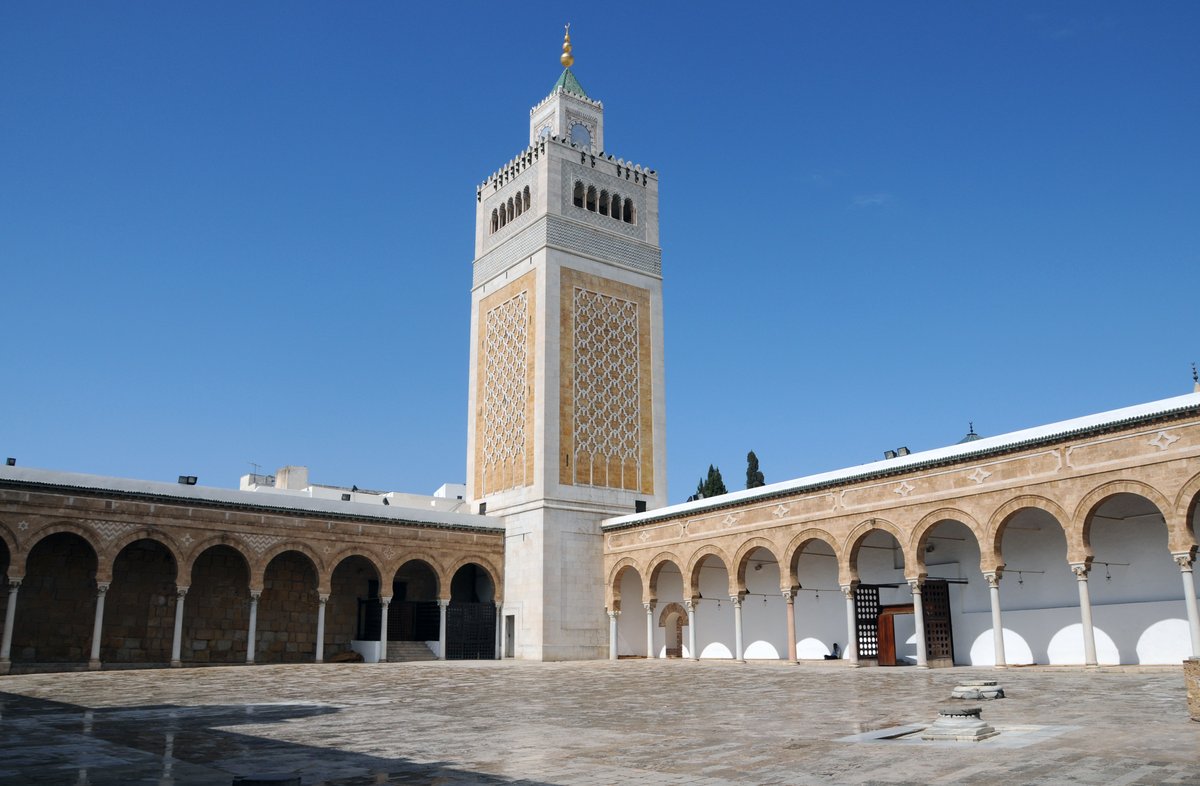
Zitouna Mosque (Great Mosque of Tunis) — The heart of the Medina, one of the oldest mosques in Africa (7th century). Non-Muslims can admire from the courtyard entrance; the arcaded portico is beautiful.
-
Souks — Each souk historically specialised in one trade: Souk el-Attarine (perfumes/spices), Souk el-Berka (jewellery), Souk des Chéchias (traditional red felt hats). Kids love the sensory overload. The chéchia hat souk is especially fun — watching craftsmen shape the distinctive red hats by hand is mesmerising.
-
Dar Ben Abdallah — A magnificent 18th-century palace housing the Museum of Popular Arts and Traditions. Free or very cheap entry. An extraordinary example of Tunis aristocratic architecture with its tiled courtyard and decorated rooms.
-
Tourbet el Bey — Mausoleum of the Hussainid beys, elaborately decorated. Free entry, rarely crowded.
-
Hafsid door — Look for the beautiful carved wooden doors and ornate tiling throughout the medina’s older alleyways — photography paradise.
-
Rating: 4.6/5 on TripAdvisor (Medina as a whole)
-
Age suitability: All ages; strollers manageable on main streets, difficult on narrower lanes
-
Cost: Free to wander; individual museums 1–5 TND
-
Time needed: 2–4 hours minimum; a full day is easy to fill
-
Location: Central Tunis, entered via Place de la Kasbah or Place Bab Bhar (Porte de France)
-
⚠️ Honest note: Persistent vendors and unofficial guides approach tourists frequently — a polite “la shukran” (no thank you) works well. Agree prices before buying in the souks. Navigation apps (Maps.me or Google Maps offline) help with orientation.
-
Pro tip: Enter via the Porte de France and head straight to the Zitouna area first (most spectacular). Weekday mornings are far less crowded than weekend afternoons. Try brik and makroudh (date pastry) from street stalls as you walk.
4. Sidi Bou Said — The Blue & White Village ⭐
Perched on a dramatic clifftop 20km northeast of Tunis, Sidi Bou Said is one of the Mediterranean’s most photogenic villages — and genuinely unlike anywhere else. Every building is white, every door and window is Tunisian blue, bougainvillea tumbles over walls, and the hilltop views stretch across the gulf to the horizon. The village is small enough to walk entirely in an hour, but beautiful enough to want to linger all afternoon.
For families it’s an easy half-day: ride the TGM train from Tunis Marine, walk up the main café-lined street, explore the winding lanes, eat at a rooftop restaurant, and take photos until everyone’s camera is full. Kids are enchanted by the visual drama and the cats (there are many photogenic cats).
Don’t miss:
-
Café des Nattes — the most famous café in Tunisia, up a steep flight of steps. Order thé à la menthe (mint tea with pine nuts) and enjoy the rooftop view. Historic and iconic.
-
Dar el-Annabi — A wealthy Tunisian family’s traditional house turned museum. 5 TND entry, worth every dinar to see how prosperous 19th-century Tunisian families lived.
-
The clifftop viewpoint — Walk past the lighthouse to the clifftop edge for sweeping views over the port and gulf.
-
Ennejma Ezzahra Palace — A stunning early-20th-century palace of French Baron Rodolphe d’Erlanger, now a music research centre. The architecture is extraordinary and the gardens peaceful.
-
Rating: 4.7/5 on TripAdvisor
-
Age suitability: All ages; main street is cobbled, manageable for older kids; strollers tricky on steeper lanes
-
Cost: Free to walk; museum/palace entry 5–10 TND; food €5–15 per person
-
Getting there: TGM train from Tunis Marine to Sidi Bou Said station (~25 min, ~2 TND). The train is delightful.
-
Time needed: 2–4 hours
-
⚠️ Honest note: The main street gets crowded midday. Souvenir shops around the café strip are touristy and overpriced — the real Sidi Bou Said is in the side lanes.
-
Pro tip: Combine with Carthage in a single TGM day — Carthage Hannibal stop first (morning), then continue one more stop to Sidi Bou Said for lunch and afternoon. Perfect full day without a car.
🏖️ Beaches & Water
5. La Marsa & Gammarth Beaches
The most accessible beaches from central Tunis are the stretches at La Marsa (end of the TGM line) and Gammarth (slightly north). La Marsa has a pleasant public beach with calm shallow water, a beachside promenade, and good restaurants. Not dramatic by Mediterranean standards, but convenient, clean, and perfectly enjoyable for families. The beach at Gammarth is slightly higher quality with more facilities.
- Rating: 4.0/5 on Google (La Marsa beach area)
- Age suitability: All ages; gentle shelving, suitable for young children
- Cost: Beach free; sunbeds for hire ~5–10 TND
- Getting there: TGM train to La Marsa terminus (~35 min from Tunis)
- Time needed: Half to full day
- ⚠️ Honest note: These are city beaches — pleasant but not spectacular. For Tunisia’s really beautiful beaches, you’d need to travel to Hammamet (1.5h south) or Djerba.
- Pro tip: La Marsa is also an excellent neighbourhood for evening dining — the waterfront restaurants here are some of the best-priced quality seafood options near Tunis.
🐫 Unique Experiences You Can Only Have in Tunis
6. Camel Ride at Carthage
Several operators near the Carthage ruins offer short camel rides — genuinely memorable for young children and a photographic highlight for the whole family. Not a long excursion (typically 15–30 minutes around a designated area) but the combination of camels + Roman ruins backdrop is unique to this region.
- Rating: 4.0/5 on Google (operator dependent)
- Age suitability: All ages; small children ride with a parent
- Cost: Typically 20–40 TND per person; negotiate before mounting
- ⚠️ Honest note: Prices are not fixed — agree the cost clearly before the ride. Don’t let the price be revealed only after.
- Pro tip: Early morning near the Baths of Antoninus has the best light for photos and fewer tourists.
7. Roman Mosaic Workshop & Artisan Souks
Tunis has a living tradition of mosaic-making that directly descended from the Roman craftsmen who made the Bardo pieces. In certain souks you can watch artisans creating intricate mosaic tiles using traditional techniques, and purchase handmade pieces as souvenirs. Some workshops offer short hands-on experiences for families.
The Souk des Chéchias (traditional felt hat makers) is particularly compelling — watching the hand-felting and shaping process is a genuine living-craft experience you won’t find elsewhere in the world, as the chéchia hat is specific to Tunisian and Maghrebi culture.
- Rating: 4.2/5 on TripAdvisor (artisan souk experiences)
- Age suitability: Ages 5+ for workshops; older kids for longer hat-making
- Cost: Free to watch; workshop participation varies (typically 20–50 TND)
- Location: Medina souks
- Pro tip: Look for the artisan quarter off Souk el-Berka for the highest concentration of working craftsmen.
8. Belvedere Park & Zoo
Tunis’s answer to an urban nature escape — a large, leafy public park in the northern city with walking paths, café terraces, and a small zoo. The zoo houses lions, tigers, elephants, camels, ostriches, bears, and 30+ other species, and is astonishingly cheap even by local standards. A pleasant half-morning activity for families with younger children who need some open-air space.
- Rating: 3.5/5 on TripAdvisor — honest assessment: it’s a pleasant city park zoo, not a modern wildlife sanctuary
- Age suitability: All ages; best for 2–10
- Cost: Park free; zoo entry less than 1 TND (~€0.30) — essentially free
- Location: Belvedere district, northern Tunis (Bolt recommended)
- Open: Daily; zoo timings vary — check on arrival (Monday closures reported)
- ⚠️ Honest note: The zoo is basic by Western standards — enclosures are older and some reviewers note the facilities are worn. It’s a local neighbourhood zoo, not a wildlife conservation experience. The park itself is the bigger attraction.
- Pro tip: Go in the morning for cooler temperatures. The park is popular with local families on weekends — a good way to experience Tunisian everyday life.
🍽️ Food & Eating with Kids
Tunisian food is genuinely delicious and very kid-adaptable. Dishes tend to be olive-oil rich, flavoursome, and warming. The key spice is harissa (chili paste) — order dishes “without harissa” or “peu épicé” for younger children.
Must-try dishes with kids:
- Brik à l’oeuf — A crispy fried pastry filled with egg, tuna, and parsley. One of Tunisia’s most famous street foods; kids universally love it. Order from a street stall for 1–2 TND or sit-down restaurant for 3–5 TND.
- Couscous au poulet — Steamed semolina with tender braised chicken and vegetables. Mild, filling, universally liked by children.
- Fricassée — A small fried bread roll stuffed with potato, tuna, olive, harissa (ask for less). Tunisia’s beloved sandwich, sold everywhere for 1–2 TND.
- Makroudh — Deep-fried date-filled pastry from Kairouan. Kids go crazy for these. Found in medina pastry stalls.
- Lablabi — Chickpea soup with bread and egg, sold from dawn in traditional street stalls. Warming, nutritious, delicious, and about 2 TND.
Good family restaurants in Tunis:
- Chez Slah (Medina area) — Famous for brik and traditional Tunisian home cooking. Long-established, reliable, beloved by locals.
- Café Mrabet (inside the Medina) — One of Tunis’s oldest teahouses, inside a beautifully tiled traditional building. Order mint tea and pastries.
- La Goulette waterfront — The port suburb just east of Tunis (near the ferry terminal) is renowned for seafood restaurants — fresh grilled fish and mixed seafood plates, very reasonably priced. A 15-minute Bolt ride from central Tunis.
- Sidi Bou Said rooftop cafés — Several restaurants in Sidi Bou Said serve Tunisian cuisine with spectacular views. Slightly tourist-priced but worth it for the setting.
Budget guide:
- Street food lunch for family of 4:
15–25 TND (€5–8) - Sit-down restaurant: main dishes 15–35 TND per person
- Average family food spend:
50 TND (€15) per person per day
🚌 Day Trips from Tunis
Day Trip 1: Sidi Bou Said + Carthage (Combined) ⭐ Best Day Trip
Distance: 20–25km | Drive/Train: 20–35 min by TGM train | Full day
As described above — the perfect TGM train day combining both sites. Start at Carthage in the morning (get off at Carthage Hannibal), spend 3–4 hours on the ruins, then hop back on the train one more stop to Sidi Bou Said for lunch and afternoon wandering. Return to Tunis Marine by late afternoon.
Day Trip 2: Dougga — North Africa’s Best Roman City
Distance: ~100km from Tunis | Drive: ~1.5–2 hours | Full day
Dougga is Tunisia’s crown jewel of Roman archaeology and arguably the best-preserved Roman city in all of North Africa — a UNESCO World Heritage Site where you walk through an almost complete 2nd-century Roman town on a dramatic hillside setting. The theatre (seating 3,500, still used for performances), the Capitol temple, the forum, the market, the baths, the mausoleum, the triumphal arches — all remarkably intact and atmospheric in ways that even Rome’s ruins rarely match.
For families with older children (8+) interested in history, Dougga is transcendent. Kids have significant space to roam, climb, and explore. The hilltop site has panoramic views over cypress forests and olive groves — genuinely beautiful.
- Rating: 4.7/5 on TripAdvisor — one of Tunisia’s highest-rated attractions
- Age suitability: Best for ages 7+; uneven terrain, lots of walking
- Cost: Approximately 12–15 TND entry (verify on arrival)
- Getting there: Rental car strongly recommended (Tunis → Testour → Dougga,
1.5h). Guided tours from Tunis available via Viator/Civitatis (€60–80/person including transport). - Time needed: 3–5 hours at the site
- ⚠️ Honest note: No shade at the site — visit morning and bring water and sunscreen. Paths are uneven; appropriate shoes essential. The site is spread across a hillside so there’s significant walking.
- Pro tip: Optionally combine with Bulla Regia (an unusual site with underground Roman houses built to escape heat) — 45km further west. Guided day tours often include both. Bring a picnic — the surrounding countryside is beautiful.
Day Trip 3: Kairouan — The Holy City
Distance: ~160km from Tunis | Drive: ~2 hours | Full day
Kairouan is one of Islam’s holiest cities — the fourth holiest in the world after Mecca, Medina, and Jerusalem — and a UNESCO World Heritage Site of extraordinary architectural beauty. The Great Mosque of Uqba (founded 670 AD) is one of the oldest and most important mosques in Africa: its vast prayer hall of 400 re-used Roman columns, its distinctive minaret, and its serene marble courtyard create an atmosphere unlike anywhere else. Non-Muslims may visit the courtyard and surroundings but not the prayer hall interior.
Beyond the mosque, Kairouan’s compact medina is one of Tunisia’s finest — less touristy than Tunis’s, with working craftspeople and excellent carpet and pastry shops. The city is also the birthplace of makroudh (those delicious date pastries) — pick up a box to take home.
- Rating: 4.5/5 on TripAdvisor
- Age suitability: All ages; best appreciated by ages 8+
- Getting there: Rental car (2h drive) or guided tour from Tunis. Bus available (2.5h, approximately 8–10 TND) but less practical for families.
- Cost: Mosque complex entry ~8–12 TND; medina free
- Time needed: Full day including travel
- ⚠️ Honest note: Dress modestly — shoulders and knees covered for both adults and children is respectful and required for mosque access. The drive involves some long straight roads through agricultural interior Tunisia — not scenic but straightforward.
- Pro tip: Kairouan’s medina is less overwhelming and more authentic than Tunis’s — a great second medina experience. The city’s carpet merchants are skilled salesmen; only enter a shop if you’re genuinely interested in buying. The Aghlabid Basins (9th-century water cisterns just outside the medina) are a fascinating engineering marvel.
🛏️ Where to Stay
City Centre / Medina area: Staying in or immediately adjacent to the Medina puts you in the heart of Tunis’s historic atmosphere — noise is part of the deal. Boutique riads (converted traditional houses) offer a unique experience. Look for family rooms or interconnecting options.
La Marsa / Gammarth: A quieter, more resort-like northern suburb on the coast. 30–40 min from city centre by TGM, but you get beach access and more hotel-style family facilities. Good balance if mixing city sightseeing with beach time.
Recommended areas for families:
- Mutuelleville / Les Berges du Lac — Modern residential area, good international restaurant access, easy Bolt links to everywhere. Calm and practical.
- Sidi Bou Said / Carthage — Beautiful but pricier; excellent base if Carthage + beach is your focus.
Budget guide: Good 4-star hotels in Tunis run €50–100/night; boutique riads €40–80/night. Tunis is dramatically cheaper than comparable Mediterranean cities.
🗓️ Practical Family Tips
Safety: Tunisia is a safe family destination. Travelers consistently report feeling welcome and unthreatened. Exercise normal big-city caution (keep bags close in crowded souks, use official metered taxis or Bolt). Check your government’s current travel advisory before departing — the situation has been stable for years but it’s good practice.
Language: Arabic (Tunisian dialect) and French are the primary languages. Many younger Tunisians also speak English. French is your most useful second language — even basic phrases are warmly received. Download a French phrasebook app.
Dress code: Tunisia is a Muslim country. Dress modestly outside beach/resort areas — shoulders and knees covered for visits to mosques and medinas. This applies to children too. Light, loose clothing in natural fabrics is ideal for hot weather.
Water: Drink bottled water. Avoid tap water and ice from street stalls. Major supermarkets (Monoprix, Carrefour Express) stock bottled water cheaply.
Haggling: Expected in the souks; not in shops with fixed prices. A gentle starting point is 50–60% of the initial asking price. Make it friendly, not aggressive. Food and café prices are generally fixed.
What kids love most: Roman ruins (climbing and exploring), the train to Sidi Bou Said, brik pastries, camel rides, the Bardo mosaics, getting lost in the medina souk alleys, and the mint tea with pine nuts at Café des Nattes.
Mosque visits: Non-Muslims are generally welcome to visit mosque courtyards and exteriors. Remove shoes when indicated; dress modestly; be quiet and respectful inside sacred spaces. The Great Mosque of Tunis (Zitouna) is particularly beautiful to glimpse from the courtyard.
📋 Quick Reference
| Metric | Detail |
|---|---|
| Currency | Tunisian Dinar (TND) — 1 EUR ≈ 3.35 TND |
| Language | Arabic, French (English in cities) |
| Airport | Tunis-Carthage (TUN) — 10km from centre |
| Best months | March–May, September–October |
| Family budget/day | ~€80–150 for family of 4 (including accommodation) |
| Key train | TGM to Carthage + Sidi Bou Said |
| App to download | Bolt (rideshare) |
| Must-eat | Brik à l’oeuf, couscous, fricassée, makroudh |
| Must-see | Bardo Museum, Carthage ruins, Tunis Medina, Sidi Bou Said |
| Best day trip | Dougga (UNESCO Roman city) |
Guide researched March 2026. Prices in TND are indicative — verify on arrival. Exchange rates fluctuate. Always check current travel advisories before visiting.