🇪🇸 Valencia — Family Travel Guide
Country: Spain Last Updated: March 2026
Overview
Valencia is Spain’s third-largest city and arguably its most underrated family destination. Sitting on the Mediterranean coast, it offers a staggering combination: the world’s most spectacular futuristic architecture complex, Europe’s largest aquarium, an immersive zoo, 9km of Blue Flag beaches, a 9km riverside park built in the drained bed of the Turia river, UNESCO-listed festivals, and the birthplace of paella. Unlike Barcelona, it doesn’t feel overwhelmed by tourists — you walk real streets, eat in real restaurants, and the locals are genuinely warm.
For families, Valencia is close to ideal. It’s safe, walkable, extraordinarily child-friendly (Spanish culture is famously welcoming to children — kids stay up late and are included in everything), packed with genuinely world-class activities, and warm enough for beach days for more than half the year.
Why families love it:
- Spanish dinner culture means late nights are completely normal — kids belong everywhere
- The Turia Gardens are 9km of car-free cycling, playgrounds, and picnic space threading the city
- City of Arts and Sciences is one of Europe’s most jaw-dropping family days out
- Direct flights from most European cities; under 2.5h from much of the UK/Ireland
- Far less crowded and more affordable than Barcelona while offering comparable (or better) experiences for families
- Paella, horchata, and the Central Market — food culture that genuinely engages kids
⏰ Best Time to Visit with Kids
| Season | Conditions | Verdict |
|---|---|---|
| Mar–May | 18–24°C, mild, low crowds | ⭐ Best overall — Las Fallas in March is unmissable |
| Jun | 25–28°C, sea warming, pre-peak | ⭐ Excellent |
| Jul–Aug | 32–38°C, packed beaches, peak prices | 🔴 Very hot — manage midday carefully |
| Sep–Oct | 25–30°C, sea at its warmest, quieter | ⭐ Excellent — sea is warmest in September |
| Nov–Feb | 12–18°C, some rain, most attractions open | ✅ Good for sightseeing, not beach |
Pro tip: Las Fallas (March 15-19) is absolutely worth planning a trip around — see the Festivals section. The city transforms completely and the experience is like nothing else on earth. Just book accommodation 6+ months ahead.
🚗 Getting Around
Metro (Metrovalencia) Valencia has a clean, modern metro with 9 lines. Critically for families:
- Children under 10: Travel FREE on metro and tram (no ticket needed)
- Children under 6: Travel FREE on bus and commuter trains
- Single journey: ~€1.50 with T2 10-trip card; ~€2.50 single
- Metro Line 5 connects Valencia Airport (VLC) directly to the city centre (Xàtiva station, ~20 minutes)
- Website: metrovalencia.es
Valencia Tourist Card Worth considering for families visiting multiple attractions:
- Includes unlimited public transport (metro, bus, tram) + 10% discount on major attractions (Oceanogràfic, Bioparc, Science Museum) + free entry to municipal museums
- 24h: ~€18 adult / €9 child (6–12); 48h: ~€22/€11; 72h: ~€27/€14
- Children under 15 get free admission to municipal museums regardless
- Buy at airport, tourist offices, or online: visitvalencia.com/en/valencia-tourist-card
Bike/Scooter Rental Valencia has superb cycling infrastructure. The Turia Gardens run 9km through the city completely traffic-free — renting bikes for a morning is one of the best free activities in the city. Multiple rental shops near the park; tandems and child seats available.
- Family bike rental: ~€10–20/day per bike
Car Rental Useful for day trips to Albufera, Xàtiva, or the coast. Not needed for the city itself — Valencia is very walkable and the metro is efficient. Parking in the centre can be €2–3/hour.
Airport → City
- Metro Line 5: ~€4.90, ~20 minutes to city centre. Best value. Works with Tourist Card.
- Taxi/Bolt: ~€20–25 to city centre, ~30 minutes
- Pre-booked transfer: ~€30–40 for a private car with car seats
🏛️ City of Arts and Sciences (Ciutat de les Arts i les Ciències)
Valencia’s crown jewel and the single most important family destination in the city. Designed by Santiago Calatrava in the former bed of the Turia river, this 2km-long futuristic complex is genuinely jaw-dropping — kids and adults alike stop and stare. It contains six buildings and is home to multiple world-class attractions.
Location: Av. del Professor López Piñero, 7 (eastern Turia Gardens) Getting there: Metro Lines 1, 2, 7 to Jesús station (5-min walk); buses 13, 19, 23, 24, 25; or cycle from city centre along the Turia
1. L’Oceanogràfic — Europe’s Largest Aquarium
The largest aquarium in Europe and one of the finest in the world. 500+ species, 45,000 marine animals, spread across 8 themed zones representing the world’s major ocean habitats: Mediterranean, Wetlands, Temperate Seas, Tropical Seas, Red Sea, Ocean, Antarctica, and Arctic. Highlights include a dramatic 35-metre underwater shark tunnel (walk through with sharks overhead), a dedicated penguin enclosure, beluga whales, polar bears, and the vast open-ocean tank with schools of rays.
The jellyfish tunnel is particularly magical for young children. The outdoor sections — penguins and polar bears — are fantastic but exposed to sun.
- Rating: 4.5/5 on TripAdvisor (20,000+ reviews)
- Age suitability: All ages; best for 4+
- Cost: Adult ~€38.30 / Child (4–12) ~€30.60 / Under 4 FREE. Book online — cheaper than door price. Combined “Complete Complex Pass” (Oceanogràfic + Science Museum + Hemisfèric): Adult ~€46.40, Child ~€39.20
- Time needed: 3–4 hours minimum
- Hours: Daily 10:00–20:00 (extended in high season to midnight)
- ⚠️ Honest notes: L’Oceanogràfic holds dolphins and two beluga whales in captivity — worth knowing in advance if this matters to your family. Food on site is expensive and average — bring snacks. The outdoor zones get very hot in July/August; visit in the morning.
- Pro tip: Buy tickets online at least 2–3 days ahead, especially in summer — queues at the door can be 40+ minutes. The underwater restaurant (Submarino) is spectacular for a special dinner but needs reservations weeks ahead.
- Website: oceanografic.org
2. Museu de les Ciències Príncipe Felipe (Science Museum)
If Oceanogràfic is the star attraction, this interactive science museum is the surprise hit that families consistently rank higher for children. Built inside a skeletal whale-like structure, the motto is “touching is allowed” — every exhibit is hands-on. Zones cover space exploration, the human body, extreme science, technology, and a rotating special exhibition. A full-room immersive Van Gogh installation has been a hit. Science workshops for children run separately (book in advance).
- Rating: 4.5/5 on TripAdvisor
- Age suitability: Best for ages 5–14; excellent for curious kids of all ages
- Cost: Adult ~€9.40 / Child (4–12) ~€7.50 / Under 4 FREE. Ground floor access is FREE (shop, café, temporary exhibitions)
- Time needed: 2–4 hours (longer with workshops)
- Hours: Daily 10:00–19:00 (21:00 in high season)
- ⚠️ Honest note: Smaller than it appears from outside — don’t expect a full day here standalone. Pair with the Hemisfèric or Oceanogràfic.
- Pro tip: Start here when the park opens (before the crowds hit Oceanogràfic), then walk to the aquarium.
- Website: cac.es
3. Hemisfèric — IMAX Dome & Planetarium
A massive eye-shaped IMAX dome that shows 45-minute immersive documentary films on nature, space, science, and adventure. Multiple screenings per day; the planetarium shows exploring astronomy are particularly good. Climate-controlled, making it a perfect midday escape from summer heat.
- Rating: 4.2/5 TripAdvisor
- Age suitability: Best for 5+; content depends on the film shown
- Cost: Adult ~€8.90 / Child ~€7.10
- Time needed: 1.5 hours (include travel time to find the right screen)
- ⚠️ Note: Shows run on a fixed schedule — check the program online before visiting. Some films are in Spanish only.
🦁 Wildlife & Nature
4. Bioparc Valencia
Consistently rated one of the best zoos in Spain and among the most immersive in Europe. Unlike traditional zoos with caged animals, Bioparc is built around “African safari” immersion — you walk through large open habitats with only moats (invisible to visitors) separating you from the animals. Three zones: African Savannah (giraffes, rhinos, hippos), Madagascar Island (lemur walk-through, flamingos, fossa), and Equatorial Africa (forest elephants, gorillas, chimpanzees, okapis).
The lemur walk-through zone in Madagascar is the undisputed highlight for families — you walk freely among ring-tailed lemurs at eye level.
- Rating: 4.5/5 on TripAdvisor (15,000+ reviews)
- Age suitability: All ages; best for 3+
- Cost: Adult ~€29.50 / Child (4–12) ~€23.50 / Under 4 FREE. Slight discount for online booking.
- Time needed: 3–4 hours
- Hours: Daily from 10:00; closing varies by season (17:00–21:00)
- Location: Av. Pío Baroja, 3. Metro: Lines 3, 5 to Nou d’Octubre; Bus 67, 73, 95, 98, 99
- ⚠️ Honest notes: No outside food allowed inside (unlike Oceanogràfic). Food stalls on site are pricey. Very exposed to sun on the Savannah paths — visit early morning in summer. Lots of walking — strollers recommended for under-5s.
- Pro tip: Arrive at opening time (10:00) — animals are most active when it’s cooler, and you’ll beat the crowds. Gorilla feeding is mid-morning.
- Website: bioparcvalencia.es
🌿 Parks & Outdoor Spaces
5. Jardí del Túria (Turia Gardens)
One of Europe’s great urban park transformations. After catastrophic floods in 1957, the Turia river was diverted outside the city. Rather than build a motorway in the drained 9km riverbed (as originally planned), Valencia’s citizens fought for a park — and won. The result is a 9km ribbon of green space threading through the entire city from the mountains to the sea, with cycling paths, playgrounds, sports facilities, paddle boats, cafés, and open lawns.
For families, this is the beating heart of Valencia’s outdoor life. Kids cycle freely, there are playgrounds every few hundred metres, and the paths connect most major attractions.
- Cost: FREE (bike rental extra)
- Age suitability: All ages
- Highlights: Gulliver Park (see below), paddle boats near Palau de la Música, sports facilities, picnic lawns
- Pro tip: Rent bikes at one end and cycle the full length — a genuinely memorable half-day for the whole family. Return via the beach.
6. Parque de Gulliver
Within the Turia Gardens, this is one of Valencia’s most unique and beloved children’s attractions. A 70-metre fibreglass Gulliver lies pinned to the ground by Lilliputian ropes — and the entire structure is a climbing frame. Children slide down Gulliver’s hair, climb his legs, crawl through tubes, and bounce on rope bridges. Pure chaos, pure joy, completely free.
- Rating: 4.5/5 on TripAdvisor
- Cost: FREE
- Age suitability: Best for 4–12; not suitable for toddlers (climbing surfaces can be slippery, no shade)
- Location: Turia Gardens near the City of Arts and Sciences
- ⚠️ Note: No shade — avoid midday in summer. Can get very busy on weekends.
🍊 Food & Unique Cultural Experiences
7. Valencia Paella Experience — The Birthplace of Paella
Paella was invented in Valencia. The authentic version (Paella Valenciana) contains chicken, rabbit, green beans, butter beans, and saffron — never seafood (that’s a different dish). Eating the real thing at source is a genuine cultural experience worth building a meal around.
Best areas for authentic paella:
- El Palmar village (Albufera Natural Park) — the traditional heartland, surrounded by rice fields. Drive 20 minutes south; the main street is lined with restaurants that have cooked paella for generations. Budget ~€15–25pp for lunch.
- Las Arenas beachfront — good quality, great setting; slightly tourist-facing prices
- Ruzafa neighbourhood — more creative takes; excellent local scene
Paella cooking class (recommended for families): “My First Paella” (Ruzafa) runs 3-hour family-friendly cooking workshops where you make and eat your own authentic paella. Kids participate in measuring, mixing, and cooking — highly rated.
- Cost: ~€65–75 per adult, ~€35–45 per child
- Website: myfirstpaella.es
8. Mercado Central (Central Market)
One of Europe’s greatest covered markets, operating since 1839 in a spectacular Art Nouveau building with 8,000 square metres of stained glass and ceramic tiles. Inside: 1,200 vendors across 300 stalls selling Valencia’s famous oranges, Iberian ham, manchego cheese, fresh fish, saffron, and every Spanish ingredient imaginable. The smells, colours, and sheer scale make it a genuine experience for children.
- Rating: 4.5/5 on TripAdvisor
- Cost: FREE to enter; produce at market prices
- Hours: Monday–Saturday 7:00–15:00; closed Sunday
- Location: Plaça de la Ciutat de Bruges (Old Town / Barri del Carmen)
- Pro tip: Arrive before 9:00 for the full experience before the tourist rush. Buy freshly squeezed orange juice (€1.50), a chunk of manchego, and jamón — better breakfast than any hotel buffet.
9. Horchata & Fartons in Alboraya
This is one of Valencia’s most uniquely local experiences — and children love it. Horchata de chufa is a sweet, milky drink made from tiger nuts (chufa), grown exclusively in Valencia’s L’Horta region. It tastes like nothing else in the world: somewhere between almond milk, oat milk, and something entirely its own. Served very cold, often with fartons — light, elongated pastries for dipping.
The village of Alboraya (10 minutes north of Valencia) is the home of authentic horchata. A classic family outing is taking the tram to Alboraya and sitting in one of the traditional horchaterías that have operated there for generations.
- Cost: ~€3–5 per person
- Top horchaterías: Horchatería Daniel, Horchatería Santa Catalina (in city), El Siglo
- Getting there: Tram Line 4 from the city centre to Alboraya (free with Tourist Card)
- ⚠️ Note: Only drink fresh, locally-made horchata — bottled commercial versions bear little resemblance to the real thing.
🏖️ Beaches
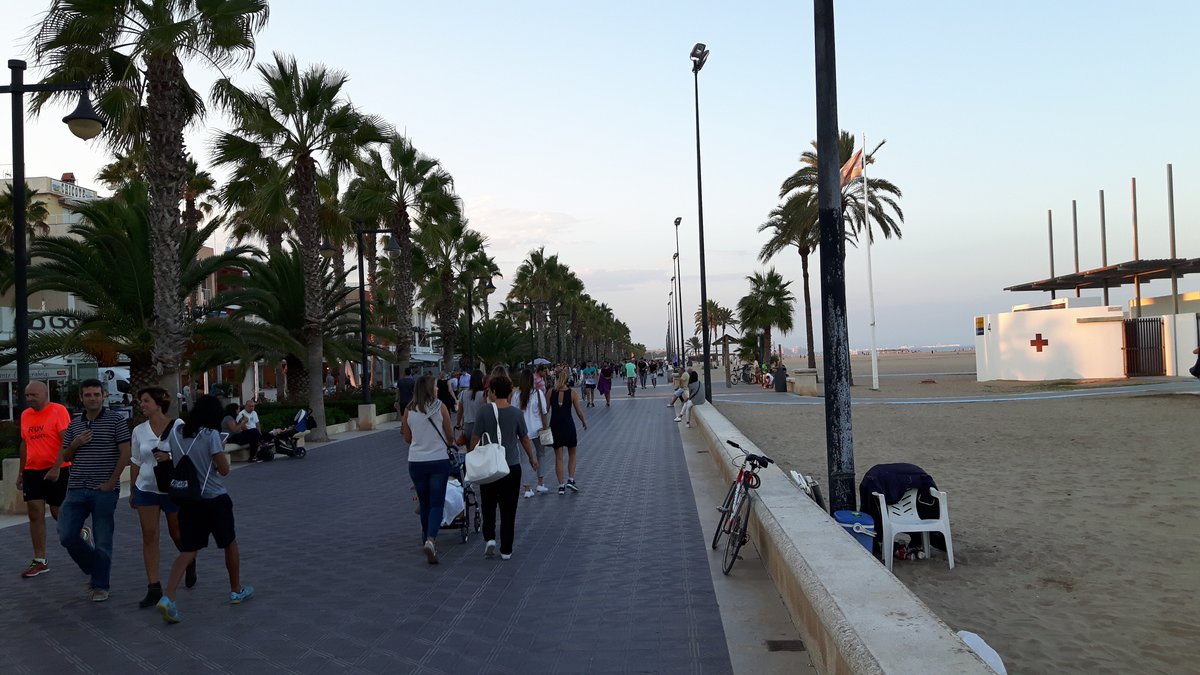
Valencia’s city beaches are genuinely excellent — wide, sandy, and easily accessible by metro or bike from the city centre.
10. Playa de las Arenas & Playa de la Malvarrosa
Two connected beaches stretching 3km north from the Port of Valencia. Las Arenas (southern end) is calmer, shallower, and best for young children. Malvarrosa (northern) is livelier with beach clubs. Both have Blue Flag status, clear water, sunbed rental, beach bars, and full-service restaurants on the promenade.
- Getting there: Metro Line 6 to Neptu; bus 20, 21, 22, 32; or 30-min bike ride along the Turia from the centre
- Best for families: Las Arenas for calm, shallow water; Malvarrosa for the promenade restaurants
- Season: Swimming comfortable May–October; warmest in September
11. Playa de la Patacona
Just north of Malvarrosa, quieter and more residential. Backed by low-key restaurants favoured by locals over tourists. Excellent for families wanting to avoid the busy city beaches.
🎉 Festivals (Unmissable — Plan Around These)
12. Las Fallas (March 15–19) ⭐ UNESCO Intangible Cultural Heritage
Las Fallas is the most spectacular, dramatic, and unique city festival in Europe — and arguably the world. For the full experience, you need to be in Valencia during the five final days (March 15–19), though the festival runs the entire month of March.
What happens:
-
Over 750 enormous papier-mâché sculptures (fallas) are erected across every neighbourhood — some reaching 30 metres high, featuring political satire, pop culture characters, and traditional Valencian scenes. They take a full year to build.
-
The Mascletà — a daily 2-minute fireworks and percussion detonation in the Plaza del Ayuntamiento at 2pm sharp. Not a visual display: this is a physical sound experience. The ground shakes. Children are both terrified and delighted.
-
The Ofrenda de Flores (March 17–18): 100,000 Valencians in traditional dress parade through the city centre to place flower offerings at the Plaza de la Virgen. The scale is overwhelming.
-
La Cremà (March 19, midnight): Every single falla across the city is set on fire simultaneously. The city glows orange. Fire engines stand by as 30-metre sculptures burn. It is indescribable.
-
Age suitability: All ages; ear protection recommended for young children during Mascletà (it is extremely loud)
-
Cost: FREE to watch everything (the sculptures are on public streets)
-
⚠️ Honest notes: The city is absolutely packed. Hotels must be booked 6–12 months ahead. Prices triple or quadruple. The noise level is extreme — it’s a month of daily fireworks. Sleep can be difficult. Worth every bit of it.
-
Pro tip: Stay in a neighbourhood away from the city centre (e.g., Ruzafa) for a slightly better night’s sleep while still being walkable to events.
🏛️ History & Culture for Kids
13. Valencia Cathedral & Climb the Micalet Tower
Valencia’s Gothic cathedral sits in the beautiful Plaza de la Reina. The interior is moderately interesting, but the big draw for kids is climbing the Micalet Bell Tower — 207 steep steps to a 360° panoramic view over the city’s orange-tiled rooftops, the sea, and the distant mountains.
- Cost: Cathedral entry: ~€8 adult / €5 child. Micalet Tower: ~€2 extra
- Age suitability: 6+ for the climb (steep, narrow spiral staircase)
- ⚠️ Note: The climb is genuinely steep and narrow — not suitable for very young children or prams. Worth it for the view.
14. El Carmen District — Street Art & Medieval Lanes
Valencia’s oldest neighbourhood is a rabbit warren of medieval lanes, Gothic churches, Roman walls, and — uniquely — one of the finest concentrations of street art murals in Europe. Wandering El Carmen looking for murals is a free activity that genuinely engages children. The best streets: Carrer de Baix, Carrer de Dalt, Carrer de na Jordana.
- Cost: FREE
- Guided tours: Available from ~€15/adult — recommended to unlock the stories behind the art
🚌 Day Trips
Day Trip 1: L’Albufera Natural Park & El Palmar Village (~30 min south by car)
L’Albufera is a vast freshwater lagoon just south of Valencia — Spain’s largest lake, surrounded by rice paddies that supply the rice for all of Valencia’s paella. It’s a striking landscape completely unlike the city: flat, marshy, populated by herons, flamingos, kingfishers, and wild ducks.
What to do:
-
Boat tour on the lagoon (rowboats or small motorboats from El Palmar or El Saler). The sunset over the lagoon is extraordinary.
-
Paella lunch in El Palmar — the authentic source. The entire main street is restaurants that have cooked paella in traditional wood-fired calderas for generations. This is the single best paella experience in Valencia.
-
Birdwatching — the lagoon is excellent for families with binoculars; species include flamingos (seasonal), herons, egrets, and dozens of duck species
-
Drive from Valencia: ~25 minutes south (no direct public transport to El Palmar — car or organised tour recommended)
-
Organised tour option: Multiple operators (Viator, GetYourGuide) offer Albufera boat + paella lunch tours from ~€45/adult, €25/child
-
Time needed: Half day (3–4 hours) or full day combined with beach
Day Trip 2: Xàtiva — Medieval Castle & Old Town (~1h south by train or car)
Xàtiva is a beautifully preserved medieval town 60km south of Valencia, dominated by a spectacular hilltop castle. The castle complex is one of the largest and best-preserved in the entire Valencian Community — you walk genuine medieval fortifications, towers, and dungeons with views over olive groves and mountains. The town below has an excellent Saturday market and good local restaurants.
Getting there by train is easy (RENFE from Valencia Estació del Nord, ~40 minutes, ~€4.80 return) and the walk up to the castle from the station is part of the experience. A small train also runs from the old town to the castle gates for those with young children.
- Castle admission: ~€3 adult / €1.50 child
- Time needed: Full day
- Rating: 4.0/5 TripAdvisor (Xàtiva as a destination, multiple sites)
- ⚠️ Note: Castle signage is mainly in Spanish/Valencian. Some areas are uneven underfoot — appropriate footwear needed. The climb from the town centre is steep (30+ minutes walking) — use the tourist mini-train with young kids.
Day Trip 3: Peniscola — Walled Castle Town on the Sea (~1.5h north by car)
Known to Game of Thrones fans as the filming location for “Meereen,” Peniscola is a stunning medieval walled city built on a rocky promontory jutting into the Mediterranean. The old town is entirely encircled by 15th-century walls, with narrow whitewashed streets leading to a magnificent castle (Castillo del Papa Luna). Surrounded by beautiful beaches on both sides.
- Drive from Valencia: ~1.5 hours north (motorway)
- Castle admission: ~€5 adult / €3 child (4–12) / Under 4 FREE
- Best for: Kids who are into castles, medieval history, or Game of Thrones (older children)
- ⚠️ Note: Very crowded in July–August. The old town streets are steep and cobbled — strollers are impractical inside the walls. Visit in shoulder season for a much better experience.
- Time needed: Full day (castle + beach)
🍽️ Eating Out with Kids
Spanish dining culture is one of the most family-friendly in the world. Children are welcomed at virtually every restaurant, even late at night — it’s completely normal to be eating dinner at 9pm with a toddler. High chairs (trona) are widely available.
What to order for kids:
- Paella Valenciana — the authentic version; most kids love it
- Croquetas — breaded ham or bacalà croquettes; universally adored
- Patatas bravas — fried potatoes with aioli; instant favourite
- Bocadillo de jamón — simple ham baguette; reliable fallback
- Horchata con fartons — the essential Valencia snack; kids love both the taste and the novelty
Best neighbourhoods for family dining:
- Ruzafa: Valencia’s most vibrant neighbourhood — excellent mix of traditional tapas bars and modern restaurants. Very local, unpretentious.
- El Cabanyal (beachfront): Traditional fishing village now partially gentrified — excellent seafood at fair prices.
- Las Arenas beach promenade: Reliable paella restaurants with sea views; slightly touristy but convenient.
Budget guide (per person, dinner):
- Tapas bar: €8–15
- Mid-range restaurant: €20–35
- Paella lunch at El Palmar: €15–25
🏨 Where to Stay
Best areas for families:
Near the City of Arts & Sciences / Turia Gardens
Ideal for families focused on the major attractions. Convenient to both the science complex and the Turia Gardens cycling paths. Quieter than the old town; easy metro access.
- Best for: Families wanting walkable access to the main attractions without city-centre noise
- Budget: Apartments and hotels from ~€90–200/night for a family room
El Ensanche / Ruzafa
Valencia’s most liveable central neighbourhood. Excellent restaurants, local markets, and a genuine neighbourhood feel. Good metro connections. Particularly good for older children.
- Best for: Families wanting local culture, great food, and easy city access
- Budget: ~€100–220/night family room
Beach Area (El Cabanyal / Las Arenas)
Stay near the beach if beach time is your primary priority. 20–30 minute metro/bus to city centre — manageable but not walkable.
- Best for: Families with primary beach focus; summer trips
- Budget: Apartments from ~€80–150/night
Hotel picks:
- Westin Valencia (Ensanche): 5-star, large rooms, rooftop pool, excellent family facilities. ~€200–350/night.
- NH Valencia Center (Ensanche): 4-star, reliable, spacious family rooms, central. ~€120–200/night.
- Apartaments Arc La Vila (Old Town): Serviced apartments with kitchenettes — excellent value for families of 4–5. ~€100–150/night.
💡 Practical Tips for Families
Language: Spanish is universal; Valencian (a Catalan dialect) is also spoken and seen on signs. English is widely spoken in tourist areas. A few words of Spanish go a long way — Valencians appreciate the effort.
Safety: Valencia is one of Spain’s safest cities. Very low violent crime. Pickpocketing in crowded markets and the old town is the main concern — use a money belt or zipped bags in Central Market and Las Arenas.
Dining times: Spanish meal times feel extreme to northern Europeans. Lunch is 2pm–4pm (the main meal of the day); dinner is 9pm–11pm. Many restaurants are closed before 8:30pm. With children, eating at 8pm is considered “early” and will be accommodated everywhere. Aim for 7:30pm if you have young kids who need early beds — most places will seat you.
Heat: July and August are genuinely very hot (35°C+). Plan mornings for outdoor activities, midday for air-conditioned museums (Science Museum, Oceanogràfic), and afternoons back at the beach or pool from 4pm onwards when it cools slightly.
Water: Tap water in Valencia is safe but heavily chlorinated and often tastes poor. Buy bottled water or use a filter bottle.
Pharmacies (Farmacia): Extensive, easy to find, and pharmacists speak basic English. Good for children’s medications, sun cream top-ups, and minor ailments.
Nappy changing: Good availability at major attractions; variable in restaurants. The Turia Gardens has clean public toilets at multiple points.
Pushchair/Stroller: The city centre and Turia Gardens are very pram-friendly. El Carmen’s medieval lanes and Xàtiva castle are not — a carrier is useful.
Valencia Tourist Card:
- Adult: 24h €18 / 48h €22 / 72h €27
- Child (6–12): roughly half price
- Includes all public transport + museum discounts
- Worth buying if you plan to use metro/bus daily and visit 2+ major attractions
📅 Suggested 5-Day Itinerary
Day 1 — City of Arts & Sciences (full day) Morning: Museu de les Ciències Príncipe Felipe (2–3 hours). Packed lunch in L’Umbracle garden. Afternoon: L’Oceanogràfic (3–4 hours). Evening: Dinner at a restaurant near Las Arenas beach.
Day 2 — Bioparc & Turia Gardens Morning: Bioparc Valencia (arrive at opening, 3 hours). Afternoon: Cycle the Turia Gardens — rent bikes near the park and ride to Gulliver Park (1 hour play). Sunset stroll back along the river.
Day 3 — Old Town & Central Market Morning: Mercado Central (arrive 8:30am before crowds). Wander El Carmen district — street art hunt. Climb the Micalet Tower. Afternoon: Hemisfèric IMAX film. Evening: Paella cooking class (pre-book).
Day 4 — Albufera Day Trip Morning: Drive/tour to L’Albufera Natural Park. Boat tour on the lagoon (~1 hour). Paella lunch in El Palmar (book ahead for weekends). Afternoon: Brief visit to the beach at El Saler on the way back. Late afternoon: Return to Valencia, explore Ruzafa for dinner.
Day 5 — Beach Day + Horchata Morning: Beach at Las Arenas or Malvarrosa (arrive by 9am for a spot). Tram to Alboraya for authentic horchata and fartons at a traditional horchatería. Afternoon: Final wander through the old town, souvenir shopping at Mercado Central area.
💰 Budget Guide
| Category | Budget (per family of 4) | Mid-Range | Splurge |
|---|---|---|---|
| Accommodation (per night) | €70–90 apartment | €120–180 hotel | €200–350 4-5★ hotel |
| City of Arts & Sciences (full complex) | — | ~€160 for family of 4 | — |
| Bioparc | — | ~€105 for family of 4 | — |
| Paella lunch El Palmar | ~€50 | ~€80 | ~€100+ |
| Day trip Xàtiva (train) | ~€20 transport | ~€35 incl. castle | ~€80 with guide |
| Daily food | €40–60 (supermarket + 1 eat out) | €80–120 (restaurants) | €150+ |
| Bikes for half-day | ~€40 for family | €40 | — |
Approximate total for 5 days, family of 4:
- Budget: ~€900–1,100
- Mid-range: ~€1,500–2,000
- Comfortable: ~€2,500–3,500
🔗 Essential Links
- Visit Valencia (official tourism): visitvalencia.com
- City of Arts & Sciences tickets: cac.es
- Oceanogràfic tickets: oceanografic.org
- Bioparc tickets: bioparcvalencia.es
- Metro: metrovalencia.es
- Valencia Tourist Card: visitvalencia.com/en/valencia-tourist-card
- My First Paella cooking class: myfirstpaella.es
- Las Fallas official info: visitvalencia.com/en/events-valencia/festivities/the-fallas
Guide written March 2026. Prices are approximate and subject to change — always verify on official websites before booking.