🇭🇷 Zadar — Family Travel Guide
Country: Croatia (Republic of Croatia) Airport: Zadar Zemunik Airport (ZAD) Last Updated: March 2026
Overview
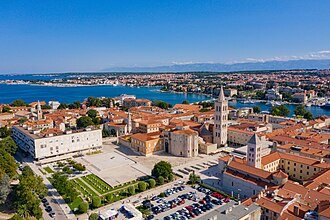
Zadar is Croatia’s oldest continually inhabited city — a UNESCO-recognised, car-free old town perched on a narrow peninsula jutting into the Adriatic, surrounded by crystal-clear water and backed by 3,000 years of layered history. It punches well above its reputation. Most tourists rush past it towards Dubrovnik or Split, meaning Zadar remains genuinely authentic: Roman forum ruins, Byzantine churches, Venetian city walls, and two of the world’s most inventive modern art installations all coexist within a 10-minute walk of each other.
For families, Zadar is a near-perfect base. The old town is entirely pedestrian (no traffic stress with kids), beaches are right on the doorstep, and three of Croatia’s greatest natural wonders — Plitvice Lakes, Krka National Park, and Paklenica canyon — are all within two hours by car. Croatia adopted the Euro in January 2023, so no currency hassle.
Alfred Hitchcock called the sunset here “the most beautiful in the world.” He wasn’t exaggerating.
Why families love it:
- Entirely pedestrian old town — safe, relaxed, spontaneous
- Europe-class nature (UNESCO national parks) within 1–2 hours
- Beaches suitable from toddlers (Borik) to confident swimmers (offshore islands)
- Genuinely unique experiences: a sea organ you can hear, solar panels you can dance on
- Far less crowded and cheaper than Dubrovnik or Split
- Croatian people are exceptionally warm with children
⏰ Best Time to Visit with Kids
| Season | Conditions | Verdict |
|---|---|---|
| May–Jun | 22–27°C, sea warming, low crowds | ⭐ Best for families |
| Jul–Aug | 28–35°C, packed beaches, peak prices | 🔴 Hot & very crowded — manage expectations |
| Sep–Oct | 22–28°C, sea at warmest (25°C+), quieter | ⭐ Excellent |
| Nov–Mar | 10–15°C, some rain, most attractions open | ✅ Good for sightseeing, cold for beaches |
Pro tip: June is the sweet spot — the Adriatic is warm enough to swim (21°C+), Plitvice Lakes is not yet overwhelmed with tourists, and accommodation prices haven’t spiked. July–August is still wonderful but book everything 2–3 months ahead and arrive at attractions by 9am.
🚗 Getting Around
Old Town: Walk Everything Zadar’s old town (Stari grad) is a compact pedestrian peninsula — everything is within a 15-minute walk. This is a genuine joy with children: no traffic, wide marble-paved streets, cafés and ice cream shops around every corner. No car needed for old town itself.
Car Rental (Essential for Day Trips) If you want to do Plitvice, Paklenica, or Krka (and you should), you need a car. Budget around €35–60/day from Zadar Airport or city rental offices. The drive to Plitvice is motorway-easy (~2 hours). Paklenica is 45 minutes. Book ahead in summer.
Local Buses (Liburnija) Liburnija operates Zadar’s city bus network covering the city and surrounding areas. Single journey: ~€1.50 with card / €2 cash. Useful for reaching Borik beach (5km from old town) and nearby areas. For day trips to national parks, car rental or organized tours are far more practical.
Organized Day Trip Tours Multiple agencies run daily buses/minibuses to Plitvice Lakes (~€30–50/person including transport and sometimes tickets). Excellent value if you don’t want to drive. Book through local Zadar agencies on the harbour or platforms like GetYourGuide/Viator.
Taxis / Rideshare Reliable taxis available citywide. Bolt app works in Zadar. City rides typically €5–10.
Ferry Connections Regular ferries to nearby islands (Ugljan, Pašman, Dugi Otok) depart from Zadar harbour — fast and cheap foot-passenger crossings for island day trips.
🎨 Unique Experiences (Only Possible in Zadar)
1. The Sea Organ (Morske Orgulje)
The world’s only sea-powered musical instrument. Croatian architect Nikola Bašić built 35 organ pipes into the marble steps of Zadar’s seafront promenade in 2005. As Adriatic waves push air through the pipes, the steps produce a continuously changing, haunting polyphonic melody — louder when the sea is rough, almost imperceptible on calm summer mornings. No two moments sound the same.
Kids run up and down the steps trying to find which stone produces which note. It’s one of the most genuinely magical things you can encounter in Europe — utterly free, always open, impossible to replicate elsewhere.
- Rating: 4.7/5 on Google — universally praised
- Age suitability: All ages; toddlers love scrambling the steps; older kids become genuinely curious about how it works
- Cost: Free
- Time needed: 20 min–1 hour (you’ll keep coming back)
- Location: Western tip of the old town peninsula, Riva promenade
- Best time: Early afternoon on a quieter weekday when the promenade is less crowded; sunset is atmospheric (but crowded)
- ⚠️ Honest note: On very calm days, the sound is subtle — the ‘music’ is most impressive when there’s a bit of chop on the sea. Don’t expect a concert hall experience.
- Pro tip: Visit again at dusk — locals gather here naturally for sunset and often spontaneous musicians join their own melodies to the sea’s. The combination is special.
2. Greeting to the Sun (Pozdrav Suncu)
A 22-metre diameter glass disk embedded into the stone pier immediately next to the Sea Organ. Created by the same architect (Nikola Bašić), it consists of 300 multi-layered glass tiles covering solar energy collectors. By day it acts as a mirror, reflecting sky and sea. After dark it transforms into a pulsing, colour-shifting light installation where each glowing orb represents a planet in our solar system, scaled to mathematically accurate proportions relative to the sun.
After dark it becomes an irresistible light-up dance floor — kids (and parents) can’t resist chasing the colour patterns. Genuinely one of the most photogenic spots in Croatia.
- Rating: 4.6/5 on Google
- Age suitability: All ages; especially captivating at night for ages 2+
- Cost: Free
- Time needed: 15–30 min
- Location: Adjacent to the Sea Organ on the Riva promenade
- Best time: After sunset — the colours intensify as darkness falls, typically 30–45 min after sunset
- Pro tip: Combine with the Sea Organ as a single sunset-into-night experience — dinner nearby followed by an hour on the promenade. This is the quintessential Zadar evening.
🏛️ Historical Sites & Museums
3. Church of St. Donat & Roman Forum
The Church of St. Donat is one of the finest examples of early medieval Byzantine architecture in Europe — a massive, cylindrical stone church built in the 9th century directly on the foundations of the Roman Forum. The contrast is disorienting and wonderful: Roman column bases and altar inscriptions are literally embedded into the church walls. The exterior plaza (the Forum ruins themselves) is open-air, unroped, and free to roam — kids can scramble over 2,000-year-old Roman stones as if they’re a playground.
The Forum was Zadar’s civic centre during Roman occupation of Dalmatia (1st century BC–7th century AD). What remains is modest but atmospheric — several standing columns, stone paving, and the outline of ancient temples.
- Rating: 4.5/5 on Google (Church of St. Donat); 4.4/5 on TripAdvisor
- Age suitability: All ages; best appreciated from age 5+; kids love the tactile ruined columns
- Cost: Forum: free | St. Donat interior: €3.50/adult; children under 10 free; closed December 31–March 31
- Time needed: 45 min–1.5 hours
- Location: Heart of the old town — Trg Rimskog foruma
- Open: Church: daily 9am–9pm (9am–5pm low season); Forum: always open
- ⚠️ Honest note: The church interior is relatively plain compared to Baroque Croatian churches — the interest is the architecture and history, not ornamental decoration. The Forum is genuinely more impressive than it sounds once you understand the scale.
- Pro tip: Come in the evening in summer — locals gather in the Forum square with musicians, café tables sprawl out among the ancient stones, and the atmosphere is magical. This is the living heart of Zadar.
4. Museum of Ancient Glass (Muzej antičkog stakla)
One of the most extraordinary and little-known museums in Croatia, and absolutely unique in this part of the world. Zadar was one of the Roman Empire’s most important glass-producing cities, and this purpose-built museum houses an astonishing collection of over 3,000 original Roman glass objects spanning four centuries — perfume bottles, oil lamps, goblets, surgical instruments — in remarkable condition. Many have maintained their iridescent colours after 2,000 years underground.
The museum also has glassblowing workshops where visitors can watch artisans create glass objects using ancient Roman techniques. Kids are mesmerized by the live demonstrations.
- Rating: 4.5/5 on TripAdvisor — consistently described as a highlight even by visitors who weren’t expecting much
- Age suitability: Best for ages 6+; glassblowing demos captivate all ages
- Cost: Adult ~€4 / Child (7–18)
€2 / Under 7 free; glassblowing workshop extra (€5–10) - Time needed: 1–2 hours
- Location: Poljana Zemaljskog odbora 1, Zadar old town
- Open: Mon–Sat 9am–9pm (varies by season); check museum website
- ⚠️ Honest note: The museum is compact — not a full-day attraction. The genuine quality of the glassware collection is the draw, not scale. Combine with the Forum and St. Donat next door for a 2-hour cultural block.
- Pro tip: Book a glassblowing workshop ahead in summer. Kids get to see molten glass shaped into bottles — it’s simultaneously terrifying and astonishing.
- Website: mas-zadar.hr
5. Land Gate, City Walls & Five Wells Square
Zadar’s Venetian defensive walls are UNESCO World Heritage-listed — part of the same designation as the rest of the city’s Venetian fortifications along the Dalmatian coast. The Land Gate (Kopnena vrata), built in 1543, is the city’s principal entrance from the mainland and one of Croatia’s most handsome Renaissance gateways. The lion of St. Mark (Venice’s symbol) is carved above the arch.
Five Wells Square (Trg Pet Bunara) just inside the gate was Zadar’s historic water source — five Ottoman-era stone wells in a row beneath cypress trees. It’s a genuinely peaceful spot for a break, and older kids who’ve studied any European history find the walking context compelling.
- Rating: 4.4/5 on Google (Land Gate area)
- Age suitability: All ages; best appreciated from age 8+ for the historical context
- Cost: Free
- Time needed: 30–45 min walking the walls and square
- Location: Land Gate: southern entrance to old town; Five Wells: immediately inside
- Pro tip: Walk the full length of the visible city walls from Land Gate to the seafront. The views over the channel to the islands of Ugljan and Pašman are lovely, and the walk takes only 20 minutes.
6. Archaeological Museum (Arheološki muzej Zadar)
One of the oldest museums in Croatia (founded 1832), housed next to the Roman Forum. Collections span prehistory to the medieval period with emphasis on local Dalmatian finds — Liburnian jewellery, Roman everyday objects, and early medieval Croatian artefacts. Not interactive in the modern sense but genuinely rich for history-curious older kids and adults.
- Rating: 4.0/5 on TripAdvisor
- Age suitability: Best for ages 10+
- Cost: Adult ~€3 / Child ~€1.50
- Time needed: 1–1.5 hours
- Location: Trg opatice Čike 1, next to St. Donat’s Church
- Pro tip: Skip this if you have young children — prioritize the Museum of Ancient Glass instead (better presentation, more visually striking). Do both if you have older history-curious kids.
🎡 Entertainment & Interactive
7. Museum of Illusions Zadar
Part of the international Museum of Illusions chain (also in Zagreb, Split, Dubrovnik), this compact but well-executed attraction is filled with optical illusions, mirror rooms, infinity tunnels, holograms, and spatial puzzles. Kids are completely absorbed. The “Vortex Tunnel” (walk across a static bridge while a spinning cylinder around you makes your brain believe you’re falling) is reliably terrifying/hilarious for children aged 6–12.
- Rating: 4.2/5 on Google
- Age suitability: Best for ages 5–14; teens enjoy the challenge of the logic puzzles
- Cost: Adult ~€9 / Child (7–14) ~€7 / Under 7 ~€5; book online for slight discount. (Verify at zadar.muzejiluzija.com — the museum was temporarily closed in early 2026 for renovation; confirm it has reopened before visiting.)
- Time needed: 1–1.5 hours
- Location: Old town, Zadar
- ⚠️ Honest note: Like all Museum of Illusions locations, it’s more of a fun activity than a profound cultural experience — and it’s compact. Worth the price as a 90-minute family activity, especially on hot afternoons or rainy days.
- Website: zadar.muzejiluzija.com
🏖️ Beaches & Water
8. Borik Beach
The best family beach in the Zadar area — a wide, gently shelving beach 5km northwest of the old town set within a large pine forest. The combination of clear shallow water, pine shade (rare on Croatian beaches), and full facilities makes it the go-to for families with young children. Several hotels (Falkensteiner resort) on the seafront mean the beach has proper changing rooms, lifeguards, sunbed hire, and multiple cafés and restaurants. There’s also a small aquapark with water slides for kids.
- Rating: 4.3/5 on Google
- Age suitability: All ages; excellent for 0–10 with shallow entry and lifeguards
- Cost: Beach entry free; sunbed hire ~€8–12/day; aquapark slides separate
- Time needed: Half day to full day
- Location: Borik, 5km northwest of Zadar old town (bus #5 from centre, ~15 min; or 5€ taxi)
- Open: Year-round; lifeguards and facilities June–September
- ⚠️ Honest note: The beach itself is pebble/concrete in places rather than sand — bring beach shoes. Very busy July–August; aim to arrive by 9:30am.
- Pro tip: The pine forest provides genuine afternoon shade — rare on the Croatian coast. Bring a picnic and make a full day of it. The coastal path from Borik back to the old town (~4km, mostly flat) is a lovely evening walk back through pine trees.
9. Kolovare Beach
Zadar’s largest city beach, closest to the old town (~1.5km south, 20 min walk or short bus). A mix of pebble and concrete platforms with all facilities — beach bars, restaurants, sunbeds, kayak and pedalo hire, beach volleyball, and a children’s aquapark section. The water is clear and calm. More urban in feel than Borik but excellent for convenience — you can walk here directly from the old town.
- Rating: 4.1/5 on Google
- Age suitability: All ages
- Cost: Beach free; sunbeds ~€8/day; aquapark ~€5–8/child session
- Time needed: 2–5 hours
- Location: Southeast side of old town peninsula, 20 min walk from Forum
- ⚠️ Honest note: It’s a working city beach — more urban atmosphere than resort-style. Still very enjoyable, just not the most beautiful beach in Croatia. Great for a morning swim before sightseeing.
- Pro tip: Walk down in the morning (9–11am) for a swim before the midday heat kicks in, then head back for old town sightseeing after lunch.
10. Island of Ugljan — Day Ferry
One of Croatia’s hidden gems for families, sitting just a 20-minute ferry ride from Zadar harbour. Ugljan is a long, narrow island covered in olive groves and pine forests, with a series of small fishing villages, calm bays perfect for children swimming, and a dramatically quieter atmosphere than the mainland. Rent bikes on the island or just walk between villages and beaches.
- Rating: 4.4/5 on Google (island overall)
- Age suitability: All ages
- Cost: Ferry foot passenger return: ~€4–5 / Children ~€2; no car required
- Time needed: Full day
- Location: Zadar Harbour — Jadrolinija ferries run roughly hourly
- ⚠️ Honest note: No major attractions — this is a nature and swimming day. Bring your own snacks/lunch as restaurant options in smaller villages are limited.
- Pro tip: Cycle from the ferry landing to Muline village on the north tip (lovely secluded bay) or to Kukljica on the south tip (small beach, good seafood restaurant). Ferries run until late — very easy day trip.
- Website: jadrolinija.hr
🌿 Nature Walks & Outdoor Activities
11. Sunset Walk on the Riva Promenade
Zadar’s seafront promenade, the Riva, runs the full western length of the old town peninsula with views across the channel to the islands. Alfred Hitchcock famously claimed it had the most beautiful sunset in the world — locals set up chairs, vendors sell roasted corn, children run between the Sea Organ steps and the Greeting to the Sun disk. It’s one of Europe’s great free evening rituals and a perfect, relaxed family experience.
- Rating: 4.8/5 on Google (promenade/waterfront area)
- Age suitability: All ages
- Cost: Free
- Time needed: 1–2 hours
- Location: Western edge of Zadar old town peninsula
- Pro tip: Go in the last 90 minutes of daylight. Get a roasted corn cob from a street vendor (~€2), sit on the Sea Organ steps, and let the evening unfold. As darkness falls, move to the Greeting to the Sun disk for the light show. This is genuinely the best free activity in Zadar.
🍽️ Family-Friendly Food & Drink
12. Burek — Street Food Experience
Croatia’s beloved pastry — flaky, paper-thin dough rolled around savoury fillings (cheese/sir, meat/meso, or spinach). Baked fresh throughout the day at every bakery (pekara) in Zadar, costing just €1–2 per portion. Burek is the Croatian equivalent of Malta’s pastizzi: cheap, delicious, and something children universally embrace. Look for steaming burek fresh from the oven in the morning. Paired with yogurt (kiselo mlijeko) if you want to eat like a local.
- Age suitability: All ages
- Cost: €1–2 per portion
- Best spots: Any local pekara (bakery) in or around the old town — the more local-looking the better
- Pro tip: Go at 8–9am when it’s fresh from the oven, or around 4pm for the afternoon batch.
13. Pag Cheese (Paški sir) & Maraschino Tasting
Zadar is the gateway to the island of Pag, home to Croatia’s most famous cheese — Paški sir, a hard, intensely flavoured sheep’s milk cheese with a Protected Designation of Origin. You’ll find it in every konoba and deli. Adults should also try Maraschino liqueur — a sweet, clear cherry liqueur produced in Zadar since the 15th century, the only certified authentic version produced here. Local shops on the main Kalelarga street stock both.
- Cost: Paški sir ~€5–8 for a small wheel; Maraschino ~€8–15 per bottle (Luxardo and Maraska are the main brands)
- Pro tip: Pick up a small wheel of Pag cheese and some local bread for a harbour-side picnic. It makes a brilliant simple lunch in summer.
14. Konoba Micic ⭐
One of the most consistently praised restaurants on the Dalmatian coast — a family-run konoba (traditional Croatian tavern) with exceptional fresh fish and seafood, prepared simply and perfectly. The couple who run it are warmly hospitable. Reviewers across TripAdvisor repeatedly describe it as the best meal of their entire Croatia trip.
- Rating: 4.7/5 on TripAdvisor
- Cost: Mains €15–28; fresh fish is priced by weight — ask the server to confirm before ordering
- Location: Old town Zadar
- ⚠️ Honest note: Fresh fish by weight means costs can rise if you’re not paying attention. Ask for the price before ordering for the table.
- Pro tip: Book ahead in summer — it’s small and fills up. Pašticada (slow-braised beef in plum and wine sauce, served with gnocchi) is the Croatian classic worth trying as a meat alternative.
15. Konoba Malo Misto
A highly regarded spot in the old town with lovely covered outdoor seating, classic Dalmatian fish dishes, and a relaxed family atmosphere. Particularly praised for its authentic local cooking and location within the old town.
- Rating: 4.5/5 on TripAdvisor
- Cost: Mains €12–25
- Location: Zadar old town
- Pro tip: Go for lunch (quieter than dinner) and order the grilled fish of the day. Pair with local Pag cheese to start.
🌊 Day Trips
Day Trip 1: Plitvice Lakes National Park ⭐⭐ (Unmissable)
~2 hours drive from Zadar (130km via A1 motorway). Can also reach by organized tour bus.
Croatia’s crown jewel and a UNESCO World Heritage Site — 16 terraced lakes linked by 92 waterfalls, connected by wooden boardwalks and electric-powered boats, surrounded by forested limestone karst landscape. The colours range from turquoise to emerald to steel blue, shifting with seasons and weather. Young children find it literally magical — they want to touch water that looks like it was dyed by a children’s book illustrator.
The park is divided into Lower Lakes (more dramatic, waterfalls and boardwalks over water) and Upper Lakes (wider, more tranquil). Most families do Route B or C: the boat across Lake Kozjak plus a loop through either the Lower or both lake sections.
What to know for families:
- Veliki Slap (Big Waterfall) at 78m is Croatia’s tallest — worth the short walk from Entrance 1
- The park boat ride (included in ticket) across Lake Kozjak is a family highlight
- Electric shuttle trains transport visitors between key points — useful with tired children
- Wooden boardwalks in the Lower Lakes run directly over the water — children find this thrilling (adults: hold hands of small children near open edges)
- Strollers are not recommended — baby carriers much better for young children on boardwalks
- The park entrance is actually 2–3km from the lakes — take the shuttle
Pricing (2025 prices — confirm current rates at np-plitvicka-jezera.hr):
-
Low season (Jan–Mar): Adult ~€10 / Child (3–7) ~€5 / Under 3 free
-
Shoulder (Apr–May, Oct): Adult ~€20–25 / Child ~€10–12
-
Peak (Jun–Sep): Adult ~€40–50 / Child ~€20–25 (Prices vary significantly by exact month — peak July/August prices are substantially higher. Always book online in advance in summer — peak season daily caps mean walk-up entry can be unavailable.)
-
Rating: 4.8/5 on TripAdvisor — one of Europe’s top-rated attractions
-
Age suitability: All ages; best for 3+ who can walk; 6+ get the most from it
-
Time needed: 5–8 hours (full day)
-
Open: Daily year-round; hours vary by season (typically 7am–8pm summer)
-
⚠️ Honest note: July–August, Plitvice is overwhelmingly crowded — shoulder seasons are dramatically better. Go in May/June or September for the same views with a fraction of the people. The park has a daily visitor cap — book online or you will be turned away in summer.
-
Pro tip: Arrive by 8am if visiting in summer. Route B is the best for families with younger children (combines boat ride + Lower Lakes). Bring your own lunch — park food is expensive and average. The lakes are blue-green year-round but June/July brings lushest foliage.
-
Website: np-plitvicka-jezera.hr
Day Trip 2: Paklenica National Park — Canyon Hiking
~45 min drive from Zadar (50km). Croatia’s best canyon hiking, accessible from Zadar.
Croatia’s second-oldest national park sits on the slopes of the Velebit mountain range, northeast of Zadar. Two dramatic limestone canyons — Velika Paklenica (Big) and Mala Paklenica (Small) — cut deep into the mountain, offering hiking from easy family strolls to serious multi-day mountain routes. For families, the easy walk up Velika Paklenica Canyon to the old partisan bunker (WWII military complex hidden inside the mountain) is spectacular — sheer grey limestone walls rising 400m overhead, a clear stream running along the canyon floor, and forest shade throughout.
Family highlights:
- Paklenica Mill — 150m from Entrance 1, a restored 19th-century watermill that kids find fascinating (and it requires virtually no effort to reach)
- Ethno-House Marasović — traditional Dalmatian stone hamlet preserved as an open museum
- Manita Peć Cave — 570m above sea level, accessible only by guided tour (reserve in advance), extraordinary stalactite/stalagmite formations, ~1.5 hours
- Easy valley floor walk — the first 2–3km up Velika Paklenica is flat, shaded, and suitable for children aged 4+ with basic walking shoes
Pricing (verify at np-paklenica.hr):
-
Adult ~€8–13 / Child (7–14) ~€4–7 / Under 7 free (seasonal variation)
-
Manita Peć cave: additional ~€5/adult; guided tour only, specific times daily
-
Rating: 4.5/5 on TripAdvisor
-
Age suitability: Easy valley hike: ages 4+; higher trails: 10+
-
Time needed: 3–6 hours depending on how far you walk
-
⚠️ Honest note: The full mountain hikes are serious (Vaganski vrh summit is 1,757m — not a family stroll). Stick to the lower canyon for families. Bring solid footwear even for the easy paths — the canyon floor is rocky.
-
Pro tip: Go in spring (April–June) or autumn (September–October) when wildflowers bloom in the canyon and the heat is manageable. Combine with a swim at Starigrad village beach on the way back — the village sits right on the coast.
-
Website: np-paklenica.hr
Day Trip 3: Krka National Park & Šibenik
~1h 15min drive from Zadar (80km). Waterfalls, boat rides, medieval city — a superb full day.
Krka National Park protects a series of travertine waterfalls along the Krka river canyon — most famously Skradinski Buk, a wide, layered cascade that was once the best swimming waterfall in Croatia (swimming directly under the falls was banned in 2021 to protect the ecosystem, but the views and boardwalk experience remain spectacular). The park includes a boat trip to Visovac island — a Franciscan monastery on a tiny island in the middle of the river — which children find enchanting.
Pair with nearby Šibenik — a medieval walled city with Croatia’s finest Gothic-Renaissance cathedral (UNESCO World Heritage: Cathedral of St. James, begun 1431) and excellent children’s art installations in the old town streets.
Pricing (2025 — verify at npkrka.hr):
-
Peak season (Jun–Aug): Adult ~€20–26 / Child (7–17) ~€10–13 / Under 7 free
-
Low/shoulder season: significantly cheaper (~€5–10 adult)
-
Boat trip to Visovac island: included in ticket (seasonal)
-
Rating: 4.6/5 on TripAdvisor (park overall)
-
Age suitability: All ages; best for 3+
-
Time needed: 4–6 hours for park; +2 hours for Šibenik
-
⚠️ Honest note: Swimming at Skradinski Buk is banned — if this was the main draw, adjust expectations. The park is still extraordinary but some visitors feel disappointed without the swim. The boat to Visovac is seasonal — confirm availability before planning around it.
-
Pro tip: Enter from Skradin (lower entrance) for the scenic boat ride into the park upstream — far more atmospheric than arriving by road. Park at Skradin town and buy tickets at the harbour. The 45-minute boat up from Skradin is one of the most beautiful approaches to a national park in Europe.
-
Website: npkrka.hr
💡 Practical Tips for Families
Best Areas to Stay with Kids
| Area | Why | Best for |
|---|---|---|
| Old Town (Stari grad) | Pedestrian, atmospheric, Sea Organ steps away | Families who want to walk everywhere; shorter stays |
| Borik | Pine forest, best family beach, full resort facilities | Families with young children focused on beach |
| Brodarica/Diklo | Quieter, apartment-style, near beaches | Self-catering families wanting more space |
| Arbanasi | Residential suburb, cheap apartments, 10 min drive to everything | Budget-conscious families |
💡 Recommendation for families: Stay in the old town for atmosphere + walking convenience, or Borik for the best beach access. If you have a car (highly recommended for day trips), Borik is ideal — Plitvice, Paklenica, and Krka all leave via the same motorway direction.
🎉 Local Festivals & Events Worth Knowing
- Zadar Full Moon Festival (July/August): Traditional fishing boats decorate the harbour by candlelight — spectacular and free. Fish grilled on open fires along the seafront.
- St. Donat Musical Evenings (July–August): Classical concerts held inside the Church of St. Donat — extraordinary acoustics in the round Byzantine church. One of Croatia’s most atmospheric concert series. Tickets ~€15–25. Age 8+ recommended.
- Summer Theatre Festival (July–August): Open-air theatre performances across multiple old town venues.
- Advent in Zadar (December): One of Croatia’s best Christmas markets fills the old town — mulled wine, honey, crafts. Atmosphere is lovely with younger children.
Family-Friendly Restaurant Tips
- Konoba Micic: Best fresh seafood, family run, warmly welcoming (book ahead in summer)
- Konoba Malo Misto: Old town setting, classic Dalmatian dishes
- Foša Restaurant: Dramatic setting inside Zadar’s old city walls next to the harbour gate — panoramic sea views, good for a special family dinner
- Arsenal: Huge historic arsenal building converted to restaurant/bar space — family-friendly by day for lunch, livelier at night. Great pizzas.
- Along Kalelarga: Numerous pizza/pasta places on Zadar’s main pedestrian street suitable for families
- Most Croatian restaurants are genuinely welcoming to families with children; high chairs are usually available; children’s menus less common but kitchen staff are flexible
Safety Notes
- 🟢 Croatia is very safe — Zadar in particular has low crime. Standard European travel precautions apply; no specific concerns.
- 🌊 Swimming: Old town harbour has no beaches. Beaches at Borik and Kolovare are calm and supervised in summer. The open Adriatic has mild currents — fine for confident swimmers; watch young children at rocky coves.
- ☀️ Sun intensity: Adriatic summer sun is intense — Factor 50 on children, hats essential. UV index regularly hits 8–10 in July/August.
- 🥾 Hiking: Paklenica and Plitvice involve uneven terrain. Proper footwear required — flip flops are not appropriate on canyon trails. Children under 5 need to be carried on longer sections.
- 🚗 Driving in Croatia: Good roads, toll motorways, drive on the right. Speed limits strictly enforced. Mandatory items: reflective vest, warning triangle. Zadar old town has no parking (pedestrian only) — use city car parks on the edge of the old town.
- 🏰 Old Town surfaces: Marble-paved streets can be slippery when wet — shoes with grip.
Local Customs Families Should Know
- Croatians adore children — you will be welcomed with warmth in restaurants and public spaces
- Tipping: Not strictly obligatory but ~10% is standard and appreciated
- Lunch is the main meal: Many Croatians eat their largest meal at midday (1–3pm). Restaurants fill up earlier for lunch than you might expect
- Coffee culture: Sitting in a café for 2 hours over one coffee is normal and expected. Children playing around café tables is completely accepted
- Sunday: Most shops closed; restaurants and cafés open. Plan grocery shopping for weekdays
- Bura wind: Zadar’s notorious cold northeasterly wind can arrive suddenly in autumn/winter, dropping temperatures dramatically. In summer this is rarely an issue
- Language: Croatian is the official language; English is widely spoken in tourist areas — essentially no language barrier
- Currency: Euro (€) since January 2023 — no currency exchange needed from Eurozone countries
💰 Money-Saving Tips
Free Attractions Worth Knowing
- Sea Organ (free always)
- Greeting to the Sun (free always)
- Roman Forum open-air ruins (free always)
- Riva promenade walking and sunset (free)
- Five Wells Square (free)
- Land Gate & city walls walking (free)
- Borik and Kolovare beaches (free entry)
- Ugljan island walking/swimming (ferry ~€4 return)
National Park Pre-Booking
- Plitvice Lakes: Always book online in advance, especially Jun–Aug — daily caps mean walk-up entry is often sold out. Online booking also tends to be cheaper.
- Paklenica: Less crowded, walk-up usually fine
- Krka: Book online in summer to skip queues
Eat Local, Save Money
- Burek from any pekara (bakery): €1–2 for a filling portion — best budget breakfast/snack
- Konoba lunch menus: Many traditional restaurants offer a set lunch (ručak) for €10–14/person
- Pekara bread + Pag cheese + local tomatoes = €6–8 family picnic
- Look for ice cream gelaterias on Kalelarga and near the Riva — excellent quality at €1.50–2.50/scoop
Apartment Rentals Self-catering apartments in Zadar are abundant and excellent value — typically better value than hotels for families of 4. A 2-bedroom apartment in Borik or Brodarica can be €80–150/night in shoulder season vs €120–200 in peak.
📋 Quick Reference: Activities at a Glance
| Activity | Age Best | Cost (family of 4) | Duration | Season |
|---|---|---|---|---|
| Sea Organ | All | Free | 20–60 min | Year-round |
| Greeting to the Sun | All | Free | 15–30 min | Year-round (evening) |
| Church of St. Donat | 5+ | ~€10 | 45 min | Apr–Nov |
| Roman Forum | All | Free | 30–45 min | Year-round |
| Museum of Ancient Glass | 6+ | ~€14 | 1–2 hrs | Year-round |
| Museum of Illusions | 5–14 | ~€32 | 1.5 hrs | Year-round |
| Borik Beach | All | Free | Half–full day | May–Oct |
| Kolovare Beach | All | Free | 2–5 hrs | May–Oct |
| Ugljan Island Ferry Day | All | ~€16 | Full day | May–Oct |
| Riva Promenade Sunset | All | Free | 1–2 hrs | Year-round |
| Plitvice Lakes (day trip) | 3+ | ~€100–160 | Full day | Year-round* |
| Paklenica NP (day trip) | 4+ | ~€30–50 | 4–6 hrs | Year-round |
| Krka NP + Šibenik (day trip) | All | ~€60–90 | Full day | Year-round* |
| Kornati Islands boat tour | 5+ | ~€120–180 | Full day | May–Oct |
*Plitvice and Krka are open year-round but winter visits have limited facilities; best Apr–Oct.
✈️ Getting to Zadar
Zadar Zemunik Airport (ZAD) sits 8km east of the city centre. Direct flights operate from many European cities (Ryanair, Eurowings, Croatia Airlines, and others). The airport is compact and manageable with children. Car rental desks are at the airport — ideal for collecting on arrival given the day trip agenda. Taxi to old town: ~€15–20. Bus connections available but infrequent.
From other Croatian cities:
- Split: ~1.5 hours by motorway
- Zagreb: ~3 hours by motorway
- Dubrovnik: ~4.5 hours by motorway (viable for a one-week coastal trip combining both cities)
Guide compiled March 2026. Prices and hours correct at time of research but subject to change — always verify on official websites before visiting. National park entrance prices in Croatia vary significantly by season; always check np-plitvicka-jezera.hr, npkrka.hr, and np-paklenica.hr for current year pricing.